When God looks down on the earth, what do you suppose He sees?
It has been written that He sees one beautiful planet on which we all live together. He doesn’t see the divisions between Peoples or Nations, just one big harmonious family of children who love each other and have good hearts, but who from time to time misbehave. OK, maybe this is a little over simplified, but I think it’s what many have said over the years…
I do not agree with this view, however.
It seems to me that God doesn’t need to look down as though He was an astronaut, for He does not have such limitations. God knows and sees all, the good, the bad and the ugly. We know from Scripture that God sees things differently than most of us do; that is for certain. He sees our rebellion, He sees our repentance, He sees us slip and fall again.
He also sees that He has a people who have been redeemed and who desire to serve Him. He sees many go forth in this world to share the Gospel, to give aid to the poor, the hungry, the sick and the oppressed. He sees many growing daily in their faith, being transformed into His likeness, slowly at first, and then more and more through the years. He sees those people giving glory to His name and boldly proclaiming His truth in the darkness of this world.
I don’t know how the mind of God works, but I can imagine that we all cause Him disappointment and grief on occasion. What I know for sure is that He never stops loving us, even when we fail. I know that He desires for us all to become part of His eternal Kingdom to be forever in fellowship with Him. I also know that when He looks at me, He sees the blood of His Son.
My prayer is that when He meets all of us face to face on that great day, that He will see His humble sons and daughters who have finally come home to dwell with Him for all eternity, and that He will say to each of us, “Well done, good and faithful servant.”
“We will go with our young and our old, with our sons and our daughters, and with our flocks and herds, because we are to celebrate a festival to the LORD.”
Exodus 10:9
It’s true that in this passage Moses wasn’t speaking of our Thanksgiving, but it seems logical to approach it in the same way: Let’s celebrate a festival to the Lord next week!
Giving thanks to God should begin as a holy obligation; we need to thank Him for all that He has done for us, but it certainly doesn’t end there. As we recall all of the ways in which He has blessed us, how can we not celebrate? This is a time for joy, happiness… and renewal. This is a time for family, happy memories, and gratitude. This year, let’s celebrate our Thanksgiving with all of our hearts and all of our energy, keeping in mind that giving thanks to God is a joy as well as a life-long pursuit.
According to Jesus, love of God and love of one’s neighbor was the foundational basis for all law. Failure to love God and one’s neighbor is therefore the foundational basis of all law breaking: sin. Under the Christian Covenant, failure to be like Christ was failure to keep the covenant, and therefore sin.
“Sin not Unto Death”
The Lord viewed all converts to Christ as “little children” (1John 3:7) and thus immaturity is expected. Such immaturity was sin (1John 1:8); it was sin “not unto death” (1John 5:16). Such sin was expected, although not accepted, and the Lord’s Table was provided as a cleansing of sin and conscience: it was there for a reason. One making progress towards Christlikeness was said to be growing in grace and the Spirit, sort of a perfection in itself. One was not thrown out of the covenant every time he sinned; you are not in covenant in the morning, out in the afternoon and back in that evening. Error is not the basis of being out of covenant for us any more than it was for the Corinthian church which even in its time of grave error and sin was called by Paul as the church of God, of saints and people who had dedicated themselves to Christ (1Cor. 12). Paul demonstrated that they were accepted, even with their sins, and offered correction so that they may be conformed to Christ.
Sins Unto Death”
This, on the other hand, is the complete repudiation of Christ and His Covenant. Since there is no way other than by the cross, a complete rejection of the way results in being lost. The New Testament reveals two ways in which this can happen:
First, a complete break with Christ and the church. This was called “fallen away” (Heb. 6:6), “severed from Christ (Gal. 5:4), “deliberately keep on sinning” (Heb. 10:26), “carried away” and “fall from your secure position” (2Pet. 3:17), “remove your lamp stand” (Rev. 2:5), and “denied my name” (Rev. 3:8). The long course of human and Divine experience demonstrated that some people keep their commitments, and others do not.
Second, one could “fall away” by their own utter neglect of their covenant pledge. The Apostles spent considerable time and effort writing to their flocks urging them to remain faithful:
Paul
By this gospel you are saved, if you hold firmly to the word I preached to you. Otherwise, you have believed in vain. (1Cor. 15:2)
Peter
Therefore, my brothers, be all the more eager to make your calling and election sure. For if you do these things, you will never fall (2Pet. 1:10) If they have escaped the corruption of the world by knowing our Lord and Savior Jesus Christ and are again entangled in it and overcome, they are worse off at the end than they were at the beginning. (2Pet. 2:20)
Jude
They are godless men, who change the grace of our God into a license for immorality and deny Jesus Christ our only Sovereign and Lord. Though you already know all this, I want to remind you that the Lord delivered his people out of Egypt, but later destroyed those who did not believe. And the angels who did not keep their positions of authority but abandoned their own home—these he has kept in darkness, bound with everlasting chains for judgment on the great Day. (Jude 4 ff.)
John
Be faithful, even to the point of death, and I will give you the crown of life. (Rev. 2:10) And I saw the souls of those who had been beheaded because of their testimony for Jesus and because of the word of God. (Rev. 20:4)
Hebrews
We must pay more careful attention, therefore, to what we have heard, so that we do not drift away. For if the message spoken by angels was binding, and every violation and disobedience received its just punishment, how shall we escape if we ignore such a great salvation? (Heb. 2:1 ff.) Remember those earlier days after you had received the light, when you stood your ground in a great contest in the face of suffering. Sometimes you were publicly exposed to insult and persecution; at other times you stood side by side with those who were so treated. You sympathized with those in prison and joyfully accepted the confiscation of your property, because you knew that you yourselves had better and lasting possessions. So do not throw away your confidence; it will be richly rewarded. You need to persevere so that when you have done the will of God, you will receive what he has promised. (Heb. 10:32 ff.) See to it, brothers, that none of you has a sinful, unbelieving heart that turns away from the living God. But encourage one another daily, as long as it is called Today, so that none of you may be hardened by sin’s deceitfulness. We have come to share in Christ if we hold firmly till the end the confidence we had at first. (Heb. 3:12 ff.)
James
What good is it, my brothers, if a man claims to have faith but has no deeds? Can such faith save him? . . . You see that a person is justified by what he does and not by faith alone. (James 2:14 ff.)
Jesus
‘Depart from me, you who are cursed, into the eternal fire prepared for the devil and his angels. For I was hungry and you gave me nothing to eat, I was thirsty and you gave me nothing to drink, I was a stranger and you did not invite me in, I needed clothes and you did not clothe me, I was sick and in prison and you did not look after me.’ . . . They also will answer, ‘Lord, when did we see you hungry or thirsty or a stranger or needing clothes or sick or in prison, and did not help you?’ “He will reply, ‘I tell you the truth, whatever you did not do for one of the least of these, you did not do for me.’ (Matt. 25:41 ff.)
So then, each of us will give an account of himself to God. (Rom 14:12) The terms of keeping the New Covenant are being “in Christ”. There is no way to keep the covenant terms if we are outside of Christ, and there is no way to keep the covenant terms if we swear allegiance to Christ, and then utterly turn our backs on our obligations. Repent! Return to your first love!
“The year that is drawing towards its close, has been filled with the blessings of fruitful fields and healthful skies. To these bounties, which are so constantly enjoyed that we are prone to forget the source from which they come, others have been added, which are of so extraordinary a nature, that they cannot fail to penetrate and soften even the heart which is habitually insensible to the ever watchful providence of Almighty God.” (Abraham Lincoln, 1863)
With these words, President Lincoln began his Thanksgiving Proclamation in 1863. Now let’s be fair, Mr. Lincoln was a lawyer, and when writing an Official Proclamation, he wrote as a lawyer…
Here’s what I think he was saying: “We have been blessed this year in so many ways, that it is easy to take it all for granted and forget where all these blessings came from: God.” OK, fine, his had a nicer ring, I’ll admit.
The amazing thing is that he begins his Proclamation talking about all of these wonderful blessings in a year that was filled with pain, death, war, grief… yes, and some good things, too. If you were just living in America in 1863, you may not be feeling all that thankful that year. In spite of this, Mr. Lincoln issues his Proclamation that is full of things the nation has to be thankful for.
Here’s the lesson: Even in the most trying of times, we have much to be thankful for, and shame on us if we forget where these blessings came from. We should take the time each day to thank God for our blessings, lest we begin to think that we are doing OK without Him, which is the path to ruin.
“I am the light of the world. Whoever follows me will never walk in darkness, but will have the light of life.”
John 8:12
Light is often used as a metaphor for truth in the Bible, certainly it is used in this way by John in his Gospel. Light, the truth of God, is what followers of Jesus Christ are to follow through life, and the result of this will be eternal life…
Yes indeed, there is a strong connection between light and life:
In him was life, and that life was the light of men.
John 1:4
So many people find themselves confused on this point, thinking that following Jesus is some sort of burden. Back in the 80’s I had a friend who believed that life must be “lived” and so he “lived” life. I spent some time with him “living,” in fact. “Living” life really meant hanging out in bars getting drunk seven days a week. He was a route salesman for a large food purveyor, and one time in October of ’84 I spent a day with him on his route. It was a beautiful trip through resort towns in the Sierra Nevada mountains in a beautiful time of year. It always took him from very early in the morning until late at night to make this circuit of customers, but I must tell you that it only took that long because of the number of bars that we had to stop at along the way to “live.”
Needless to say, in due course, this gentleman came to considerable grief because of all of his “living.” He told me at one point that he could never be a Christian because Christians must be miserable since they didn’t know how to enjoy life. This poor guy had confused drinking to excess with enjoying life. He was able to fool himself all the way until he went to prison for getting too frisky with a 14-year-old while drunk. Imagine how that affected his wife and children!
Was there any truth to this guy’s belief in what life was? No, it was a complete lie.
For those of us who follow Jesus Christ, there is life indeed. Sharing it with others is the greatest calling of all, for it is the only calling that has an eternal effect. We may or may not change the world, but we will change eternity for any who are willing to see the light that is right before them; the light of truth and of life.
“Shout for joy to the LORD, all the earth. Worship the LORD with gladness; come before him with joyful songs. Know that the LORD is God. It is he who made us, and we are his; we are his people, the sheep of his pasture.”
Psalm 100:1-3
Is there a better Thanksgiving message that that? I doubt it.
He has made us, we are His, we are His people, we are His joy…
May your week be filled with this kind of true joy and happiness.
We can all use a little break from the tumultuous and chaotic times in which we live, so I thought that today would be a good time for some relaxing reflection…
My soul finds rest in God alone; my salvation comes from him.
He alone is my rock and my salvation; he is my fortress, I will never be shaken.
Find rest, O my soul, in God alone; my hope comes from him.
“WHEREAS it is the duty of all nations to acknowledge the providence of Almighty God, to obey His will, to be grateful for His benefits, and humbly to implore His protection and favour; and
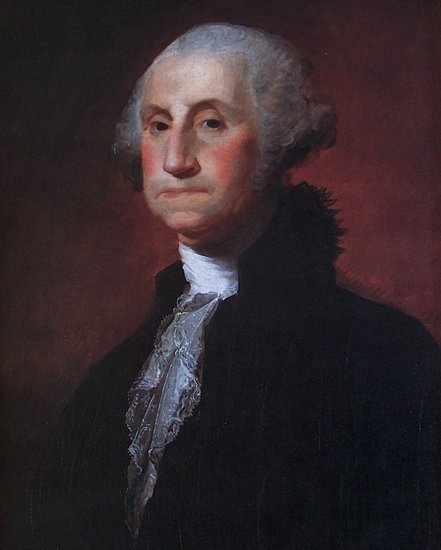
Whereas both Houses of Congress have, by their joint committee, requested me “to recommend to the people of the United States a DAY OF PUBLICK THANKSGIVING and PRAYER, to be observed by acknowledging with grateful hearts the many and signal favors of Almighty God, especially by affording them an opportunity peaceably to establish a form of government for their safety and happiness:” George Washington 1789
Can you imagine the President of the United States issuing this statement today? The ‘duty of all nations to acknowledge the providence of Almighty God…’?
Attitudes have certainly changed since 1789.
My point in asking this is twofold: First to show how the people who actually wrote our Constitution (Washington was president of the Constitutional Convention) viewed these matters; quite differently than today, in many cases. And second, to show how lucky we are to live in a Nation founded on the belief that we owe our thanks to God for all of our blessings, whether the politicians and judges think so or not. Politicians and judges come and go, but the basic principles of this country remain. Wow! There’s something else to add to our list of things to be thankful for this year!
As General, Washington issued Proclamations of Thanksgiving at various times, and as President, he issued the first Presidential Proclamation, and in our time, this is something that all presidents do in November each year. May this year’s Thanksgiving be especially rich and rewarding for all of you.
Be joyful always; pray continually; give thanks in all circumstances, for this is God’s will for you in Christ Jesus.
1 Thessalonians 5:16-18
If you do a word search of the Bible, you will find that prayer and thanksgiving go together an awful lot. In fact, it’s almost unusual not to find them together; I wonder why that is…
I don’t claim to be all that smart, but I do have a theory about this.
If you received an invitation to sit down with the president for a chat, wouldn’t it occur to you to thank him for the invitation? Hey, I don’t care if you like him or not, he’s a busy guy with lots of people wanting some time, and he showed you the honor of inviting you. Wouldn’t you thank him for his time?
As busy as the president must be, how much more important and busy must God be! After all, He is running the whole universe, not just one little country on one little planet…
So, a person’s first impulse might be to give thanks for His attention. But once you do that, it should occur to you that He has done a lot more than just grant an audience; He has given you life, a home, a nice family, and so on.
Then all of a sudden, a whole lot of other things come to mind to give thanks for; maybe you start to realize that you are a really fortunate person, who is blessed all of the time, even though you may not have every little thing you ever wished for. In fact, you might even start to think that some of the things that bug you are really not very important!
I’d like to go on, but if you’ll excuse me, I just thought of some things I’d like to talk to God about…
To the modern person it may seem odd that Thanksgiving, as an American holiday, hasn’t always been there… After all, didn’t the Pilgrims start it back at the very beginning? Didn’t George Washington proclaim it?
The short answer is “yes” but it didn’t really ‘stick’ at first. In the early days of the Republic, Thanksgiving was only observed each year in New England; it was more or less unknown in the South. During those early years, however one New England woman campaigned for Thanksgiving as a national holiday… and she was Sarah Hale.
Sarah was born October 24, 1788 in Newport, New Hampshire, Sarah Josepha Buell. She was educated at home, and was properly married to David Hale in 1813. The couple quickly had five children, and then David died suddenly in 1822, leaving Sarah widowed with five little kids and questionable prospects. Sarah began to write, and quickly became recognized as a talented author of poetry and novels. She is the author of “Mary had a Little Lamb” by the way…
In a time when women were not supposed to work outside the home, Sarah became the editor of the nation’s first women’s magazine “Ladies Magazine” in 1828, and in 1836 she became the editor of “Godey’s Ladies Book” which became huge in later years. It has been said that she was a combination of Martha Stewart and Oprah in her time…
While her career is quite a fascinating one, her role with Thanksgiving is our quest today…
She began her efforts to make Thanksgiving a national holiday in 1847, and over the next 17 years she contacted five presidents with her appeal. She finally achieved success in 1863 when President Abraham Lincoln, who issued his own Proclamation of Thanksgiving, and supported legislation to add Thanksgiving to Washington’s Birthday and Independence Day as our Nation’s third holiday.
Sarah Hale worked on many other projects during her long life, including the Bunker Hill Monument, the preservation of Mount Vernon and the Quincy Market, before her death in 1879 at the age of 90.
Please take a few moments to visit the links below to discover more about this amazing lady of long ago.
Join us on a journey through life following Jesus Christ. Our journey of life is an adventure of discovery that is both exciting and challenging. It is a discovery of clear and simple faith that comes from the a clear and simple understanding of the Word of God.
No, we aren't perfect, we are works in progress. There's no judging, no guilt and no condemnation here, just perspectives on life and truth as we work on our Project to become a little more like Him every day.
My Other Blog
Click the image to visit my other blog, Photo Vistas, my journey in pictures