
Chapter 3 – The Babel Rebellion
The Third Rebellion and the Fragmentation of the Nations
The third major rebellion in the biblical narrative occurs in Genesis 11:1–9, the account of the Tower of Babel. While the Eden rebellion explains the origin of human sin, and the rebellion of the rebellious sons of God explains the escalation of spiritual corruption, the Babel rebellion explains the fragmentation of humanity into nations and the emergence of territorial spiritual authority structures that shape the rest of Scripture.
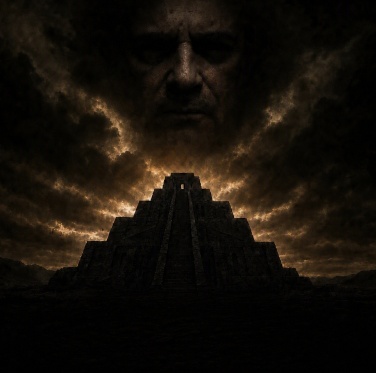
This chapter examines the Babel rebellion through a close reading of Genesis 11, a study of its canonical interpretation—especially Deuteronomy 32:8–9—and a theological synthesis that situates Babel as the third of the three great rebellions that form the biblical worldview of evil.
I. THE TEXT OF GENESIS 11:1–9: HUMANITY’S UNIFIED REVOLT
The narrative reads:
Now the whole world had one language and a common speech. As people moved eastward, they found a plain in Shinar and settled there. They said to each other, “Come, let’s make bricks and bake them thoroughly.” They used brick instead of stone, and tar for mortar. Then they said, “Come, let us build ourselves a city, with a tower that reaches to the heavens, so that we may make a name for ourselves; otherwise we will be scattered over the face of the whole earth.”
But the LORD came down to see the city and the tower the people were building. The LORD said, “If as one people speaking the same language they have begun to do this, then nothing they plan to do will be impossible for them. Come, let us go down and confuse their language so they will not understand each other.”
So the LORD scattered them from there over all the earth, and they stopped building the city. That is why it was called Babel—because there the LORD confused the language of the whole world. From there the LORD scattered them over the face of the whole earth.
Genesis 11:1–9
The Babel narrative is deceptively simple. It describes a unified humanity attempting to build a city and a tower “that reaches to the heavens” in order to “make a name for ourselves.” The divine response is to confuse their language and scatter them across the earth.
But beneath this simplicity lies a profound theological event—one that shapes the entire biblical story of the nations, the spiritual realm, and the mission of God.
II. THE NATURE OF THE REBELLION AT BABEL
The rebellion at Babel is not merely architectural. It is theological, political, and spiritual.
A. A Rejection of God’s Command
In Genesis 1:28 and again in Genesis 9:1, God commands humanity to “fill the earth.” The Babel project is a direct rejection of this command:
“…otherwise we will be scattered over the face of the whole earth.” Genesis 11:4
Humanity unites not to fulfill God’s purpose but to resist it.
B. A Desire for Autonomy and Self‑Exaltation
The builders seek to “make a name for ourselves.” In the ancient Near Eastern context, this phrase refers to establishing one’s own identity, legacy, and authority apart from God.
C. A Tower “That Reaches to the Heavens”
The phrase “reaches to the heavens” is not about height but about access. In the ancient world, ziggurats were built as gateways between the human realm and the spiritual realm. The Babel tower represents humanity’s attempt to control or manipulate access to the heavenly realm.
D. A Unified Human Rebellion
Unlike Eden (individual) and Genesis 6 (spiritual beings), Babel is a collective human rebellion. All of humanity participates in a unified act of defiance.
III. GOD’S RESPONSE: SCATTERING AND DISINHERITANCE
God’s response to the rebellion is twofold:
- Confusion of language
- Scattering of the nations
But the deeper theological meaning of this event is revealed not in Genesis 11 but in Deuteronomy 32:8–9, a passage that interprets Babel through the lens of divine governance.
IV. DEUTERONOMY 32:8–9 — THE DIVINE COUNCIL INTERPRETATION
The key text reads:
Deuteronomy 32:8–9 (based on DSS/LXX textual tradition)
When the Most High gave the nations their inheritance, when he divided all mankind, he set up boundaries for the peoples according to the number of the sons of God.
For the LORD’s portion is his people, Jacob his allotted inheritance.
This passage describes the aftermath of Babel from a heavenly perspective.
A. “When he divided all mankind”
This phrase refers directly to the scattering at Babel.
B. “He set up boundaries for the peoples”
This refers to the formation of distinct nations.
C. “According to the number of the sons of God”
Here, “sons of God” refers to spiritual beings in the unseen realm. The meaning is that God assigns the nations to the oversight of spiritual beings, while reserving Israel as His own portion.
This is the theological moment of divine disinheritance:
- Humanity rejects God at Babel.
- God responds by giving the nations over to the governance of spiritual beings.
- God chooses one nation—Israel—to be His own.
D. The Nations Under Spiritual Authority
The result is a world in which:
- the nations are under the influence of spiritual beings,
- these beings are expected to govern justly,
- but many become corrupt,
- leading to the rise of hostile spiritual powers.
This interpretation is reinforced by Psalm 82, which depicts God judging spiritual beings who rule unjustly over the nations.
V. THE RISE OF HOSTILE SPIRITUAL POWERS
The Babel rebellion marks the beginning of a new spiritual reality: the nations are placed under the authority of spiritual beings who, over time, become hostile spiritual powers.
A. Psalm 82: Spiritual Beings Judged for Injustice
Psalm 82 portrays God standing in judgment over spiritual beings who have failed in their governance:
“How long will you defend the unjust and show partiality to the wicked?”
Psalm 82:2
These beings are condemned for injustice, oppression, and corruption.
B. Daniel 10: Territorial Spiritual Conflict
Daniel 10 describes spiritual beings associated with specific nations:
- “the prince of Persia”
- “the prince of Greece”
These are not human rulers but spiritual beings influencing geopolitical realities.
C. The New Testament: Principalities and Authorities
The New Testament uses terms such as:
- “rulers”
- “authorities”
- “principalities”
- “powers”
- “spiritual forces of evil”
These terms refer to spiritual beings associated with the nations—beings whose origins trace back to the disinheritance at Babel.
VI. THE THEOLOGICAL SIGNIFICANCE OF THE BABEL REBELLION
The Babel rebellion introduces several key theological themes.
A. The Fragmentation of Humanity
Humanity is no longer unified. The scattering creates linguistic, cultural, and national diversity.
B. The Disinheritance of the Nations
God gives the nations over to spiritual beings as an act of judgment.
C. The Election of Israel
In contrast to the nations, God chooses Israel as His own portion. This sets the stage for the Abrahamic covenant in Genesis 12.
D. The Spiritualization of Geopolitics
Nations are not merely political entities; they are spiritual territories.
E. The Background for the Great Commission
The nations that were disinherited at Babel are the nations Christ commands His followers to reclaim.
VII. BABEL AND THE LARGER BIBLICAL STORY
The Babel rebellion is not an isolated event. It shapes the entire biblical narrative.
A. The Abrahamic Covenant as God’s Response
Immediately after Babel, God calls Abram:
“All peoples on earth will be blessed through you.” Genesis 12:3
This is not coincidence. The call of Abram is God’s plan to reclaim the nations He disinherited.
B. Israel as a Priestly Nation
Israel is chosen to mediate God’s presence to the nations.
C. The Prophets and the Nations
The prophetic books repeatedly address the nations, anticipating a future in which they will return to the worship of the true God.
D. Jesus and the Nations
Jesus’ ministry anticipates the inclusion of the nations:
- “a light for the Gentiles” (Isaiah 49:6)
- “all nations will come” (Isaiah 2:2–4)
- “make disciples of all nations” (Matthew 28:19)
E. Pentecost as the Reversal of Babel
At Pentecost, the confusion of languages is symbolically reversed:
“each one heard their own language being spoken.” Acts 2:6
The nations begin to be reclaimed.
F. The Church as the New Humanity
The Church is a multi‑ethnic, multi‑lingual people united in Christ—a reversal of the fragmentation at Babel.
VIII. SYNTHESIS: THE THIRD REBELLION IN THE FRAMEWORK OF THE THREE
The Babel rebellion is the third of the three great rebellions that shape the biblical worldview of evil.
- Eden explains the origin of human sin.
- Genesis 6 explains the corruption of the spiritual realm.
- Babel explains the fragmentation of the nations and the rise of territorial spiritual authority.
Together, these rebellions form a coherent narrative:
- Humanity falls.
- Spiritual beings rebel.
- The nations are scattered and placed under spiritual authority.
This framework explains the biblical language of spiritual conflict, the mission of Israel, and the universal scope of Christ’s victory.
IX. SUMMARY
The Babel rebellion is a pivotal moment in the biblical story. It marks the fragmentation of humanity, the disinheritance of the nations, and the rise of territorial spiritual authority structures. Deuteronomy 32:8–9 reveals the spiritual dimension of this event, showing that the nations were placed under the oversight of spiritual beings while Israel was chosen as God’s own portion.
The Babel rebellion sets the stage for the Abrahamic covenant, the mission of Israel, the ministry of Jesus, the birth of the Church, and the Great Commission. It is the third and final rebellion that forms the biblical worldview of evil and prepares the way for the redemptive work of Christ.


Pingback: The Nephilim: An Investigation and Analysis BONUS 4 | Talmidimblogging