
A Royal Invitation

Matthew 22:1-14

This is the third of the three parables that Jesus delivers to the Jewish religious elite in the scene that began in 21:23…

In this parable, unlike the previous two, Jesus begins with”The Kingdom of heaven is like…” This time, He will put His parabolic meaning into the context of the Kingdom of heaven, which has been His general theme ever since He began His public ministry some three years earlier. In the parable, God is the King, Jesus, although He has been mentioned as king many times in Matthew’s narrative, is the son of the king, and the banquet is the messianic banquet we have seen earlier in Matthew’s account (cf. 8:11; 25:1 ff.). The king (God) wishes to honor his son (Jesus) and has arranged this banquet. Invitations have been sent out. Everything is ready, and the king sends his servants to let the invitees know that it is time to come to the banquet hall of the king… and they refuse.

By refusing, they have given a gross insult to the king, for they have refused to join him in honoring his son. Surprisingly, the king sends his messengers again, but the invitees are too busy with their own affairs; some even attack the messengers; the king is not amused, and demonstrates his wrath.

The king then tells his servants to invite people off the street to attend, and soon the hall is full of guests. When the king enters the room, he notices a man who is not appropriately dressed for a wedding banquet and asks him the reason; the man says nothing, and the king has him tossed out of the hall, to a dark place where there is “weeping and gnashing of teeth”. The phrase “weeping and gnashing of teeth” has serious apocalyptic significance, for it denotes the judgment of God upon a person or a people.

In the final verse, Jesus sums up what has happened when He says: ““For many are invited, but few are chosen.” The hall was full of people, but those who were first invited refused to attend; they were invited, but since they didn’t show up to honor the son, they weren’t chosen. The second group of invitees showed up, but one of them didn’t take his invitation very seriously, and was thrown out; he was also invited, but his lack of caring about that invitation resulted in his also not being chosen.

You might ask, “Chosen for what?”

The answer is a simple one: Chosen to remain in the presence of the king.

This parable demonstrates the messianic mission of Jesus in that when Israel, represented by their leaders, refused to honor Him, they rejected not only Jesus, but His Father as well; surely this sounds familiar to you for Jesus said this several times. Israel was the very first to be invited into God’s presence, but they were too busy, to hardened of heart to show up; some even attacked His messengers. The invitation then went out to the Gentiles, and many took advantage of the invitation, but even then there are those (of us) who really don’t take the whole thing very seriously, and who will come to judgment in the end.

This might be a point for reflection for all of us…

I really doubt that the Jewish leaders who heard this really comprehended the scope of what Jesus was telling them here, for as we have already seen, their eyes had been blinded by their stubborn hardness of heart; they were now doing Satan’s bidding, whether they understood it or not. From here on, their secret plotting will consume them…

Posted in Bible | Tagged , , , , , , , , | 4 Comments

Parable of the Tenants

Matthew 21:33-46

The second parable that Jesus told the religious leaders is the Parable of the Tenants; we are still in the scene that began in 21:23, which we discussed in Rising Tensions. If you missed that post, for best results, I would urge you to READ IT NOW before you continue.

Since this is another fairly well known parable, I would suggest you avail yourselves of the link above to refresh your recollection, and we’ll discuss the last several verses of our text when you get back…

OK, now that we are all on the same page, let’s have a look at what has just happened in our narrative. The Jewish religious leaders may or may not have gotten every bit of the parable, but they knew Jesus had just made them look bad; that much is for sure. Beginning in 21:42, Jesus makes use of a quotation from Psalm 118 that was originally a song of thanksgiving for a military victory; it was often sung in Jesus day by pilgrims making their way to Jerusalem. For them, the “stone that the builders rejected” referred to Israel, but Jesus applies it here in a different way, for here He applies it to Himself; He is the stone the builders rejected. Interestingly, this imagery became a very important component of the teaching of the early church, as seen in 1 Peter 2:4-8 and Acts 4:12. As such, the stone rejected is identified as the capstone, the stone that holds the entire building in place; this cones together quite nicely with our earlier discussion concerning Matthew 16:18-19 wherein the Apostles are seen as the “foundation” of the church with Jesus as the “capstone”. To be quite clear, if you remove the capstone (sometimes called “keystone” today) the building crumbles.

21:43 ff. demonstrates Jesus’ emphasis on the fact that the Jewish leaders have forfeited their rights to enjoy God’s favor, God’s presence, which is also to say His Kingdom, by their stubborn refusal to receive their Messiah (the stone that was rejected) and thus, Jesus will build a new temple of a new people comprised of all ethnic groups as a new holy nation; His Church.

The Jewish religious leaders seem to have caught enough of His meaning to motivate them even more to silence Him for good. No, this simply would not do; they must kill Him as soon as possible! Yet, there was still the problem of the crowds who viewed Jesus as a prophet; what to do about the crowds? This was now clearly their problem, and to its solution they would turn their full attention in 22:15-40. Even so, Jesus wasn’t quite finished with them, for He has one more parable, and quite a parable it was. We’ll tackle it when we get back together next time…

Posted in Bible | Tagged , , , , , , , , | 5 Comments

Speaking in Parables Again

After their first skirmish, Jesus tells the Jewish religious leaders three parables that combine to form a serious indictment of their continual, chronic and habitual refusal to hear God’s truth. If you have not read Saturday’s post Rising Tensions I would encourage you to do so before you read this one, since the context and scene are set in that post; this (and the next two as well) is a continuation of that encounter, in essence Jesus’ counter move.

“What do you think? There was a man who had two sons. He went to the first and said, ‘Son, go and work today in the vineyard.’

“‘I will not,’ he answered, but later he changed his mind and went.

“Then the father went to the other son and said the same thing. He answered, ‘I will, sir,’ but he did not go.

“Which of the two did what his father wanted?”

“The first,” they answered.

Jesus said to them, “Truly I tell you, the tax collectors and the prostitutes are entering the kingdom of God ahead of you. For John came to you to show you the way of righteousness, and you did not believe him, but the tax collectors and the prostitutes did. And even after you saw this, you did not repent and believe him.

Matthew 21:28-32

This parable is perhaps the easiest in Matthew to figure out; the sinners (tax collectors and prostitutes) are the son who said ‘no’ and then did as his father told him to do. The Jewish religious leaders are the son who said ‘yes’ and then disobeyed. The father, of course, is God.

Notice that Jesus told them this parable, and then asked them  which son did as the father wanted, and they were so blind that they answered without noticing that they were stepping in a trap; please think about that for a moment.

Who was on the offensive in this scene; remember that it began in verse 23 where they were demanding to know by what authority Jesus had done the things He did on the previous afternoon. They had come after Him to attempt to trap Him into saying something that would cause Him to become unpopular with the crowds, and so they could charge and kill Him. In the previous text, they were plotting, scheming and calculating, and yet here, mere moments later, Jesus asks them an obvious question about a very straightforward parable, and they blindly step into His trap. Is it possible that they, brilliant as they were, really didn’t see the trap? You might remember that earlier in this scene when Jesus asked them what the source of John’s baptism was, that they saw the trap in that question (21:24-26).

So, do you recall when the disciples asked Him why He spoke to the people in parables? (13:10)

His answer was in 13:11-17, and essentially it was this:” Though seeing, they do not see;
though hearing, they do not hear or understand” (13:13b).

This may be the most obvious example of what Jesus told the disciples back in chapter 13 in the entire New Testament; the Jewish leaders did not see the obvious, for they had not been given the ability to see, because they did not want to see at all.

So Jesus springs His trap in 21:31-32, and I’m sure it warmed the hearts of those leaders to hear they are worse than tax collectors and prostitutes…

This thrill-packed episode will continue next time; see you there!

Posted in Bible | Tagged , , , , , , , , | 8 Comments

The Power of the Gospel

IL714 046-LR

“I am not ashamed of the gospel, because it is the power of God for the salvation of everyone who believes: first for the Jew, then for the Gentile.”

Romans 1:16

Are you ashamed of the Gospel?  Of course not!  How about at work, at the store or at the diner?

The Gospel is the power of God for the salvation of the world.  That makes it about the most powerful force in the universe.  The power of the Gospel can move mountains… and it can change lives; it is powerful indeed.  As Christ’s ambassador, it is the most powerful force in your arsenal, and is one that we all must respect and be bold enough to bring up.  Here’s another way of looking at it: Do you love people?  Do you care about your neighbor; would you help him or her out if they had a problem?  If so, how can we let them die without hearing the Gospel from someone they know and trust?

Just think, God put you where you are and gave you the glorious message of power; the Gospel.  Can we keep it to ourselves?

Posted in Christian Life | Tagged , , , , , , , , , , | 8 Comments

Rising Tensions

Matthew 21:23-27

It is day 2 in Jerusalem. Jesus arrives at the Temple in the morning, and the Jewish leaders are waiting for Him; they are ready to challenge Him. What they probably didn’t understand, was that they were playing the wrong parts, for as the religious leaders of the chosen people of God, they should be rolling out the red carpet for their Messiah, but instead of doing that, they are playing to role of Satan’s stooges, Satan’s shills, giving a voice to his challenge of the Son of God. Maybe it’s just me, but I find that what Matthew has revealed about their thinking here, is fascinating; it speaks volumes…

The Jewish leadership had adopted a political strategy!

Jesus entered the temple courts, and, while he was teaching, the chief priests and the elders of the people came to him. “By what authority are you doing these things?” they asked. “And who gave you this authority?” (21:23)

When a politician has a ticklish problem, he will respond to it directly… by changing the subject. This strategy actually has a name: “controlling to narrative”. Thus, instead of speaking to the messianic identity that Jesus so clearly assumed the day before, they ask Him who authorized His actions. If Jesus answers their question, then they will have the upper hand in what follows; an allegation of wrongdoing.

But Jesus doesn’t take the bait:

Jesus replied, “I will also ask you one question. If you answer me, I will tell you by what authority I am doing these things. John’s baptism—where did it come from? Was it from heaven, or of human origin?” (21:24-25a)

This is Jesus’ counter move, and with it, He threw their maneuver right back in their faces. Their sidebar is nothing less than fascinating:

They discussed it among themselves and said, “If we say, ‘From heaven,’ he will ask, ‘Then why didn’t you believe him?’ But if we say, ‘Of human origin’—we are afraid of the people, for they all hold that John was a prophet.” (21:25b-26)

If you doubted me in my application of politics in this discussion, you really need to change your mind at this point, for any novice can see the politics in this thinking. The leaders have found themselves in a lose – lose position, so they do the honorable thing; they lie.

So they answered Jesus, “We don’t know.” (21:27a)

Jesus has just won their first round:

Then he said, “Neither will I tell you by what authority I am doing these things. (21:27b)

Even so, Jesus isn’t finished talking on this subject, and seizing the initiative, He will tell them three parables (21:28-22:14) in which He will assert His authority indirectly. We will be looking at the three parables one at a time, but as we do so, I hope you will remember the setting and context of what has just happened, for it is only by doing so that you will see the full picture of what is happening in this incredible scene. We will begin on Monday morning, see you then!

Posted in Bible | Tagged , , , , , , , , | 11 Comments

The Private Move

Matthew 21:18-22

As I mentioned a couple posts back, Jesus would make three moves that declare His Messianic identity upon His arrival at Jerusalem; the first two were public, His triumphal entry, and His clearing of the Temple. Now we come to third, His private demonstration to the disciples who, it would seem, missed the point just as much as the Jewish leaders did.

Early in the morning, as Jesus was on his way back to the city, he was hungry. Seeing a fig tree by the road, he went up to it but found nothing on it except leaves. Then he said to it, “May you never bear fruit again!”Immediately the tree withered. (21:18-19)

Make no mistake, Jesus wasn’t having a temper tantrum because there was no fruit on the tree; His actions were quite illustrative of the situation they were in. He, the son of David, the Messiah had entered the Holy City of Jerusalem on the previous afternoon, headed directly to the Temple, the very dwelling place of God and the symbol of God in the midst of His people, and He had found only corruption and vice. Israel, as represented by its capitol looked healthy and productive from the outside, but the inside was rotten to the core.

The fig tree looked good, and it should have had fruit, but upon closer inspection, it was barren; Jesus pronounced judgment on that tree for its lack of fruit, and it withered and died. This action is prophetic, for like His actions in the Temple on the previous day, it was an illustration of what was in Jerusalem’s future; God’s judgment.

It would seem from their reaction in verse 20 that the disciples didn’t see the prophetic aspect of this, at least not at first, and as we probably would have been in their place, they were amazed at how Jesus said the words, and the tree had withered right before their eyes. I must admit that would be something to see. Jesus responds to their amazement by speaking to them of faith, a commodity they would be need quite a bit of in the very near future:

Jesus replied, “Truly I tell you, if you have faith and do not doubt, not only can you do what was done to the fig tree, but also you can say to this mountain, ‘Go, throw yourself into the sea,’ and it will be done. If you believe, you will receive whatever you ask for in prayer.” (21:21-22)

If you’ve been following along in our journey through Matthew, you will recall that this is not the first time Jesus has spoken to them in this way about their faith. In the days ahead, the disciples will need to have faith, for they will find themselves in a position where they will need to depend mightily on God; thus He reminds them that in doing so, nothing will be withheld from them. The obvious contrast is the Jewish religious leaders, who rely entirely upon their own abilities and self righteousness, even to point of having their long-awaited Messiah nailed to a cross, thus sealing their doom.

In the next scene, the indignation of the Jewish leaders finds its voice; see you then!

Posted in Bible | Tagged , , , , , , , , , | 11 Comments

The Seat of Corruption

Matthew 21:12-17

For the Jews, the Temple in Jerusalem was the center of everything Jewish, the very center of the Jewish people and Nation. It was the embodiment (if I can use that term for a building) of their very identities as a people; it was their pride, it was their joy, and it was their hope for a better day. Yet the real significance of the Temple ran far deeper than all of that, for its true significance was entirely apocalyptic in nature.

The Temple in Jerusalem was the symbol of God dwelling in the midst of His people, the symbol of their exalted status as God’s chosen; God’s elect. There, in the Most Holy Place, dwelt the Spirit of God Himself on the earth; in the heart of Israel’s capitol city. It was a place of gathering in community, a place of teaching and instruction, a place of worship and prayer, and it was also a place of atonement; it was by any definition a sacred place.

When Jesus entered the city on that donkey colt as the son of David, He went directly to the Temple, and He did so in a manner that asserted his authority as king and Messiah, as one who is greater than the Temple itself (12:6). His actions there demonstrated prophetically what the Temple had become, and in doing so, Jesus went to very heart of the corruption of Israel, for they had perverted the very blessing that set them apart from everyone else, and that blessing was their relationship with God. In His actions on that fateful afternoon, Jesus told an active parable about what would be the fate of the Temple, for it would be utterly destroyed. Later in chapter 24, Jesus would speak to his disciples prophetically about this destruction. But on this day, Jesus, by his actions, would deliver a stinging indictment of the entire ideology that had developed within the teachings of the Jewish religious leaders concerning the Temple.

As a result, they question His identity (21:10), and His authority (21:23); they were indignant (21:15). Later in the drama, Jesus’ predictions concerning the Temple’s destruction are levied against Him at His trial (26:61) and hurled at His in the form of taunts at His crucifixion (27:40). Yes sir, the Messiah was on the scene, and He has brought to them a message that says serious house cleaning is needed, and in so doing, He has “let loose the dogs of (spiritual) war”!

Game on.

Posted in Bible | Tagged , , , , , , , , , | 4 Comments

…and thus the drama begins

Matthew 21:1-11

Jesus makes the first move in the rising conflict, actually, He makes three moves, two of which are in public, and one in private. All three moves have something in common; He is answering the question “Who do you say that I am?” His identity as the son of David comes to the fore first here and in the next section, as though He were saying to Jerusalem, “Here I am, the son of David, Messiah!”

The people seem to be delighted, at least those who were present, yet there is an undertone, a very dark undertone. What we have in this entire section is the outward and physical manifestation of the ultimate spiritual conflict, for the thing we need to recognize is this: Jesus’ actions here are the first shots in a war, a showdown with eternity itself as the prize for the victor.

In this passage, Jesus gives instructions to the disciples to obtain the donkey on which He would enter the city, and as was his custom, Matthew ties that into Israel’s prophetic history (21:4-5). As I have mentioned in other posts here, in the ancient near east, a king arriving in peace rode a donkey, a king arriving to conquer rode a war horse. Jesus, the Prince of Peace, comes to town on a donkey, for the battle He was fighting was not a clash of arms between battalions of mortal men, but a spiritual battle between good and evil in the hearts of men; make no mistake, Jesus knew exactly who the real Enemy was.

Along His path, He was greeted by the crowds as a king would be greeted as he arrived in the city in peace. In the eyes of the crowds, He was the new Davidic King come to claim His throne and overturn the Roman occupation with the power of God, restoring Israel to its rightful place among the Nations of the earth. In the eyes of the Jewish religious authorities, He was trouble. Yet in the eyes of Satan, this was what he had been waiting for, in both dread and anticipation. Dread because Jesus could utterly destroy him, anticipation because if he could manipulate the Jewish authorities, already in a state of rebellion against God and hardness of heart, he could destroy Jesus by an assault upon His body, killing Him before He could destroy the Devil, and thus our drama, the greatest drama of all time begins.

In the next post, we will see Jesus make His second move, in which He takes His Davidic identity a step further, see you then!

Posted in Bible | Tagged , , , , , , , , , , | 5 Comments

The Rising Conflict

Matthew 21-25

With the end of chapter 20, we have concluded the section that spans from 16:21-20:34 in which Jesus tries to reveal His true messianic mission to the disciples. With the end of the section, we have come to realize that they had not yet understood adequately what He was teaching, although the time would soon come when they would understand it. Now, in this new section, we will see the rising conflict between Jesus and Jewish officialdom, that will ultimately result in all of Jesus’ predictions concerning His fate to come to pass.

As He arrives in the city, Jesus begins a series of provocative actions (cf. 21:12, 14-15, 23; 24:1) in the area of the Temple which result in the “chief priests and teachers of the law” becoming “indignant” (21:15). There has been conflict before, but with the conflict over His “authority” (21:24-27) followed by three parables that expose their rebellion and hardness of heart , they resolve to silence Him for good (21:45).

The initial strategy of the leaders was a purely political one; they would try to bring public condemnation upon Jesus by forcing Him to take unpopular stands on controversial issues of the day, just as politicians try to do with their opponents in our time (cf. 21:46; 22:15-48). As all of them would discover, you simply cannot “trap: Jesus, and by the time He has finished with their attacks, they are reduced to plotting in secret.

From the very beginning of this narrative, the battle will rage over the leaders’ response to the demonstration of Jesus’ messianic credentials (21:1-17), and His authoritative teaching and affirmations concerning His identity that follow (21:23-22:46). The refusal of the Jewish leaders to recognize His identity results in Jesus seizing the initiative and denouncing the hypocrisy of the Pharisees (23:1-39), and pronouncing apocalyptic doom on the city (24:1-34) and finally, giving exhortation to the people of the New Kingdom (24:36-25:46).

We will jump into the fray with Jesus when we get together next time; you won’t want to miss this!

Posted in Bible | Tagged , , , , , , , , | 7 Comments

Photo of the Week: January 13, 2016

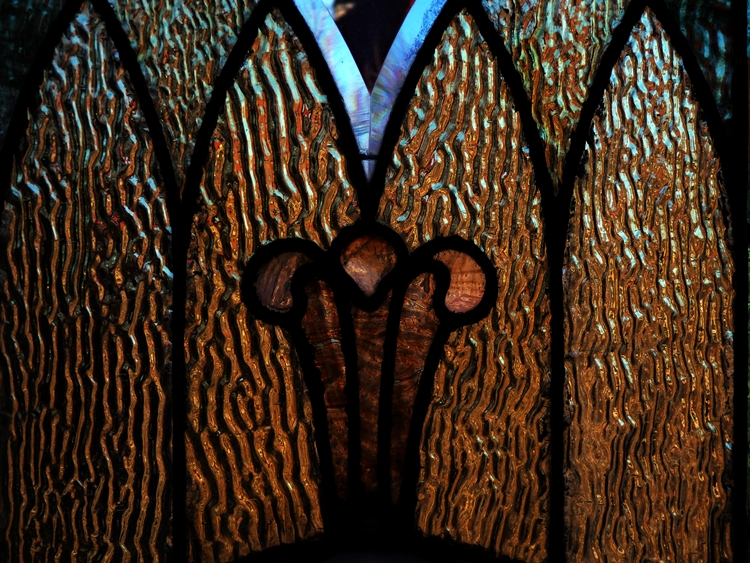
Back in 2011 I did a photo essay about the stained glass windows in my house, and the other day i thought I would try a few more shots of those windows. I kind of like this one since the colors came though so vividly…

Posted in Photo of the Week | Tagged , , , , , | 11 Comments