Husbands and Wives

Ephesians 5:21-33

With these verses, Paul moves from the general instruction about a Christian’s life to a more specific instruction, beginning with the relationship of marriage, a subject that he writes about in more than one letter, as you know. To be perfectly honest, these aren’t my favorite topics to blog about, for it’s easy to get the wrong impression about where this is headed; a post on this text tends to run a bit long as a result; even so, let’s try the short version today.

The main point to keep in mind as you read this, (ladies in particular) is that the relationship between husband and wife isn’t even Paul’s main point. Gentlemen, I think it is also very important that we recognize right off, that historical and cultural attitudes of the past might color our view of some of this, for over the centuries in male dominated societies, our forefathers sometimes ignored the rules of context here, preferring to seize upon certain verses to impose upon their wives some pretty idiotic ideas, ideas that are entirely in opposition to Paul’s teaching.

Yep, one of these days, I’ll do a series of posts, maybe a whole book on Biblical marriage; that’s probably what it would take to it justice. Biblical teachings on marriage aren’t what most people think they are, at least in my view, for they are always really about our relationships with God more than anything else.

Context: “Submit to one another out of reverence for Christ.” (verse 21) Did you catch “to one another”?

Verses 22-24 are historically our favorite verses in the entire Bible to quote out of context: Yes sir, wives should submit to their husbands in everything! Ladies, please bear in mind that I usually refer to my wife as “She Who Must Be Obeyed”! Paul is using a cultural attitude from the first century Roman Empire to illustrate the relationship between Christ, represented here by husbands, and the church, represented by wives. He is not authorizing husbands to mistreat their wives, for that would be a violation of the marriage covenant.

Verses 25-31 are instructions to husbands, who are supposed to love their wives as Christ loved the church… “and gave Himself up for her.” Jesus gave up His very life on the cross for the church, and likewise, Paul is telling husbands they should give up their very lives for their wives. Most of the time, husbands don’t need to give up their physical lives for their wives, no it’s more like their will, ambitions and “self”. Thus, for a preacher to teach, and a Christian husband to assert domination over wives is purely a perversion of the text.

Wives give up self by submission, husbands give up self by devotion, and the result is a partnership, not domination; everybody wins.

Consider this: Isn’t this what we’ve been saying all along? Giving up self and serving others? Sounds like love doesn’t it?

The final two verses were seldom quoted in days gone by, and they aren’t always mentioned now either:

This is a profound mystery—but I am talking about Christ and the church. However, each one of you also must love his wife as he loves himself, and the wife must respect her husband.

Ephesians 5:32-33

You see, this whole conversation is about Christ and the church; marriage is supposed to be the illustration of that relationship, an illustration that we all recognize and understand, but thanks to the sinful nature of this world, it requires a lot more explaining than perhaps it used to in Paul’s day.

Oh yes, and by the way, husbands really should love their wives as they love themselves, and wives really should respect their husbands.

Posted in Bible | Tagged , , , , , , , | 8 Comments

TLP Inspiration: 12/6/18

donmerrittonline.com

Posted in Christian living | Tagged , , , , , , | Leave a comment

Be Filled with the Spirit

Be very careful, then, how you live—not as unwise but as wise, making the most of every opportunity, because the days are evil. Therefore do not be foolish, but understand what the Lord’s will is. Do not get drunk on wine, which leads to debauchery. Instead, be filled with the Spirit, speaking to one another with psalms, hymns, and songs from the Spirit. Sing and make music from your heart to the Lord, always giving thanks to God the Father for everything, in the name of our Lord Jesus Christ.

Ephesians 5:15-20

These words are as fresh and vibrant today as they were 2,000 years ago, and they point us to one inescapable conclusion: Place your priority on God.

It matters how we live our lives, where we choose to place our priorities and what we think about and do and say. It matters that we let opportunities slip through our fingers, or that we don’t lend our brother a hand when he needs it. It matters when we make ourselves so very busy that we aren’t available to serve our Master or our loved ones or our neighbor, yes dear reader, it really matters.

Verse 17 is key: We are not to be foolish; instead we are to understand the Lord’s will.

Great Paul, but what is His will?

Yesterday I heard about a pastor who recently asked his congregation to spend the next four weeks praying to God that He would reveal His purpose to them. It seems that pastor told his flock that no one can know the purpose and will of God, so as I come to this verse today, I’m struck by the contrast between Paul and this pastor… yet maybe they just have different ways of saying the same thing. Maybe he was trying to teach his congregation to spend time in their relationship with Christ, clearly that is where Paul is taking his readers.

We mustn’t fill ourselves with wine, but with the Spirit. He expresses his thought further in the remaining verses by saying we should speak to one another in psalms, hymns and songs from the Spirit. Some will disagree with me on this, but I see this musical approach as a metaphor, maybe because I’m a poor singer. I see this as a metaphor for being focused on our relationships with Him and letting Him speak and work through us, so that when people see us, they see Him at work in us. If this means we sing, then I guess we ought to sing!

However you see the musical aspect of this, Paul’s meaning is clear: If our lives are centered on our relationship with Jesus Christ, then He will live in us and through us. If our lives are centered on self and the things of this world, we will be on a difficult and fruitless path.

Posted in Bible | Tagged , , , , , , , | 2 Comments

Photo of the Week: December 5, 2018

Posted in Photo of the Week | Tagged , , , , , | 2 Comments

December 5, 2018

Posted in Op-Ed | Tagged , , , | Leave a comment

A Shining Light

 For you were once darkness, but now you are light in the Lord. Live as children of light (for the fruit of the light consists in all goodness, righteousness and truth) and find out what pleases the Lord. Have nothing to do with the fruitless deeds of darkness, but rather expose them. It is shameful even to mention what the disobedient do in secret. But everything exposed by the light becomes visible—and everything that is illuminated becomes a light. This is why it is said:

“Wake up, sleeper,
    rise from the dead,
    and Christ will shine on you.”

Ephesians 5:8-14

This is an interesting piece of text, following along in context with that of our last passage. Actually, it’s quite simple: We were once darkness, now we are light, so pursue those things that are produced by the light of God’s truth and avoid the old ways of darkness.

Simple; you knew that, right?

There are two things about this that are curious; the first of which is found in vv. 11-13. We are to stay away from the fruitless deeds of darkness, instead exposing those nasty dark things done in secret…

As I read it, you can take this one of two ways: First, maybe Paul means that we should sneak into those secret places where things are going on that are shameful to even discuss, and then tell everybody what you saw so those deeds will be exposed. This sounds like a politician’s method to me. The other way you could take this is that we share the light with those who live in darkness so that the light may shine in their lives and shed truth on their misdeeds…

Personally, I think Paul gives us a pretty good clue as to his intention when he mentions that even discussing what goes on in secret in certain places is shameful. If it is shameful to mention such things, then big public announcements seem even more shameful to me.

The other curious thing is the quotation in verse 14. I have no clue who or what Paul is quoting; obviously it isn’t the Old Testament, even though Paul set the quote up just like he would an OT quotation. Might he have made a mistake, thinking this was a Scriptural quotation? Frankly I doubt it. More likely it was something very familiar to the Ephesians that has been lost to history; maybe it was something Paul taught there, or an Ephesian’s representation of Paul’s words. In any event, it’s a pretty good saying, don’t you agree?

Posted in Bible | Tagged , , , , , , , | 3 Comments

TLP Inspiration: 12/4/18

donmerrittonline.com

Posted in Christian living | Tagged , , , , , , , , | 4 Comments

Watch It!

 But among you there must not be even a hint of sexual immorality, or of any kind of impurity, or of greed, because these are improper for God’s holy people. Nor should there be obscenity, foolish talk or coarse joking, which are out of place, but rather thanksgiving. For of this you can be sure: No immoral, impure or greedy person—such a person is an idolater—has any inheritance in the kingdom of Christ and of God. Let no one deceive you with empty words, for because of such things God’s wrath comes on those who are disobedient. Therefore do not be partners with them.

Ephesians 5:3-7

Take a look at these verses again; see the things that Paul is telling us not to do? What is the common thread between all of them?

Exactly, good work!

They are all self-centered. The things Paul tells us we should do are all outwardly focused. Yes, dear reader, that is how these verses fit into the larger context here… and Paul’s theme continues on to the next batch of verses that we’ll look at next time.

That is the most important part about this short text, it is the main lesson here, and now that I have done my teaching duty, I have a couple of observations of a slightly more “advanced” nature that may not be for the faint of heart.

In verse 3, Paul refers to “sexual immorality” and “greed”. These are the most obviously self-centered things he mentions… and oddly in today’s world they are the most controversial. We live in a time when we can’t, as a culture, define sexual immorality, because the word “immorality” implies that there is a standard of conduct beyond the statutes adopted by the government. Nobody would have been concerned with that before the 20th century, and “morality” was even a highly prized virtue at one time, but sadly, that time has passed, and now we seem to think, as a society, that anything that is legal in a court of law is just fine, but that is a bald-faced lie! Human governments decide what they will permit, but they cannot over rule Almighty God. If you are tempted to argue with me on this point, just remember that the Nazi Holocaust was all perfectly legal, as were most of the outrages of history.

Yet Paul’s point here is not based upon a legal issue, for Paul’s focus is not legal or transactional; it is entirely relational. You see the real danger to the believer in things like immorality and greed comes from the fact that these impulses, unchecked, are very strong indeed, and can pull a man or woman completely away from their relationship with Christ. In fact, a person falling into this kind of trap can be pulled so far away from His loving arms that they may not be able to return, assuring their destruction…

In verse 4, Paul tells us that obscenity, foolish talk and coarse joking are “out of place” and I think many will also understand this in a transactional sense. It is important that we all recognize that sin and its consequence isn’t the point, for remember that Paul is writing to Christians whose sins are forgiven. However, the way we talk reveals a great deal about the way we think, for if we speak in a sloppy and undisciplined way, the chances are that our thinking is sloppy and undisciplined as well, and thus if we are in the habit of speaking in a way that is far from reflecting our relationship with Christ, then the chances are very good that we do not have a healthy relationship with Him. Now obviously I’m not saying that we can engage in pious talk and fool God into thinking we are pious; we probably won’t fool anyone around us either. Paul is trying to teach us that if our talk is “out of place” our thinking probably is as well, and we are on a slippery slope with our faith.

We need to be more focused on our relationship with Jesus Christ− all of us! Can we just change our thinking and living entirely on own power? Maybe, maybe not. If we are waiting for the Holy Spirit to jump into the fray and zap us with perfection however, we’ll be waiting for a very long time, because that isn’t how He works. You see, the Holy Spirit is waiting for us to make the first step. He has given us the instruction to make an effort; you’ve just read it.

We make the effort, we make a commitment and seek His strength and His presence and He sustains us through the process; that’s how it works.

Posted in Bible | Tagged , , , , , , , | 2 Comments

TLP Living: 12/3/18

Visions of Christmas Past- Redux

The Christmas season is upon us, and even I can’t put it off any longer! I thought that it might be fun to take a look at it from two different points of view, looking back and looking forward.  Today, let’s look back…

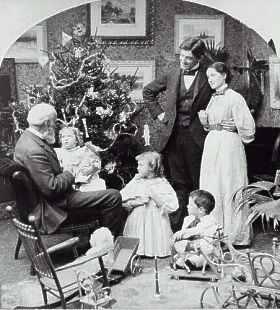
For me, the notion of Christmas in the Victorian era is a great one; it somehow seems so innocent and wholesome.  I don’t know why this is, maybe I’m just a sucker for that period, but somehow things just seem more simple.  My honest guess is that this would amuse the people who lived then, but what the heck, let’s deck the halls!

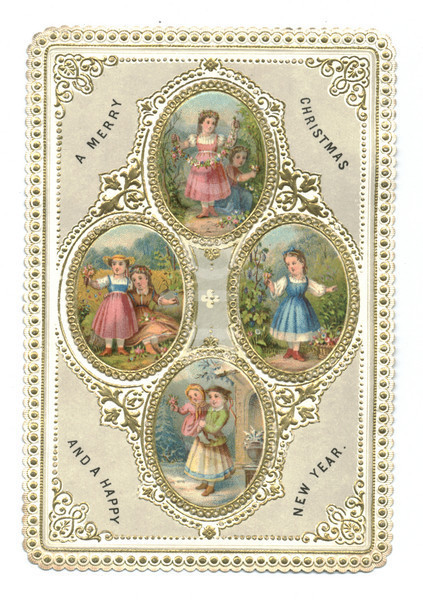
Of course you would have to start out with your Christmas cards, this was the era that invented them, and since internet connections weren’t that great in those days, everyone would actually write them and send them in the mail!

OK, try to picture this: People would go about town singing Christmas Carols in public!  Apparently the ACLU was asleep on the job in those days: Horror!


People did crazy things like look out for their neighbors, give gifts to them and carol in their yards to bring festive cheer and love into their lives… I must say that we are much better off today because instead of having to go out and do things like that, we can download a movie about other people doing it and feel just as good in the warmth and security of our own homes…

Then it would be time to get the house ready for the big day.  If you were well-to-do, you might go out and buy fancy ornaments for your tree, but if you weren’t, homemade ones were perfectly fine too.  In fact, a great deal of their decorating involved people coming together to make things and spend time together.

When the time came, everyone in the family would come together to celebrate.  Gifts were exchanged; often the gifts were hand-made as well as the decorations.  For most people, gifts that their loved ones made themselves were as good as the store-bought ones, because they were made out of love for one another.

And of course, if there weren’t any gifts, that’s OK too… they would spend time in each other’s company.  I guess that’s why the Christmas season in the Victorian context seems more innocent to me… or maybe there wasn’t anything good on TV; who can say?

Of course, I’ve been having a little fun with this comparison, but please don’t get the idea that I don’t appreciate the season in our own times; it’s a wonderful time… and let’s be honest, it’s what you make of it.

If we’re all caught up in the material and commercial aspect of it, it won’t be as much fun as it could have been.  I’m all for Christmas Simplification!  Why not just be happy with the Day, what it means and with one another’s’ company?

Of course my kids just call me “Scrooge”!

One last thing, I came across this video from 1898 called “Santa Claus” and I had to include it here, even though it’s a bit off-topic.  It’s pretty short; you’ve got to check it out.  It is charming in its simplicity…

Posted in Christian living | Tagged , , , , , , , | 2 Comments

TLP Inspiration: 12/3/18

A Child is Born

Isaiah 9:1-7

For to us a child is born,
to us a son is given,
and the government will be on his shoulders.
And he will be called
Wonderful Counselor, Mighty God,
Everlasting Father, Prince of Peace.
Of the greatness of his government and peace
there will be no end.
He will reign on David’s throne
and over his kingdom,
establishing and upholding it
with justice and righteousness
from that time on and forever.
The zeal of the Lord Almighty
will accomplish this.

Isaiah 9:6-7

This passage falls within a section that runs from 8:1-9:7. The section begins with a discussion about the relationship between the lack of belief in Judah and the resulting invasion of the Assyrians (8:1-10). It affirms that God will not allow His people to be entirely wiped out, and moves on to tell those who remain faithful not to join in disbelief (8:11-22) presenting a very dark picture of anguish for those who are not faithful to God. 9:1-7 tells of hope; that just as God brought light out of darkness at the creation, so will He bring light to a world darkened by unbelief.

Our passage begins by telling the people that deliverance will come first in the North; “Galilee of the Gentiles”. This area was the first to be invaded by foes from the North, and would also be first to see deliverance. It is “of the Gentiles” because at the time of writing, the Israelites had been taken into captivity from this area, and the resultant inhabitants were Gentiles. The two tribes mentioned in the text, Zebulun and Naphtali were representative of those “lost” tribes. The reference, in verse 4, to the defeat of Midian is noteworthy, as it reminds the people of what God has done for them in the past. In addition, it was a deliverance that had particular effect on Zebulun and Naphtali. (Judges 7) Of course, after God’s deliverance the people again fell into disobedience and were re-conquered. This was a cycle that Isaiah’s readers should have been well aware of. Yet this time, the deliverer would be far greater than before.

Deliverance would come through a child of the House of David; but not a ruler like any they have seen before. Verse six contains a series of names for this coming ruler which reveal beyond dispute that the child will be no mere mortal: “Mighty God” for example is hardly a term that Jews would apply to a mortal man. “Everlasting Father” is most definitely another one that is beyond debate: the child would be God! Verse 7 indicates that his rule will last from that time on forever, and that all of this would be accomplished through the “zeal of Lord Almighty”.

In short, Isaiah is telling the people that they have grave trouble with God, and bad times ahead. This is all brought on by their own disbelief and rebellion against God, yet in the end, God will replace their disbelief with deliverance when He Himself will rule over His people.

It would be unthinkable for a Christian not to see Jesus Christ as the fulfillment for this prophecy in light of Matthew 4:13-17 in which Matthew specifically states that Jesus went back to Galilee to fulfill it. Note also that in verse 17 what is Jesus telling the people? “Repent, for the kingdom of heaven is near.” Jesus was bringing the kingdom of heaven to Galilee. He established this kingdom by bringing deliverance to those who would remain faithful to God through His work on the cross. This was deliverance not by the sword, but by forgiveness; and the Kingdom of Heaven came into being; a Kingdom that makes war obsolete, for it is not of this world. (Isaiah 9:5; John 18:36)

Posted in Christian living | Tagged , , , , , , , , , | 1 Comment