
What Really Happened so Long Ago?

Our story took place a very long time ago, in a faraway place.

Things were a lot different in the days of old when the Messiah came into this world; there were no cars, no highways, no buses, trains or planes, and if a person went on a trip, they had to walk the whole way. Travel was hard, there were no rest stops, no fast food places; you have to carry everything with you.

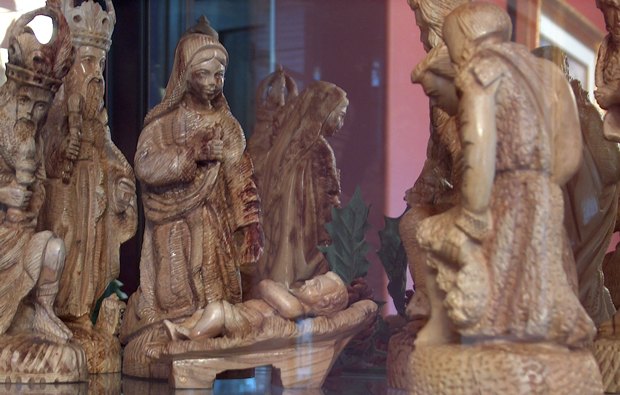
I was only a small child in those days in the little town of Bethlehem; not much went on in Bethlehem then, but our little town was still famous, for centuries earlier, it came to be known as the City of David, for it was King David’s hometown. Yet when I was little, nothing much ever happened there, well that is until the decree came out that ordered a Census.1214 015-crop
Now in those days, the land was ruled by the Romans; we hated the Romans!

Well, I suppose nobody likes a foreign power ruling your country…

Anyway, their King, Augustus was his name, he sent out this decree that ordered the people to go to the town of their forefathers to be counted. Now the only reason they did this was to make sure that they knew exactly how much money they could squeeze out of the folks, poor as we were, so they could build palaces and form new armies to oppress us with.

Yep, those were bad days.

People from out of town began to come to Bethlehem for the census, and one day after school, I was hanging around the main street of town when I saw a curious sight; there was this man who looked to be from Galilee, and his wife coming into town. She was really pregnant; I mean really seriously pregnant, like she was going to have a baby any minute, and she looked miserable, red in the face, sweat pouring down in the sun… I wasn’t sure if I felt sorrier for her or for her husband… she did not look very happy!

I was curious about them, as small boys are about unusual things, so at a safe distance, I began to follow…

The man asked someone for directions to the Inn, and set off to find it. When they got there, I knew they’d have trouble; it looked like it was overflowing with out of towners. Shortly after going inside, he came back out looking dejected as he told his wife there were no rooms to be had. Even I knew there was only one Inn in our little town; I wondered what they would do next, so I followed. After some time, they came upon a man who pointed to a farm a ways away, and they continued. The farmer let them stay in his manger with the animals. I crept closer to hear what they were talking about, and I heard some very curious things:

The wife, whose name it turns out was Mary, kept going on about how there really must be room for them somewhere, because the angel had told her that she was having God’s Son; how could she have God’s Son in a manger with a bunch of animals and such? Apparently, her husband had been visited by an angel too, because he kept saying that the angel he talked to had never said anything about where the baby would be born, just that the baby wasn’t “regular” like.

That was kind of curious for a small boy like me to hear from a grownup; these people seemed a little strange to me, so I kept hanging around.  After a while, I knew it was getting late and I had to get home, but I decided I’d creep out later, after everyone had gone to sleep, to see what happened next.

When everyone was fast asleep, I crept out of our house and headed back into town. It was much cooler in the night air than it had been that afternoon, and I could see the campfires lit by the shepherds out in the fields who were keeping watch over their flocks; those guys were always out there at that time of year, because of the wolves and other wild animals that came in looking for sheep to eat… and that’s when I saw it.

All of the sudden, there was a bright light shining out there in the fields; I have never seen anything like it before or since. It was so bright, that the countryside was lit up almost like daytime. I was scared to death, and judging from the shouts of the shepherds, they were too; what was making that light? I got low to the ground and crawled toward the shepherds, the grass of the fields was cold and damp, but I didn’t care!

As strange as the scene was, I suddenly noticed something even stranger, for then I suddenly realized the light was coming from an angel of God, and the angel said:  “Do not be afraid. I bring you good news that will cause great joy for all the people. Today in the town of David a Savior has been born to you; he is the Messiah, the Lord. This will be a sign to you: You will find a baby wrapped in cloths and lying in a manger.”

I simply could not believe my ears! Those strangers from Galilee! That pregnant woman, her baby and the angel that had spoken to both of them about the baby being special… It was the Messiah; the Messiah was being born in our little town!

Ever since I could remember, the adults talked about the Messiah. The Messiah would come to save us, just like the prophets had said ages before… and I had seen these people, I had followed these people: I knew exactly where they were right now!

I jumped up and started to run, but something else happened right at that moment that stopped me in my tracks:

Right at that moment, the one angel was joined by a whole choir of angels and they said:

“Glory to God in the highest heaven,
and on earth peace to those on whom his favor rests.”

And then they were gone. I was frozen for a minute, and then I heard the shepherds talking about going to the manger to see what all of this was about, and I bolted right past them. They shouted at me, and I just yelled, “Follow me!”

Well, they followed me right to the manger, since I knew which one to go to, and there was the scene; the pregnant woman, Mary, had the new baby in her arms; her husband, Joseph was his name, was there too, looking a little sick.

The shepherds rushed past me and stared. No one spoke, the baby was quiet.

Then the shepherds left and started telling people what they had seen, it created a commotion in town, but still Mary, Joseph and the baby were quiet. Suddenly the shepherds were back, and they told Mary and Joseph what they had seen in the fields, and they shouted praise and glory to God. Mary and Joseph looked at each other, but neither really said much.

A week later they named the child Jesus, which they said is what the angel of the Lord had told them should be his name. People around the town talked a great deal about the three of them in the manger, and about what the shepherds had said about the child and the things we saw out in the fields that night. Some people believed the story, others were skeptical. Sometime later, there were new visitors to the manger, only this time, I seriously kept my distance, for these were rich folks, and wherever rich folks go, there’s trouble. People said these men were kings, or wise men or great teachers from the East, but I don’t know who they were, for they left town suddenly one day and we never saw them again. Then Mary, Joseph and the baby Jesus were gone too. Shortly after that, the soldiers came.

Some thought that the soldiers came to kill the baby Jesus, and most believed that they succeeded, but I knew that the three of them fled the town, because an angel told them there was danger, so they left, but I didn’t tell anyone about that. After the soldiers of the king came and killed all of the baby boys, people didn’t talk much about the strange happenings of the fateful night. In time, people pretty much forgot about the whole thing, but not me, and not those shepherds; we had seen all of it, and we remembered everything.

Many years went by before I heard any mention of Jesus again. By the time I heard of him again, he must have been over 30 years of age. At first, I didn’t think much about it, but then I heard more about him. They called him Jesus of Nazareth, and Nazareth is in Galilee. Some thought that he was a prophet, others thought he might be the Messiah; everyone agreed that he was something to see, so one day, I traveled to see him preach in Galilee. He preached about the Kingdom of heaven and the forgiveness of sins. He healed sick people, made the lame walk and restored sight to the blind; I saw him do it! He even drove a demon out of a man; everyone was amazed. One time, I got a brief chance to ask him if he was that child from Bethlehem that the angels had told the shepherds about. He looked at me for a moment, put his hand on my shoulder and smiled at me, but he didn’t say a word. From then until now, I believed in him, and I’ve followed him ever since.

Posted in Christian Life | Tagged , , , , , , , | 4 Comments

Strange Bedfellows

The Pharisees and Sadducees came to Jesus and tested him by asking him to show them a sign from heaven.

He replied, “When evening comes, you say, ‘It will be fair weather, for the sky is red,’ and in the morning, ‘Today it will be stormy, for the sky is red and overcast.’ You know how to interpret the appearance of the sky, but you cannot interpret the signs of the times. A wicked and adulterous generation looks for a sign, but none will be given it except the sign of Jonah.” Jesus then left them and went away.

Matthew 16:1-4

The Pharisees and the Sadducees were bitter rivals, and for these two groups to work together against Jesus is a bad sign. They came to Him demanding a sign from heaven to confirm His authority to preach, as though they didn’t already know about the miracles and signs He has provided. Can anyone be foolish enough to think that if Jesus performed another miracle, these groups would change their minds about Him?

Of course not, they’d just demand another sign!

Apparently, both groups saw Jesus as a serious threat; so serious in fact, that they were willing to stop fighting each other to team up against Jesus.

Jesus isn’t giving them a sign. Of all of the people of Israel, both the Pharisees and the Sadducees should know who He was, and my guess is that they did know who He was. There would only be one sign for their wicked generation, the sign of Jonah.

Jesus used this same language in chapter 12, and here is the explanation:

Then some of the Pharisees and teachers of the law said to him, “Teacher, we want to see a sign from you.”

He answered, “A wicked and adulterous generation asks for a sign! But none will be given it except the sign of the prophet Jonah. For as Jonah was three days and three nights in the belly of a huge fish, so the Son of Man will be three days and three nights in the heart of the earth. The men of Nineveh will stand up at the judgment with this generation and condemn it; for they repented at the preaching of Jonah, and now something greater than Jonah is here.

Matthew 12:39-41

Jesus has performed many miracles for those who had faith in Him; for those who refuse, there will be only one sign: He will rise from the dead, and that is their only chance to respond. Jesus is not going to play their games.

Of course He has more to say in the next section…

Posted in Bible | Tagged , , , , , , , , | 4 Comments

Feeding the Four Thousand

Matthew 15:29-39

After the incident with the Canaanite woman, Jesus moves back the shore, and the crowd follows. He has just come back from Gentile territory, and the crowd from there is still following; this is important for us to keep in mind, for it is a predominantly Gentile crowd. Although Matthew uses language similar to that of the feeding of the five thousand, this is a different scene, a different feeding.

Pharisees don’t appeal to Gentiles, they don’t eat with Gentiles, they want nothing to do with Gentiles, and you will no doubt remember that in this section, Jesus is teaching the disciples about His identity and purpose, and in this chapter, He is demonstrating the difference between the toxic teachings of the Pharisees, and the inclusive teachings of Jesus.

The people bring everyone who needs healing of whatever kind to Jesus’ feet, and having compassion for them, Jesus heals the lot of them.  Now the Pharisees were righteous men; just ask them, and they’ll tell you. They are motivated by the written code of the Law, and by their traditions; what do you suppose a Pharisee would do in Jesus’ place have compassion for a crowd of Gentiles?

Not likely. It would be more likely for them to tell the crowd that these people are afflicted because they aren’t Jews. But that was not how Jesus used His authority from the Father; He had compassion and healed every last one. I wonder what the disciples thought about all of this…

Jesus, noting that these people had been following Him for days now, thought that maybe they should have a meal so that they wouldn’t collapse from a lack of food…

To make a long story short, He saw to it that they had enough to eat before they headed back to their homes.

Remember back to the way this chapter began: The Pharisees accosted Jesus about the fact that His disciples weren’t following their tradition of hand washing before meals. Remember also that Jesus wouldn’t have any of their hypocritical nonsense; He shut them up, speaking a tad harshly about their traditions. Then He took the disciples to Gentile territory and blew up several more of the traditions and customs of the Jewish religious elite.

He didn’t do any of this to be rebel, He did it to educate his disciples about the Kingdom, His purpose, God’s purpose, and the fact that God was not pleased with the empty forms of the religious elite, for they had ceased to follow God long ago, and the disciples needed to understand that they, and not the Pharisees, were the ones who would one day show the world how to follow God’s ways.

Posted in Bible | Tagged , , , , , , , , , | 2 Comments

A Child’s Bread… and the Dog

Matthew 15:21-28

After His encounter with the Pharisees from Jerusalem in the last section, and His instruction to the disciples, Jesus heads into Gentile territory to show the disciples His teaching in action. Remember that in this section, Jesus has set about to “disciple” the disciples, so they will better understand who He is and what the mission is. So far, they have come to see that He is the Son of God, but that, as big as it is, is only the beginning.

A Canaanite woman appeals to Jesus to help her demon possessed daughter; Jesus does not respond. The disciples ask Him to send her away: Jesus answers, but not their request, saying: “I was sent only to the lost sheep of Israel” (15:24).  That isn’t the end of the matter:

The woman came and knelt before him. “Lord, help me!” she said.

He replied, “It is not right to take the children’s bread and toss it to the dogs.”

Matthew 15:25-26

I just want to be sure that you understand that Jesus just told the woman that she and her afflicted daughter are “dogs”… right? “Dogs” is the word used by the Jews to characterize Gentiles; they were “unclean” and shouldn’t receive the time of day from a “proper” Jew. Obviously the woman caught His drift:

“Yes it is, Lord,” she said. “Even the dogs eat the crumbs that fall from their master’s table.” (15:27)

The “children” refer to the “lost sheep of Israel”, the “dogs” are Gentiles, like this woman and her daughter, and we know who the “master” is.

Then Jesus said to her, “Woman, you have great faith! Your request is granted.” And her daughter was healed at that moment. (15:28)

It looks to me like Jesus just blew up another one of those traditions that the Pharisees were so concerned about.

Here’s the lesson for the disciples, and by extension, for us as well: God couldn’t care less about our traditions and customs and ceremonies and rituals; He cares about our faith. Jesus was sent to save Israel first of all; for they were God’s chosen. Yet, in the end, they placed a higher priority on their traditions than they did on their faith that God would keep His promises. When this conflict, between faith in God and traditions of men arose, Jesus’ reaction was not all that diplomatic, for this conflict, that is still with us today, is nothing less than toxic, and in the end, the one who received God’s grace was the one with faith, not tradition, breeding, position or human righteousness. Instead it was a poor Gentile woman who loved her afflicted daughter, and was willing to put her trust in Jesus.

But wait; that’s not all! We have another whole scene to go… see you next time!

Posted in Bible | Tagged , , , , , , , , | 8 Comments

Jesus, Disciple and Pharisee

Matthew 15:1-20

Matthew continues to move forward in his narrative, and beginning with this passage, he shows Jesus teaching the disciples to keep their distance from the Jewish religious leaders and their teachings. The scene begins with a confrontation between Jesus and some Pharisees who were sent from Jerusalem. They challenge Jesus over the issue of hand washing; His disciples don’t do the ritual hand washing before they eat. The washing of hands prior to eating is a traditional practice of the “righteous”, but it isn’t a requirement of the Law or of any of God’s commandments. Jesus quickly takes the offensives:

“And why do you break the command of God for the sake of your tradition? (15:3).

He continues in 15:4-6 to make His charge that their tradition allowed a person to not honor their parents by dedicating a possession to God, when it was needed by their parents. In order for a person to “honor” their parents, it would have been incumbent upon the person to see to the financial and physical needs of their parents when they were no longer able to work. If the person was wealthy, they might be able to “dedicate” assets to God (whatever that really means in practice) and still have resources to help their parents, but most people are not wealthy, and there is the loophole. They “dedicate” assets to God, give some money to the Temple, and fail to properly care for their parents, and yet still seem to do quite nicely themselves… all with the blessings of the Pharisees, who collect some extra cash in the process: Interesting arrangement.

Jesus equates this with “cursing” one’s parents; His reasoning is that cursing, as in language is a capital offense, and is not neglecting their needs a more serious act than saying something bad? Their little “tradition” might have lined their cash coffers, but it negated a divine imperative in the process… and they are here complaining about hand washing?

Jesus isn’t buying it.

After reciting the prophecy of Isaiah in vv. 7-9, He calls the crowd over in 15:10-11 to tell them that it isn’t what goes into a man’s mouth that defiles him (food from non-ceremonially washed hands) but what comes out of a man’s mouth (like the corrupt teachings of the Pharisees).

The disciples react with concern, for they perceive that Jesus has offended the Pharisees sent to Him from Jerusalem; Jesus’ reaction shows us that He really couldn’t care less that they are offended (15:12-14). Perhaps one of these days, I’ll write a post about that.

Peter asks Jesus to explain His parable, and Jesus explained it like this:

“Are you still so dull?” Jesus asked them. “Don’t you see that whatever enters the mouth goes into the stomach and then out of the body? But the things that come out of a person’s mouth come from the heart, and these defile them. For out of the heart come evil thoughts—murder, adultery, sexual immorality, theft, false testimony, slander. These are what defile a person; but eating with unwashed hands does not defile them.” (15:16-20)

Tradition of the Church requires that I find a spin on this that makes you think that Jesus was always nice, gentle, sweet and diplomatic with the disciples, and with everyone other than the Pharisees, and that He was never all that tough on the Pharisees, but our traditions aren’t much better than those of the Pharisees when you get right down to cases, so here’s the obvious truth: Jesus wasn’t concerning Himself with their little feelings either at that moment. “Are you still so dull?”

The rest of what He said here really doesn’t require any further comment from me.

What happens next in Matthew’s narrative is that Jesus is going to move into Gentile territory and demonstrate this teaching in action in two different scenes, and we’ll get into the first of these next time…

Posted in Bible | Tagged , , , , , , , , , | 7 Comments

Jesus Takes a Stroll

Matthew 14:22-36

This is a familiar story; actually it serves as the ending of the story of the feeding of the 5,000, connected as it is with the previous passage. Since it is a familiar narrative, and since you have a link to the text to refresh your recollection, let’s just talk about the story for a bit; grab a cup of coffee, and let’s chat…

This is not the first story about Jesus, the disciples and a boat on the Lake that we have seen in Matthew’s narrative, and it is inexorably linked with the story we have seen already in chapter 8. Look at the similarities:

In both scenes, the disciples are afraid (8:26 cf. 14:26). In both scenes, Jesus says they are of little faith (8:26 cf. 14:31). In 8:25, they called upon Jesus to “save us”; and in 14:30, Peter calls on Jesus to save him. In 8:27, after Jesus has demonstrated His authority over the elements, the disciples ask “what kind of man is this?” In 14:33, they answer their own question: “Truly you are the Son of God.” This is the first time in Matthew’s Gospel that a human has correctly identified Jesus as the Son of God.

In light of the purpose and mission that these disciples will be called to later on, God has given them the very special opportunity to see just exactly who this Jesus was, for this is something they will need to know. As the narrative continues, they will be led to acknowledge His role and mission as well.

The scene closes when they arrive back on solid ground, with a summary of what Jesus has been doing for some time now; teaching, healing and showing the Kingdom in action.

Now that Jesus has had an opportunity for time alone with His Father, and has revealed to the disciples that He is the Son of God, we continue the disciples’ education out among the people; who do we run into first?

Well, it wouldn’t be any fun without Pharisees… see you next time!

Posted in Bible | Tagged , , , , , , , , , | 2 Comments

Photo of the Week: December 16, 2015

This morning’s sky, just at sunrise…

Posted in Photo of the Week | Tagged , , , , , | 9 Comments

Jesus Steps Out of the Spotlight…

…and the crowds went with Him!

Matthew 14:13-21

When Jesus heard what had happened, he withdrew by boat privately to a solitary place. Hearing of this, the crowds followed him on foot from the towns. (14:13)

When Jesus heard about the brutal murder of John the Baptist in Herod’s jails, He withdraw from the public spotlight, and Matthew begins a new section in his narrative, a section in which Jesus seeks to spend time working with His disciples so that they might come to understand both His identity and His mission.

But the people were loathe to let Him step into the background, and when they heard that He had departed from Nazareth and was headed to the far side of the Sea of Galilee, the word spread quickly, and by the time Jesus and the Twelve arrived, there was a very large crowd waiting for them. Notice in the text that Jesus, who was trying to get away from crowds, took pity on them and healed all who needed healing, rather than either sending them away or moving on Himself.

I’m thinking that you could easily write an entire post just about that.

As it was getting late, and they were in a remote location, the disciples suggest to Jesus that He send them on their way so they would still have time to buy something to eat in the nearby towns, but Jesus had another idea: Why don’t you guys give them something to eat?

Sadly, they only had a few loaves of bread and two fish with them, but Jesus told the crowd to take a seat in the grass and then began to multiply the food on hand, and they ended up feeding 5,000 men, plus women and children. How many people in total were fed with a few loaves of bread and two fish? Although I know of a few scholars who have somehow calculated the “exact” number, I’ll just leave it a 5,000 “plus” and be satisfied that we have a major miracle on our hands.

Oh yes, I almost forgot; they also had 12 baskets of leftovers…

So much has been written about this series of events, so many sermons, lessons… and so much speculation about the circumstances of Jesus’ attempted withdrawal, Herod’s intentions toward Jesus in light of his fear that Jesus was John come back from the dead to get him, not to mention moralizing about the miracle itself. Let’s approach it a little differently…

What is actually in the text?

  1. It’s getting late in the day, and the people are in a remote place; there isn’t even a McDonald’s nearby.
  2. The disciples, good men that they are, notice that there might be a problem coming along with the lack of food for this large crowd of people, and suggest that Jesus send them on their way while they can still buy something to eat.
  3. Jesus, who has withdrawn to “disciple” the disciples, throws the challenge back on the Twelve: You find them something. No problem right? After all, there are only 5,000 plus hungry mouths to feed.
  4. The disciples attempt to deflect this impossible task by pointing out (accurately) that they only have five loaves of bread and two fish. In their defense, I’m not sure that five loaves of bread and two fish are quite enough to feed 13 grown men after a long journey and a very full day with the crowd. Yet, it would seem they have overlooked something in their human thinking; they were in the presence of the Kingdom of heaven.
  5. Jesus took care of the rest.

Could it be that Jesus is trying to teach the disciples that in our very rational and reasonable human thinking, we tend to forget that we have more than human potential to help us deal with the challenges we face? It seems worth considering to me.

Posted in Bible | Tagged , , , , , , , , , | 7 Comments

“Sorry, we don’t have any vacancies”

121513 010-LR

 So it was, that while they were there, the days were completed for her to be delivered.  And she brought forth her firstborn Son, and wrapped Him in swaddling cloths, and laid Him in a manger, because there was no room for them in the inn.

Luke 2:6-7

When the Son of God was born on this earth, the birth took place out in a barn because there was no room at the Inn; unbelievable!

Can you imagine anything more ridiculous?  The very incarnation of God, and no one can open their doors… “Well, you can stay in the barn I guess, but don’t touch anything!”

There are many ways to look at this, and preachers have done their sermons on it for years, and yet it still amazes me.  Look, if Joseph and Mary came to my house and needed a place to stay, I’d make room for them, wouldn’t you?  Imagine having Jesus born right there in the guest room; wow!

Wait a minute!  That way of thinking is ridiculous, isn’t it?

My door would be open to really good friends or family, but not to a dirty couple of strangers, and certainly not for a home birth… think of the mess, and how do I know they won’t steal something?

Suddenly this isn’t such an easy thing, is it?  Do we really welcome strangers in the 21st century?  No, but sometimes we talk a good game. Our world is a dangerous place, you can never tell who is some kind of a criminal… no, it’s better not to be involved. “Are there no prisons, are there no workhouses?”

Being entirely serious, there is a real dilemma here for a Christian.  We know what Jesus said about entertaining strangers and we know the whole concept of showing His love to those around us, but is it just a concept; some sort of a metaphor?

Here is what I can say for certain: It is no metaphor.  Sharing Christ’s love with strangers is a real thing, not a metaphorical concept.  On the other hand, having perfect strangers in one’s home overnight is risky to say the least, and I don’t know how to reconcile the two; apparently the people of Bethlehem didn’t either, but God used the situation to bring glory to Himself.  God showed us that even those in the most humble of circumstances could be the greatest of blessings to Mankind, and the mightiest of His servants.  It has always struck me fairly hard that Messiah did not come as someone in high society, but as a common working class man from “fly over country.”

Over the years, I haven’t had the best of luck trying to lead the poorest and most humble of people to Christ, to be honest.  I don’t even speak the language of the inner city or rural poor, and yet I’ve seen others do amazing work in these areas.  I’ve had more success with the educated, while those I’ve met who work with the poor have not.  It might just be that each of us has his or her own ‘calling’ as to who we can best work with, but I’d like to share an idea with you, and in so doing remind myself of it:

It is true that each of us has a calling in some area with the spiritual gifts to go with it, but all of us have an imperative to share with those God brings across our paths. We mustn’t say that a person God brings to us isn’t the right one for us to share with. This can be uncomfortable sometimes, but that’s no excuse; who can say what God is up to?  We might just be the one who plants a seed that results in a glorious harvest that someone else brings in later that we never even find out about.  The only way to be sure is to never share at all, and then we can be sure that we have frustrated the spread of the Gospel of Salvation.

O Lord, guide us and lead us to do your will in all things!

Posted in Bible | Tagged , , , , , , , , , | 15 Comments

John the Baptist Attends a Party

Matthew 14:1-12

This passage is the last in the section of Matthew’s Gospel that began in 11:2 in which were have seen the growing misunderstanding and rejection of Jesus and His message of the Kingdom of heaven. In this passage, we see just how twisted and extreme the misunderstandings became, and how deadly their results would become. Yes, John would be seen at Herod’s party, but not all of him would be there…

According the first century Jewish historian Josephus, Herod ordered the arrest and imprisonment of John the Baptist because John had publicly denounced Herod’s wedding to his sister-in-law, Herodias. As we see from 14:6-11, Herod, who was afraid to have John killed, found himself in a position from which he could not extricate himself without having him beheaded, and so it came to pass that John the Baptist was murdered at Herod’s command, and his head was brought to Herod’s birthday party on a platter and presented to his niece who was also his step daughter. Two things really jump off the page for me in this story: One is the curious way that Matthew tells the story; it is a “flashback”. Second is Herod’s reaction to Jesus’ miracles, assuming as he did that Jesus’ miraculous abilities must mean that He was John the Baptist risen from the grave.

This dude was a loon, no getting around that!

Yet that isn’t what Matthew is really getting at.

Focus on the very depth of Herod’s misunderstanding of what is going on around him; it doesn’t seem to occur to him who Jesus might really be, but then Herod wasn’t a Jew, was he? He had been afraid to kill John not because of who John was, but because he had been popular with the masses. Yep, that’s right; Herod’s fear was motivated by nothing more than politics. Nevertheless, his fear that Jesus could be John come back from the grave is very real indeed, and as the story goes on, it will result in a very odd political alliance between the Jewish religious leaders, who want Jesus out of the picture, and Herod, their enemy, who also wants Jesus out of the picture.

Oh the tangled webs we weave!

So then, why does Matthew introduce this story in the unusual manner that he did?

You might recall that when Jesus learned of John’s imprisonment in 4:12, Jesus responded with a decisive move, taking His ministry out of the shadows and into full public view. When Jesus learns of John’s death, He makes another decisive move, this time, stepping back from full public view, and as a result, Matthew’s narrative moves into its next main section that extends from 14:13 -16:20 in which the main emphasis is on Jesus teaching His disciples exactly who He was, and what the purpose of His mission was, for make no mistake; His disciples were not yet clear on either of these things.

We will pick up the story next time, and see what happens when Jesus tried to step out of the public spotlight…

Posted in Bible | Tagged , , , , , , , , | Leave a comment