Jesus Tells the Disciples Why They are Going to Jerusalem

Jesus took the Twelve aside and told them, “We are going up to Jerusalem, and everything that is written by the prophets about the Son of Man will be fulfilled.  He will be delivered over to the Gentiles. They will mock him, insult him and spit on him; they will flog him and kill him. On the third day he will rise again.”

The disciples did not understand any of this. Its meaning was hidden from them, and they did not know what he was talking about.

Luke 18:31-34

When you come right down to it, there really isn’t all that much to say about this passage. Jesus told them very explicitly why He was going to Jerusalem. Yes, of course, it was for Passover, but in reality, it was for a great deal more than that; He was going to fulfill His Messianic destiny.

Which was to be killed by evil men.

Luke tells us that the meaning of this was “hidden” from the disciples; maybe Luke’s meaning is hidden from us!

Do you suppose that the Holy Spirit or the Father had somehow intervened so that the disciples would be incapable of comprehending what Jesus has just told them so graphically and unambiguously?

Or maybe they were just stupid or something…

Personally, I doubt highly that God was keeping the truth from them, for if He was, why would Jesus have bothered to tell them what was going to happen; this is the third time He has told them. I also know full well that they were not stupid; they were actually rather clever as we see elsewhere.

So what’s going on here?

It seems to me that there are two complications: First, Jesus isn’t making it any easier for them to understand, even though He is speaking in graphic terms, for while He does so, He is also speaking the third person: “The Son of Man” and “he”, rather than “I” and “me”. The second complication is that the disciples believe, like everyone else, that Jesus’ Messianic destiny is to march into Jerusalem, overthrow the Romans and restore Israel to its former earthly glory as king. In fact, these assumptions have quite clouded their perception of so many obvious things throughout this story, just as many of our assumptions cloud our perceptions about many things today.

For this reason, it is no mistake that the next event chronicled by Luke involves a blind man…

Posted in Bible | Tagged , , , , , , , , , | 4 Comments

The Rich, The Way and The Kingdom

Luke 18:24-30

Jesus was fully aware that the disciples would be confused after His conversation with the rich man because, as we noted last time, He had blown up a major cultural expectation of the time that the rich were more favored by God than others were. As a result, He begins to teach them, even while the man is standing right there…

Jesus looked at him and said, “How hard it is for the rich to enter the kingdom of God! Indeed, it is easier for a camel to go through the eye of a needle than for someone who is rich to enter the kingdom of God.” (18:24-25)

The rich man hadn’t been overly enthused at the prospect of giving up all of his wealth, and Jesus underscored the difficulty that many have in entering the Kingdom and leaving the priorities of this world behind. Looking at His example here of putting a camel through the eye of a needle, I think we can safely say that He was engaging in a touch of hyperbole to make the point. The reaction of the disciples speaks volumes about the prevailing assumptions of that culture: “Who then can be saved?”

If you notice, Jesus in His answer blows up a second predominant assumption of that time:

“What is impossible with man is possible with God.” (18:27)

There are two cultural teachings that are being corrected here: First, that the rich are most favored by God, and the second is that a person can attain righteousness by reliance upon their own ability to keep the Law; both of these are false. This second teaching is still with us, sometimes it is obvious, and sometimes it is more subtle, we call it “works”. You cannot earn your way into the Kingdom by following the rules, “doing church right” or by doing good deeds, for you can only enter the kingdom by faith in God through Christ. Can the rich enter the Kingdom? Yes, they can, by placing their faith in God, and not in their earthly possessions and positions.

Peter is beginning to comprehend: “We have left everything to follow you!  (18:28)

In reply to Peter, Jesus indicates that there may be more than just “stuff” that can get in the way…

“Truly I tell you,” Jesus said to them, “no one who has left home or wife or brothers or sisters or parents or children for the sake of the kingdom of God will fail to receive many times as much in this age, and in the age to come eternal life.” (18:29-30)

Notice the relationships that may also need to be left behind, notice also that they are in the same list as “home”, Matthew has “fields”, which is to say material possessions. The real point is that the follower of Christ must be willing to leave anything behind if it interferes with following Him, for with the Kingdom, you are either “all in” or all out. Aren’t these things that we all struggle with at one time or another?

This is one of those cases when the theology of the teaching is very simple, but living it can be difficult, yet with God, all things are possible. Consider this: The man who wrote Matthew’s Gospel was a tax collector. He was rich, he also had a family, friends and associates, but by the grace of God, he was one of the Twelve, and he wasn’t the only one. Remember Zacchaeus? Joseph of Arimathea? Saul of Tarsus?

With God, all things are indeed possible!

Posted in Bible | Tagged , , , , , , , , , | 10 Comments

Jesus Meets a Rich Ruler

Luke 18:18-23

This account matches up quite nicely with Matthew’s (Matt. 19:18-22) although Matthew tells us that the rich man was young as well.

Social conventions and customs are a funny thing; they influence most of us in a way that enables us to make sweeping assumptions concerning great truths, even eternal ones, and yet those very conventions change often through history. We should take this reality as a warning to question the social conventions of our time, and this tale is a case in point. In Jesus’ day, as in many other historical periods, it was assumed that most wealthy people were the ones favored by God; why else would they be so blessed? Yes, some were not so ethical in their conduct, but many were good, hard working people, the bedrocks of the community; surely God’s favor was upon them!

What a contrast to those little children in the last scene, those little ones that represented vulnerability and humility. Right after Jesus commented about the little ones, a rich young man walks up to Him and asks a question:

A certain ruler asked him, “Good teacher, what must I do to inherit eternal life?” (18:18)

Here’s a guy who appears to have it all, but he apparently believes that he is lacking in the way he has led his life; there is an element of humility here that we often overlook. In the dialogue that follows, we learn more about this young man:

“Why do you call me good?” Jesus answered. “No one is good—except God alone. You know the commandments: ‘You shall not commit adultery, you shall not murder, you shall not steal, you shall not give false testimony, honor your father and mother.’”

“All these I have kept since I was a boy,” he said. (18:19-21)

In Matthew’s account, the man asks Jesus what he was still lacking right here. This young man was righteous, and appears to have good intentions, and as you will see, Jesus doesn’t dispute his claim that he has kept all of those commandments. It would also appear that the man was beginning to realize, perhaps more quickly than the disciples, that merely keeping commandments as was the Jewish prevailing thought, wasn’t quite enough, after all, why else would he have asked Jesus in the first place? Yet, he still seems to have believed that eternal life was contingent upon his ability to do something. Maybe he was right:

When Jesus heard this, he said to him, “You still lack one thing. Sell everything you have and give to the poor, and you will have treasure in heaven. Then come, follow me.”

When he heard this, he became very sad, because he was very wealthy. (18:22-23)

Jesus told the man to sell everything he owned, give money to the poor and follow Him. I cannot over-emphasize how radical this was, for the prevailing thought of those times said that the rich were blessed, worthy and most favored of all, yet Jesus told the man to liquidate and give to the poor. Notice, He didn’t say to give everything to the poor (as some older translations say) but the implication is clear enough. The story ends with the man going away sad, because he had great wealth.

Traditional teaching assumes the man did not do as Jesus told him, but I want to point out that the text doesn’t say so; maybe he did, maybe he didn’t… but he was sad.

This is where we like to bash people who have more than we do; I can’t tell you how many times I have heard this in class discussions and sermons and how many times I have read it, but I would suggest that we should not go rushing into this too quickly. I have known quite a few people who are quite wealthy, rich people, and they usually discover that their wealth, while handy for sure, is also a millstone around their necks; a burden more than a pleasure. Yet once they have it, it is hard to let go of. Even so, let’s not concentrate on those who have more than we do, let’s look in the mirror instead, for there is where Jesus message, and the young man’s predicament resonate:

Suppose Jesus came to you and told you to liquidate everything you have, that’s right dear reader, sell all your possessions, give to the poor and follow Him.

Would that make you happy?

If you answer “yes” to that question, then let’s take a closer look: Your home, your car(s), your accounts, retirement plans, investments, kids’ college funds, the contents of your house… everything. You show up to follow Jesus with only the shirt on your back. Hold on, the shirt on your back is also a possession, so you show up without even a shirt on your back or anything else, to follow Jesus. Are you happy?

More importantly, would you do it?

Maybe we should think carefully before we make this all about pointing fingers at others!

The good news is that we are still in that section where the instruction is for the disciples, and in the next part, we will see what Jesus has to say to them; will it get easier? Well, you’ll have to come back next time to find out!

Posted in Bible | Tagged , , , , , , , , , | 10 Comments

A Brief History of Progressivism: Episode 4

Christianity and the State

Individuality means tyranny

Walter Rauschenbusch

While Woodrow Wilson “evolved”, a great deal was happening in Progressive circles; there were many voices from various points of view. In all of the noise, something fascinating began to take place, Christianity became as one with Progressive socialism. In time, Woodrow Wilson would personify the union of the two.

Of course not all Christians would have anything to do with such things, but a movement began to take place, a movement that came to be called the “Social Gospel Movement”. The driving force behind the Social Gospel was that society’s many problems needed Christian solutions that were applications of Christian “laws” to social circumstances. Problems such as poverty, alcoholism, child labor, employee rights and crime ran counter to the teachings of Scripture, and the leaders of the Social Gospel believed that the only way to correct these social problems was by the imposition of the “Christian ethic” on the State, and the State imposing it on the population.

In the early days of the Progressive Era, this was a popular and well received idea.

Walter Rauschenbusch put it this way:

“New forms of association must be created. Our disorganized competitive life must pass into an organic cooperative life.”

Rauschenbusch and the other leaders of the Social Gospel believed that the State was the right arm of God and the means by which the Nation and the world would be redeemed. 1  You might guess at this point that there was more involved theologically in this, and there was: The Social Gospel, in its early days, was based upon a Postmillennial understanding of the New Testament, which holds that before Christ can return to the earth in the Second Coming, the world first needed to become purified and uncorrupted by sin, and that their Social Gospel, with the State as its right arm would eventually usher in Christ’s return.

To be quite fair to the early Social Gospel, this was also the view of several of the framers of the Constitution back in 1787, although they sought a radically different path to accomplishing it.

Many people, especially in the middle class, found this new view of things frightening, and did not go along with it. This group Included such well-known preachers as Dwight Moody who believed that the Gospel was about receiving salvation for the soul, rather than a basis for State control of everyday life. With that, the battle lines were drawn.

The Social Gospel Progressives began early in an effort to separate children from their families ideologically, expanding greatly public schools and supporting compulsory education, which on the surface seems great; we needed to educate our young of course, but there was a more sinister side to it, for children were then taken into something completely new: Kindergarten. Many people objected to this, and as time went more and more people began to notice that what many children were learning in school was at sharp odds with what their parents believed in many areas of life. As we all know, these issues are still controversial in the early 21st century. Woodrow Wilson himself would comment on the nature of education as president of Princeton University: “Our problem is not merely to help the students to adjust themselves to world life… [but] to make them as unlike their fathers as we can.”

As our story continues in upcoming episodes, we will see a great deal more about how the Social Gospel became an important part of early Progressivism, and how it was later purged. To wrap up this episode, I am going to put a number of links in this post for those who are interested in finding out more about the early Social Gospel Movement and its leaders. Please note that these are Wikipedia links, and Wikipedia is not the most reliable source of information. In reading these articles, I think they are more than fair, but the more important resource than the articles themselves, is the links they contain at the end, which lead to some very good online sources, for your further review.

The Social Gospel Movement

Early Leaders:

Washington Gladden

Walter Rauschenbusch

1  Rauschenbusch, Walter. A Theology for the Social Gospel. New York: Abingdon Press, 1917.

Posted in Progressivism | Tagged , , | 14 Comments

Give Thanks!

ps107

I’d say that about sums it all up!

Posted in Christian Life | Tagged , , , , , , , , | 1 Comment

Random Ramblings: March 4, 2017

Today is Inauguration Day!

OK, no it isn’t, but it used to be.

Isn’t that great to know? Well it might come in handy at a trivia contest…

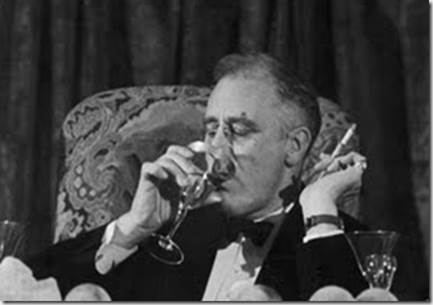
March 4 is the date when the terms of the president, vice president and members of Congress begin and end as written into the Constitution way back at the beginning; this continued until the 20th Amendment was passed in 1933.roosevelt

Why did they change the dates?

The framers of the Constitution set March 4 as the date to allow four months to pass between the elections in early November and the beginning of terms for the simple reason that everything took longer to accomplish in the 1700’s. Votes took a long time to count, news travelled slowly, more time would be needed to assemble the Electoral College, and it took longer for a president to put his Administration together simply because communication and travel took time in those days.

President Franklin Roosevelt, who was first elected president in 1932 wanted to get moving very quickly and was quite frustrated apparently with the waiting… As we know, once in office, he moved with (you’re going to love this…) Trump like speed in pushing forward his agenda in his first hundred days in office. During his first year, he pushed hard for both the 20th and 21st Amendments to the Constitution. The 20th Amendment changed the dates terms expired and began from March 4 to January 20 since things could move so much more quickly in the 20th Century than in the 18th. The 21st Amendment was the repeal of Prohibition which of course made his famous martinis legal.

Oh yes, FDR was very proud of the “Roosevelt Martini”!

Yes, yes I realize he might have had other reasons for the repeal of Prohibition than just to legalize his martini.

At any rate, now you can go to your next “trivia night” armed with some not very useful information that might just put you into the winner’s column.

Would you be surprised if I told you that I sat down intending to write a completely different post, about computers actually, and that this just popped into my admittedly strange mind when I typed “March 4, 2017”? Well dear readers, that’s why these ramblings are called “random” I suppose…

Posted in Random Ramblings | Tagged , , , | 1 Comment

Humility

People were also bringing babies to Jesus for him to place his hands on them. When the disciples saw this, they rebuked them.  But Jesus called the children to him and said, “Let the little children come to me, and do not hinder them, for the kingdom of God belongs to such as these.  Truly I tell you, anyone who will not receive the kingdom of God like a little child will never enter it.”

Luke 18:15-17

This is another story with which we are all quite familiar. The disciples sought to keep the children away from Jesus as He taught the people; children can be such a distraction and Jesus was doing important work. Jesus saw things differently, explaining that we must receive the Kingdom like little children.

What is it that little children bring to the party? They have no money or resources, they have no social position or influence in the community. They have no accomplishments or knowledge to speak of; nobody respects them. In fact, little children are messy, loud, and uncouth and they consume resources without contributing much of anything in return other than the occasional “cute” moment.

Little children are innocent, they must be dependent on their parents for everything; they have no guile. Of course this is precisely the point Jesus is making. To enter the Kingdom of God, we must be like little children, entirely dependent upon God for our provision and our acceptance, for we bring nothing to the party other than ourselves in complete humility. Again, Jesus is making quite a contrast between God’s ways and the ways of men, for this kind of thinking is quite the opposite of our earthly way of looking at things.

Posted in Bible | Tagged , , , , , , , , | 3 Comments

A Pharisee and a Tax Collector

To some who were confident of their own righteousness and looked down on everyone else, Jesus told this parable: “Two men went up to the temple to pray, one a Pharisee and the other a tax collector.  The Pharisee stood by himself and prayed: ‘God, I thank you that I am not like other people—robbers, evildoers, adulterers—or even like this tax collector.  I fast twice a week and give a tenth of all I get.’

“But the tax collector stood at a distance. He would not even look up to heaven, but beat his breast and said, ‘God, have mercy on me, a sinner.’

“I tell you that this man, rather than the other, went home justified before God. For all those who exalt themselves will be humbled, and those who humble themselves will be exalted.”

Luke 18:9-14

Luke sets this parable up in an interesting way, because he mentions no particular scene change, and has Jesus talking to people who are “confident in their own righteousness”; has he turned back to those Pharisees and teachers of the law, or has another group come along? Recall that we are on the road heading for Jerusalem…

Whoever it was, He tells a short parable that goes right at the attitudes of their day, that some people are “better” than others because they have achieved righteousness through their observance of a form of worship.  The Pharisee in the parable is praying a prayer of thanksgiving in which he is thanking God for making him better than other people. Honestly, I cannot imagine such a thing as this; such audacity…

But this is a parable after all.

The tax collector humbles himself, acknowledges his sin and asks for God’s mercy, as well he should, as well as we all should. It is the tax collector who is “justified” before God, not the righteous Pharisee, for the tax collector humbled himself and put his trust in God, while the Pharisee exalted himself and trusted his own ability to keep the law.

All God wants from us is that we humble ourselves and trust Him. When we do so, His grace is sufficient for salvation. Yet should we exalt ourselves and consider ourselves better than others for our ability to keep the law, we will be condemned by the law and our own excessive pride. Quite frankly, to thank God for making us “better” than everyone else is to bear false witness right to God’s face.

Yikes!

Posted in Bible | Tagged , , , , , , , , , | 5 Comments

A Persistent Widow

Then Jesus told his disciples a parable to show them that they should always pray and not give up. He said: “In a certain town there was a judge who neither feared God nor cared what people thought.  And there was a widow in that town who kept coming to him with the plea, ‘Grant me justice against my adversary.’

“For some time he refused. But finally he said to himself, ‘Even though I don’t fear God or care what people think, yet because this widow keeps bothering me, I will see that she gets justice, so that she won’t eventually come and attack me!’”

And the Lord said, “Listen to what the unjust judge says.  And will not God bring about justice for his chosen ones, who cry out to him day and night? Will he keep putting them off? I tell you, he will see that they get justice, and quickly. However, when the Son of Man comes, will he find faith on the earth?”

Like 18:1-8

The scene has not changed from the last passage (Luke 17:20-37), Jesus has just said “Where there is a dead body, there the vultures will gather.” Then He tells this parable to clarify things.

It is not a difficult parable to understand: God hears our prayers, and comes to the aid of His persistent children in this life. Jesus assures the disciples that there will be justice; this is easy to see. The “kicker” is at the very end:

when the Son of Man comes, will he find faith on the earth?

Do you remember their question (17:37), “Where Lord?” Remember His answer (17:37)?

There is a considerable controversy over when and where He will return, as I mentioned last time. There are books, videos, presentations, even blogs that are filled with speculation, but none of this builds faith; it is a distraction. How many come to Christ because they are afraid He will return next week and they need to get their house in order? How many non-Christians read those end of the world books? How many Christians draw closer to God while arguing about the Second Coming and End Times?

The disciples had much more important things to worry about, and so do we. We and they have been tasked with taking His love to a dark world that so desperately needs it, and we cannot do this while arguing about the end of the world, particularly when Jesus’ entire guidance on the subject is that it will be a surprise and we must be ready whenever it happens.

Don’t worry; God will do His part we need to worry about doing our parts.

Oh my, there’s another parable coming up in the next passage…


Posted in Bible | Tagged , , , , , , , , , | 2 Comments

Not an Easy Question

Luke 17:20-37

On a particular occasion some Pharisees asked Jesus when the Kingdom of God would come (17:20). In His answer, He both conceals and reveals the answer; it’s one of those “he who has eyes to see” kind of answers. He says that the coming of the Kingdom isn’t really something that you can observe; it’s just there ”because the kingdom of God is in your midst.”

Jesus Himself was the embodiment of the Kingdom.

Then, to the disciples but not to the Pharisees, Jesus tells them quite a lot more, but He isn’t exactly addressing the same question…

“The time is coming when you will long to see one of the days of the Son of Man, but you will not see it.” (17:22)

In the remainder of this passage, Jesus is telling the disciples about the coming of the Kingdom in its consummation upon His second coming. There are difficult times ahead for the disciples, and for all of His followers, and they will wish for His return, but they will not have it yet.

There will be rumors and people will say that He has returned, but they will be wrong, for when He returns, everyone will know because His Second Coming will  be sudden and not in secret (17:23-25).

When exactly will He return?

Nobody knows, yet every generation was sure theirs would be the one to see it, including our own, yet all have been mistaken so far. Jesus would suffer at the hands of the generation living at that time, in fact He was heading to Jerusalem for just that purpose, then He would rise from the grave and be taken to heaven, and the Kingdom of God would enter a new phase as the church. In Jesus’ day, He embodied it, in our day it is embodied in His Body, the church. Then, at a time as yet unknown, He would return to judge the Nations and the Kingdom would be consummated in eternity… and when this will happen, will be a surprise.

Just as in the days of Noah, everyone will be surprised. Just as in the days of Lot, everyone will be surprised (17:23-29). Things will be moving along as always; business as usual: Then Judgment. Over the centuries that have followed, many have speculated, books have been written, sermons have been preached, claims have been made, videos and movies have been sold… and every single one has been wrong. He will come when we do not expect it.

When He does come, it will be for judgment. Verses 30-35 describe the Final Judgment; one is taken to the Kingdom, one is left for judgment. Why do I say this so clearly, you ask? Simple, because the context requires it. He is talking about a) the Kingdom (v. 20) and b) His coming (v. 22).

Finally, the disciples ask “where” (17:37). It is apparent they have been confused by His mention of one being “taken” and the other “left”; where were they taken; where were they left?

Who came blame the disciples for being confused, when scholars have been fighting over the answer to that for centuries; this is a tough text to understand, and many see it quite differently than I do, and if you are one of those, that’s perfectly all right.  I’ve approached simply by following the rules of grammar and context, recognizing that this passage is chock full of apocalyptic elements that are found throughout the Scriptures, and many others apply different methods of understanding it. One day we’ll all find out, and most likely we will all have gotten some parts right, and some parts wrong, so let’s not go crazy about this now, for He will come when and where He comes.

“Where there is a dead body, there the vultures will gather.”

Posted in Bible | Tagged , , , , , , , , , | 12 Comments