Bonus Post: The Passion Narrative

Matthew 26:1-28:20

This final section of Matthew’s account of Jesus is quite interesting for several reasons and is deserving of a little extra background information. To begin, it is comprised of three parts, the first of which runs from 26:1-56 in which Jesus actively predicts and accepts the course of events that culminate in His death. In these scenes there is a cohesiveness that is comprised of Jesus’ own words that detail coming events, and even set them in motion; they are punctuation by prophetic announcements concerning upcoming scenes (See 26:3, 12, 18, 21, 24, 31, 32, 34, 45, 50, 54, 56). With this continuing contrast between Jesus’ foreknowledge and His constant determination to do the Father’s will (cf. 26:34, 39, 42, 54, 56) Matthew shows us that the Passion of Jesus was not a strange twist at the end of the story, but a conscious and voluntary self-sacrifice made to accomplish God’s will.

The second part extends from 26:57-27:50, in which Jesus moves away from being an active participant and into a passive role, seldom speaking and silently enduring pain and humiliation as God’s suffering servant. Following Jesus’ death in 27:50, God once again takes an active role in the story, confirming His pleasure with His Son’s actions through miraculous signs of approval. As a result, the mocking of the Jewish leaders in 27:38-41 is replaced by Gentile onlookers’ claim that Jesus was “the Son of God” (27:54). The Jewish leaders take every precaution to ensure that no one can claim Jesus had risen from the tomb by posting guards; yet He bursts forth from that very same tomb. You no doubt know the story and the series of events; God is quite active in the remainder of the narrative.

There is another aspect of the Passion that might be of interest: The Passion has many parallels with the opening section of Matthew’s Gospel (1:1-4:17). The concluding section of Matthew’s account brings to a climax the rising Jewish opposition that began way back when Herod attempted to kill Jesus at the time of His birth (2:16-18 cf. Rev. 12:1-4). We might also note that early in the story, the “chief priests and teachers of the law” are aligned with political forces in opposition to Jesus (2:4-6). In addition, the final section resumes the emphasis on prophetic fulfillment in a manner parallel to the opening chapters (Chs. 1-5 cf. 26:56, 59; 27:9-10). The latter chapters also abound with references to Old Testament texts (e.g. Ps. 22, 69; Zech. 11:13; Is. 50-53).

There are many themes, ideas and phrases that were found in early chapters which are repeated in the final section such as forgiveness of sins (1:21; 9:6; 20:28; 26:28), as well as terms relative to Jesus such as Christ, King of the Jews, shepherd and  Son of God. Even the mocking scenes have a parallel in the Temptation narrative (4:1-11) when the mockers take on the role of tempters to try and deflect Jesus from His course of doing God’s will.

Finally, the ending of the narrative (28:18-20) recalls the themes of: A mountain as the place of revelation, the universal appeal of the Gospel and the abiding presence of Christ, and with this abiding in the last sentence, it is as though Matthew has taken us full circle, back to Jesus in Galilee. Clearly, with this final command to teach “everything I have commanded you” we find that the entirety of Matthew’s narrative becomes an active part of our Christian lives.

Posted in Bible | Tagged , , , , , , , , | 5 Comments

In the Garden

Matthew 26:36-46

Matthew shifts the scene to the Garden of Gethsemane (which means “oil press”). This is another scene that is no doubt a familiar one for most all of us, a scene that has an odd feel to it, when we see the contrast between the Jesus of the prior scenes, confidently predicting His death, secure in the knowledge that He is doing His Father’s will, and the Jesus of Gethsemane who is troubled and mournful, asking His Father for another way. It might prompt us to ask, “Is there an internal conflict going on?”

I don’t think there is, but at the same time I must admit that off the top of my head, I can’t think of another scene in which Jesus seems conflicted about anything, maybe we’d better have a look at His Gethsemane prayer!

Here’s the scene: They went to Gethsemane where Jesus left 8 disciples, went a little further with 3 disciples, left them and went still further to be alone to pray. As the disciples were being placed in their positions, Jesus “began to be sorrowful and troubled” (26:37).Jesus told the three that   “My soul is overwhelmed with sorrow to the point of death. Stay here and keep watch with me” (26:38) Matthew records these words as His prayer:

“My Father, if it is possible, may this cup be taken from me. Yet not as I will, but as you will.” (26:39)

“My Father, if it is not possible for this cup to be taken away unless I drink it, may your will be done.”  (26:42)

Matthew also tells us that Jesus “fell with his face to the ground” in 26:37, and that He prayed the same thing a third time in 26:44. Interestingly, he only gives us one-liners for the prayers, yet Jesus was praying long enough for the disciples to fall asleep, so we can safely assume that more was said in those prayers…

One of the highest and boldest forms of piety in Israel was the prayer of lament (cf. Ps. 31:10; 40:11-13; 42:6, 9-11; 43:1-5; 55:4-8; 116:3-4) and it was not all that unusual for someone to ask God to change His mind (cf. Ex. 32:10-14; 2Kings 20:1-6; 2Sam 15:25-26).

Jesus knew His mission, He was OK with His mission; He was determined. Yet, as the hour approached, He seemed to wonder if there might be another way to accomplish it, for He was fully human after all. Notice what He did: He took this to His Father in an attitude of submission; for He would do His Father’s will whatever that will turned out to be. Please take special note of this, for He was troubled and He cried out to God in submissiveness, not in rebellion. That is where we tend to go wrong, don’t you think? We might cry out to God, but we don’t always do so in submission to His will, preferring our own plans instead.

Apparently, Jesus got the “go ahead as planned” message from His Father, for we see these words in the concluding verses of this passage:

Then he returned to the disciples and said to them, “Are you still sleeping and resting? Look, the hour has come, and the Son of Man is delivered into the hands of sinners. Rise! Let us go! Here comes my betrayer!” (26:45-46)

From that moment forward, there were no doubts, no questions; God’s redemption of Mankind would move into full execution.

Those disciples? Obviously they had failed to grasp the gravity of the situation, as they would continue to do, as the most momentous events in all of history unfolded…

Posted in Bible | Tagged , , , , , , , , | 2 Comments

Predictions of Desertion

Matthew 26:31-35

In the entire series of events beginning with the plot of Judas and ending with his suicide, the disciples aren’t portrayed in a very flattering light, but Jesus isn’t surprised by any of this, in fact He predicts it. It is really quite easy for us to look down our very righteous noses at the disciples’ actions that night; yes they failed miserably. Would we have acted differently in their places?

I rather doubt it. Trying to honestly place myself in their shoes, I must (grudgingly) admit that the scene in the Garden when the mob comes to arrest Jesus would probably have done it for me, for seeing this Man whom I had witnessed walking on water and calming storms being taken away quietly by such a motley force would simply have blown my mind, and even now, knowing how the story ends… it still blows my mind! No, I don’t think I’ll be joining the finger-pointers on this one.

Jesus tells them that on this night they will all disown Him, citing the prophecy from Zech. 13:7, and they are astonished, and proclaim their faithfulness; Peter is their spokesman. Notice that just as they did when Jesus predicted His death, they missed the last part. Shouldn’t they be saying something like, “What did you mean, ‘after you have risen’?” But they didn’t say that.

Matthew tells the familiar story about Peter’s three denials and the rooster crowing, and again Peter steadfastly says he won’t do any such thing:

But Peter declared, “Even if I have to die with you, I will never disown you.” And all the other disciples said the same. (26:35)

Ultimately, Peter’s claim would turn out to be true, but on this night, they would all falter.

The way I see it, there was much too much at stake for God to let the disciples get in the way of events, for it was vital that Jesus keep His appointment with the cross, for this was at the very core of God’s eternal purpose of redemption. Suppose that the disciples fought the troops in the garden, as Peter started to do, and a general engagement ensued. What would become of God’s purpose if there had been a bloodbath in the Garden?

No, Jesus, the Lamb of God, had to go quietly in submission to do His Father’s will, and the disciples needed to get out of the way and let Him do it, for they had a critical role to play in the early years of the church− of course, this is just speculation on my part. Next time, we pick up the action in the Garden of Gethsemane.

Posted in Bible | Tagged , , , , , , | 6 Comments

The Last Supper

Matthew 26:17-30

This passage opens with Jesus giving instructions to the disciples about the arrangements for the Passover meal that remind us of His instructions to them in 21:1-3 about the arrangements for His entry into Jerusalem. After everything had been arranged, the scene opens at the meal itself. This narrative is broken into two sections, each beginning with the words “while they were eating”. The first, 26:20-25 is all about the betrayal of Jesus, the second (26:26-30) covers Jesus’ institution of the Lord’s Supper.

Matthew’s account, though it gives these details, omits most of the details that John includes, such as Jesus’ washing their feet, and John’s lengthy account of the final discourses, and in this, Matthew is continuing the choppy pace that began at the beginning of this chapter; he reminds us a little of the way Mark covered most everything. Yet while he is leaving out some of the dramatic discussions of that evening, Matthew is once again focusing our attention on the ultimate mission of Jesus: His appointment with the cross.

In the first part, notice that when Jesus tells them that His betrayer is in their midst, the disciples are “sad” and say “surely you don’t mean me, Lord” (26:22). Matthew gives a direct quote from the denial of Judas in 26:25: “Surely you don’t mean me, Rabbi”. It may be nothing, but there is a slight difference between the eleven who said “Lord” and the one who said “Rabbi”, for in calling Jesus “teacher”, Judas seems to be expressing respect for Jesus as a teacher, but withholding his obedience to the Lordship of Jesus. Whatever his intent, Judas’ remark was disingenuous at best.

In His reply to Judas, Jesus seems to be revealing that He isn’t buying the denial.

In 26:26-30, we have the institution of the Last Supper, one of the most hotly debated aspects of the Faith traditionally, as disagreements among believers have literally divided the Body multiple times for the past thousand years or so. Ironically, however, everyone agrees that the partaking of the bread and the cup point us to the cross, the one thing that unites all Christians.

Posted in Bible | Tagged , , , , , , , , | Leave a comment

The Pace Picks Up

Matthew 26:1-16

We have now begun the final section of Matthew’s Gospel. I don’t want to interrupt the narrative of Matthew’s story, so I will compile a Bonus Post with the background on this section, which is quite interesting. I will say that you will notice that Matthew really picks up the pace from this point forward…

This text has three parts that flow in rapid succession. By arranging the narrative in this way, Matthew shows us that there is quite a lot going on behind the scenes at or about the same time. We begin with Jesus and the disciples (26:1-2) which is set in time as “When Jesus had finished saying all these things…” (26:1). From this transition we come to see that they are all sitting there where Jesus has been giving the Olivet Discourse; Jesus finished the Parable of the Sheep and Goats… and then said…

That He was about to be crucified.

Isn’t it interesting that He has told them everything we have seen in 24-25, and then brings them right back to His messianic mission:

He must die?

Matthew immediately follows this statement by shifting to the Jewish leaders behind closed doors plotting His secret arrest and His murder (26:3-5).

Next, in verse 6 we have a scene change; now Jesus and the disciples have left the Mount of Olives and walked the few miles to Bethany where they are in the home of Simon the Leper. Nothing more is said about Simon, and thus we can’t be quite sure of who he was, or if he was even present. The scene centers on an unidentified woman who anoints Jesus with “a very expensive perfume”. The disciples object, saying that the ointment could have been sold for a lot of money, and then the money given to the poor; apparently they had been listening to Jesus’ story of the sheep and goats. Yet Jesus tells them something else that should bring them back to His messianic mission: she was preparing His body for burial!

Is It just me, or are those disciples just not hearing Him when He tells them that He is about to be killed?

Then Judas slips out and goes back into Jerusalem and makes his deal with the chief priests to deliver Jesus into their hands so they can kill Him.

Yes, momentous events are moving quickly now.

Posted in Bible | Tagged , , , , , , | 1 Comment

God Knows

W112313 003-LR

I don’t know how many people there are in the world these days, but the number is in the billions.  They all have their stories, their hopes, dreams, fears and joys; who can know them all?

God does!

It is hard to get one’s mind around, but it’s true; God knows everything about each one of us.  He knows your thoughts, your habits, your little secrets, your hopes and your motives.  He hears your prayers and your cries and your joy; you are never alone.

So many people feel all alone, so many people feel like nobody cares… it is really a sad state because it is not necessary.  God cares about, knows, loves… YOU!

He desires to have a relationship with all of us.  What keeps that from happening?  We do. We need to seek Him out, to let Him in and to give ourselves over to His love; we need to run back to His loving arms. There is hope, there is safety, there is love…

O Lord, you have searched me
    and you know me.
You know when I sit and when I rise;
    you perceive my thoughts from afar.
You discern my going out and my lying down;
    you are familiar with all my ways.
Before a word is on my tongue
    you know it completely, O Lord.

Psalm 139:1-4

Posted in Christian Life | Tagged , , , , , , , , , | 2 Comments

Jesus Tells One More Parable

Matthew 25:31-46

Today we reach the final passage in the Oliver Discourse, the parable of the sheep and goats. In this parable, Jesus is painting for us a picture of His return, and the assembling of all people for judgment. They are divided into two groups “as a shepherd would divide the sheep from the goats.” This language from verse 32 underscores the figurative nature of the parable, and once again I must remind you that this is not a literal passage.

The king, representing Jesus, says to sheep, representing His people, that they are to enter into His Kingdom which is prepared for their inheritance, representing eternity with Christ.

“Then the King will say to those on his right, ‘Come, you who are blessed by my Father; take your inheritance, the kingdom prepared for you since the creation of the world. For I was hungry and you gave me something to eat, I was thirsty and you gave me something to drink, I was a stranger and you invited me in, I needed clothes and you clothed me, I was sick and you looked after me, I was in prison and you came to visit me.’

Matthew 25:34-36

Jesus tells them they are “in” because of the things they have done for Him, and yet they have no knowledge of having done them. In verses 37-39 they ask when it was that they did these things for Him, and He drops the bomb in verse 40:

“The King will reply, ‘Truly I tell you, whatever you did for one of the least of these brothers and sisters of mine, you did for me.’”

To fully appreciate the gravity and significance of this statement, recall the lessons of the first two parables in this chapter. Half of those 10 virgins were “ready” when the bridegroom came for them, and they entered the wedding feast. When the master returned from his journey, two of his servants had used the money that he had left with them for the master’s benefit, and they were rewarded richly. Add to these our question in the last post about the commands Jesus gave us: Love God, love your neighbor, love you brothers and sisters, forgive one another and make disciples. Putting these things together, we have an amazing picture.

The things the king will say the righteous have done, are those things Jesus has commanded us to do. We love God, He loves us, and He loves our brother. Thus we love our brother because we love God, and show God’s love in us when we care for our brother… and when we do that, we are expressing our love for God. Thus, “whatever you did for one of the least of these brothers and sisters of mine, you did for me.”

In the remaining verses, the goats are condemned because they did not do these things for the king. They appeal to the king, “When did we ever see you in one of those situations?” And the king replies that if they didn’t do it for the least of these, they didn’t do it for Him!

Now we have the whole picture of what will be necessary for us to be ready when He returns suddenly and without warning; it’s all about the way we live and interact with others. If He should return today, will we be ready?

Posted in Bible | Tagged , , , , , , , , | 7 Comments

Bags of Gold

Matthew 25:14-30

Before we get started, let’s remember our context, Jesus is still giving His answer to this question: “what will be the sign of your coming and of the end of the age?” (24:3). Also, please don’t forget this is a parable, and they are not meant to be understood literally.

OK, so here we have a master, three servants, various amounts of money and a trip. The master gives each servant a certain amount of money, according to their ability, and leaves on an extended trip. While he is gone, the servants are to protect the master’s interests, and so the first two put the money to work for the master, and by the time he returns, they have each doubled his money. The third is fearful and cautious; he buries the money out back, and returns it intact, if damp and muddy, to his master. The master’s reactions to the three were different. For the first two, who had brought him a very nice return on his cash, he rewarded them generously, but the master was furious with the third servant and had him cast out into the darkness.

The master is the Lord Jesus, who has left us with talents, abilities, spiritual gifts and manifold blessings, and who has now gone away from us. We are the servants. Our Lord will soon return, although we don’t know quite when. When He returns, He expects that we will have put out talents, abilities, spiritual gifts and manifold blessing to good use in the furtherance of His Kingdom.

When He settles our accounts, what will His reaction be? Will we be ready?

Up to this time, Jesus has focused on lack of a sign of His coming, when He spoke about the days of Noah. He has also made it quite clear that no one, not even He knows when He will return; only the Father knows. He has focused on our need to be ready when He does return, as with the parable of the 10 virgins, and here He kicks the whole thing up a notch, for being ready means that we have produced something for the Kingdom.

When we think about this, our minds might race all over the place, worrying about what it is that we are supposed to be doing with all of those abilities, talents, spiritual gifts and blessings that we have received… you mean I’m supposed to DO something?

Apparently so.

So let’s consider… here, I’ll give you a hint: What commands has Jesus given to His followers? I don’t mean teachings, parables and the like, I mean imperative voice commands?  If you are a “regular” here, you have a big advantage, because I’ve gone through this many times before…

If you can think of what He actually commanded then you will have the answer. Hint: don’t overlook the obvious.

Posted in Bible | Tagged , , , , , , , | 1 Comment

A Thanksgiving Prayer

This is something that I wrote some years ago, but it still applies today…

Father, I thank you for all of the ways in which you have blessed me and my family.  Our blessings are so great that it is hard to list them all, but I’d like to highlight some of them.

Thank you for my wonderful spouse, she loves me in spite of my many faults, and she is a joy in my life.  Thank you for my children, guide them in all that they do so that they may always be pleasing in your sight.  I thank you for my home and material blessings; Lord you have out done yourself!

I thank you for my Nation and my community, and for the freedom that we usually take for granted.  I also thank you for my church family, may you continue to bless them and guide them through life according to your will.

Finally Father, I thank you for the person who is reading this right now.  I pray that he or she will be blessed in this coming year, and that they will grow in faith; that they will always walk according to your ways.  I pray that he or she will be blessed with good health, loving family and a grateful outlook on your blessings.  Guide them, I pray, in your ways and according to your purpose.

Father, I ask and pray these things in the name of Jesus Christ our Lord, for whom I am most thankful of all… Amen

Posted in Christian Life | Tagged , , , , , , , , , , | 11 Comments

Photo of the Week: November 22, 2017

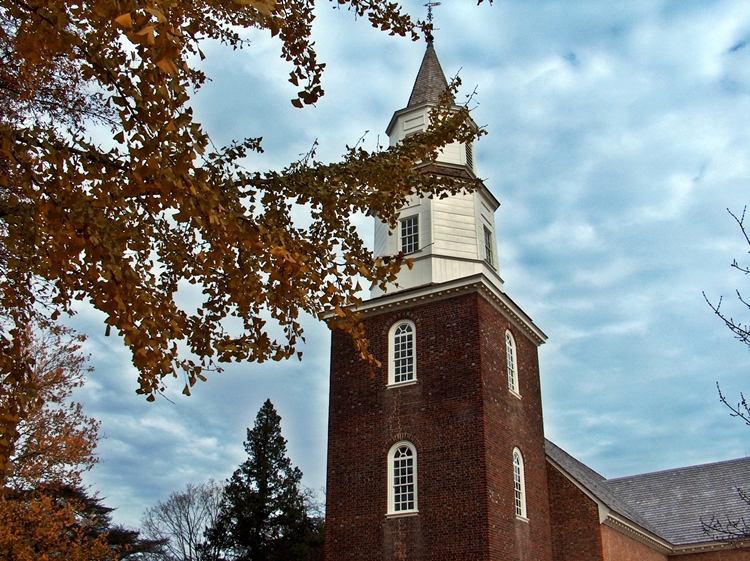
Bruton Parish Church, Williamsburg, VA

Posted in Photo of the Week | Tagged , , , , | 2 Comments