
The Three Rebellions In-Depth
CHAPTER 1 — THE EDEN REBELLION
The First Revolt and the Beginning of the Human Condition
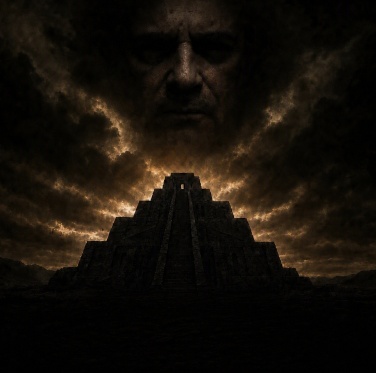
The biblical story of evil begins not with giants, not with the rebellious sons of God, and not with the fragmentation of the nations, but with a garden. The Eden narrative in Genesis 3 is the foundational account of humanity’s fall, the introduction of sin, and the beginning of the spiritual conflict that shapes the rest of Scripture. Any attempt to understand the later rebellions—whether in Genesis 6 or at Babel—must begin here, because Eden establishes the categories, the patterns, and the theological logic that the rest of the biblical story assumes.
This chapter examines the Eden Rebellion through a close reading of the text, a survey of canonical interpretation, and a theological synthesis that situates Genesis 3 as the first of the three great rebellions that form the biblical worldview of evil.
I. THE TEXT OF GENESIS 3: WHAT HAPPENED IN THE GARDEN
Genesis 3 opens with a sudden and unexplained presence:
“Now the serpent was more crafty than any of the wild animals the LORD God had made.” Genesis 3:1
The narrative does not introduce the serpent with a backstory, a genealogy, or a description of its nature. The serpent simply appears, speaking, questioning, and subverting God’s command. This literary abruptness is intentional. The text is not concerned with the serpent’s origin but with its function: it is a creature whose purpose is to challenge the divine order and entice humanity into rebellion.
The serpent’s strategy is subtle. It begins with a question that distorts God’s command:
“Did God really say, ‘You must not eat from any tree in the garden’?” Genesis 3:1
The question is not a denial but a reframing. It invites Eve to reinterpret God’s generosity as restriction. The serpent then escalates from distortion to contradiction:
“You will not certainly die,” Genesis 3:4
And finally, it offers an alternative vision of human identity:
“For God knows that when you eat from it your eyes will be opened, and you will be like God, knowing good and evil.” Genesis 3:5
The temptation is not merely about fruit. It is about autonomy, self‑definition, and the rejection of creaturely dependence. Humanity is invited to seize wisdom on its own terms rather than receive it from God.
The result is immediate:
“Then the eyes of both of them were opened, and they realized they were naked.” Genesis 3:7
Shame, fear, and alienation enter the human experience. The relational harmony of Genesis 2 collapses. Humanity hides from God, blames one another, and experiences the rupture of the created order.
The divine response is both judgment and mercy. God pronounces consequences on the serpent, the woman, and the man, but He also provides clothing (Genesis 3:21) and promises a future deliverer.
The Eden narrative is not merely the story of the first sin. It is the story of the first rebellion—one that involves both humanity and a spiritual adversary.
II. THE IDENTITY OF THE SERPENT: CANONICAL DEVELOPMENT
Genesis 3 does not explicitly identify the serpent as a spiritual being. It does not call the serpent Satan, a demon, or a fallen spiritual son. The narrative is intentionally sparse. However, later biblical texts interpret the serpent in ways that reveal its deeper identity.
A. The Serpent as a Spiritual Adversary
The clearest canonical identification appears in the New Testament:
“That ancient serpent called the devil, or Satan, who leads the whole world astray.” Revelation 12:9
This passage retroactively interprets the serpent as a personal spiritual adversary. The same identification appears in Revelation 20:2. Jesus also describes the devil as “a murderer from the beginning” and “the father of lies” (John 8:44), language that aligns with the serpent’s actions in Genesis 3.
Paul likewise connects the serpent with spiritual deception:
“Just as Eve was deceived by the serpent’s cunning… ” 2 Corinthians 11:3a
The canonical witness is consistent: the serpent is not merely an animal but a spiritual being acting in opposition to God.
B. The Serpent as a Rebel in the Unseen Realm
The Old Testament contains hints that the serpent is more than a creature. The curse in Genesis 3:14–15 is directed not only at the animal but at the spiritual adversary behind it. The promise of enmity between the serpent’s offspring and the woman’s offspring, culminating in a decisive victory, suggests a conflict that transcends zoology.
The serpent is a rebel in the unseen realm—a spiritual being who opposes God’s purposes and seeks to corrupt humanity.
III. THE THEOLOGICAL SIGNIFICANCE OF THE EDEN REBELLION
The Eden Rebellion establishes several foundational truths that shape the rest of Scripture.
A. The Origin of Human Sin
Genesis 3 explains why humanity is estranged from God. Sin is not an abstract concept but a relational rupture. Humanity chooses autonomy over obedience, self‑definition over divine wisdom, and distrust over trust.
B. The Introduction of Death
God’s warning in Genesis 2:17—“you will certainly die”—is fulfilled in two ways:
- Spiritual death: alienation from God
- Physical death: mortality enters the human condition
Death becomes the defining consequence of rebellion.
C. The Beginning of Spiritual Conflict
Genesis 3:15 introduces the first prophecy in Scripture:
“He will crush your head, and you will strike his heel.”
This verse establishes a long‑term conflict between humanity and the spiritual adversary. It also introduces the hope of a future deliverer who will defeat the serpent.
D. The Distortion of Human Vocation
Humanity was created to rule the earth as God’s representatives (Genesis 1:26–28). The Eden Rebellion distorts this vocation. Instead of ruling creation, humanity becomes subject to frustration, toil, and decay.
E. The Pattern of Rebellion
Eden establishes a pattern that recurs throughout Scripture:
- A divine command
- A spiritual adversary
- Human disobedience
- Consequences
- A promise of redemption
This pattern becomes the template for understanding the later rebellions in Genesis 6 and Genesis 11.
IV. EDEN AND THE BIBLICAL WORLDVIEW OF EVIL
The Eden Rebellion is not an isolated event. It is the foundation of the biblical worldview of evil.
A. Evil Is Personal
The serpent is a personal spiritual adversary. Evil is not merely a force or an abstraction; it is rooted in personal rebellion against God.
B. Evil Is Relational
Sin disrupts relationships:
- between humanity and God,
- between humans themselves,
- and between humanity and creation.
C. Evil Is Progressive
Genesis 3 is the beginning, not the end, of rebellion. The narrative of Genesis 4–11 shows the rapid escalation of violence, corruption, and spiritual disorder.
D. Evil Is Opposed by God’s Redemptive Purpose
Even in judgment, God promises redemption. The entire biblical story unfolds from the promise of Genesis 3:15.
V. THE EDEN REBELLION IN THE NEW TESTAMENT
The New Testament consistently interprets the Eden Rebellion as the origin of human sin and the beginning of spiritual conflict.
A. Paul’s Adam–Christ Typology
Paul contrasts Adam and Christ in Romans 5 and 1 Corinthians 15. Adam brings sin, death, and condemnation; Christ brings righteousness, life, and justification.
“For as in Adam all die, so in Christ all will be made alive.” 1 Corinthians 15:22
Eden is the backdrop for the gospel.
B. The Serpent as the Spiritual Adversary
As noted earlier, the New Testament identifies the serpent with Satan. This identification frames the spiritual conflict that Christ confronts in His ministry.
C. Christ as the Second Adam
Christ succeeds where Adam failed. He resists temptation, obeys the Father, and restores humanity’s vocation.
D. The Church as the New Humanity
The New Testament presents the Church as a new creation (2 Corinthians 5:17), a restored humanity that participates in Christ’s victory over the spiritual adversary.
VI. SYNTHESIS: THE EDEN REBELLION AS THE FIRST OF THE THREE
The Eden Rebellion is the first of the three great rebellions that shape the biblical worldview of evil. It explains:
- the origin of human sin,
- the introduction of death,
- the beginning of spiritual conflict,
- and the distortion of human vocation.
It also establishes the categories necessary to understand the later rebellions:
- Genesis 6 escalates the conflict through the rebellion of spiritual beings.
- Genesis 11 fractures humanity into nations under the influence of Hostile Spiritual Powers.
Eden is the foundation. Without it, the later rebellions cannot be understood.
VII. SUMMARY
The Eden Rebellion is the beginning of the human story and the beginning of the story of evil. It introduces the spiritual adversary, the reality of sin, the consequences of rebellion, and the promise of redemption. It sets the stage for the later rebellions and for the ultimate victory of Christ.
Eden is not merely the first chapter of the Bible. It is the first chapter of the conflict that Christ came to resolve.


Pingback: The Nephilim: An Investigation and Analysis BONUS 2 | Talmidimblogging