The Lord has been good to you

The Lord is gracious and righteous;
    our God is full of compassion.
The Lord protects the unwary;
    when I was brought low, he saved me.

Return to your rest, my soul,
    for the Lord has been good to you.

Psalm 116:5-7

This short passage is one of those that should be read slowly, very slowly, in a quiet and solitary place. Come to think of it, this little passage needs to be a prayer, more than just read; try praying it.

The Lord is gracious and righteous;
    our God is full of compassion.

It’s like a prayer of Thanksgiving, isn’t it?

The Lord protects the unwary;
    when I was brought low, he saved me.

Yes, O Lord, how many times you have saved me! Thank you, Lord!

Definitely a prayer of Thanksgiving.

Return to your rest, my soul,
    for the Lord has been good to you.

Now this is interesting. O, Lord, you have been good to me in so many ways, so many times: Praise be to your Name!!

See what just happened there? A prayer of Thanksgiving morphs into a prayer of praise, and life this morning just got a whole lot better- thank you, Lord.

Posted in Christian living | Tagged , , , , , , , , | Leave a comment

Another Parable

Matthew 20:1-16

In looking at this very well known parable, the first thing I would like to call your attention to is the fact that it isn’t here in Matthew’s narrative standing all on its own; it is a continuation of the discussion we covered last time in 19:23-30, and there is no scene shift of any kind, in spite of the chapter division. Remember, the chapters and verses are arbitrary human devices for reference purposes only, and sometimes we must wonder why they put them where they did. We can be certain of this because of the way this passage begins: “For the kingdom of heaven is like…” Notice that Jesus is still speaking, so after He said “But many who are first will be last, and many who are last will be first” in 19:30, He continued, “For the kingdom of heaven is like…” in 20:1. Got it? Good!

Thus, in chapter 19 we have the whole discussion with the rich young man about entering the kingdom, his possessions and all of that, followed by the explanation with the disciples, and moving beyond this world’s priorities to follow Jesus, in which the first (rich, powerful or well off in whatever way) end up as the last, and those who are less fortunate in whatever way being the first − and now Jesus is amplifying the “first and last” statement.

In the parable, we have the owner of a vineyard who is hiring day labor to work the vineyard. He hires workers several times during the day so that each group works a different amount of time in the vineyard, and when the end of the day comes, they all receive the same pay, to the annoyance of the first group who worked all day long. The owner of the vineyard pointed out that he paid them what they agreed to work for, and if that meant that he might seem to be overpaying the ones who worked a shorter time, that was his business; he chose to be generous to them.

Just as with His explanation of the conversation with the rich young man, Jesus is teaching that God’s grace is not something we can earn, and that it is not an entitlement, it stems entirely from God’s graciousness… could it be that’s why it is called “grace”?

The bottom line is really quite simple: When considering the things of God, we cannot understand them by the values and wisdom of Man, for instead we must take a heavenly view. As the chapter moves forward, we will see more of this new Kingdom view of things.

Posted in Bible | Tagged , , , , , , | Leave a comment

When Times are Tough

1 Peter 5:7

We all have tough times; no matter how much we might have our act together, tough times will come. When times are tough for whatever reason, and there can be many causes, our Lord will stand by our side.

So, there we are, feeling the weight of difficulty, feeling the anxiety that trouble can cause us. It’s hard to rest, it’s hard to think about anything clearly; we feel like the walls are closing in on us… We’re trapped.

Yet our Lord is right there with us.

We search for a way out, yet we feel a growing sense of hopelessness- will this ever end?

Our Lord is right there with us. I’m not exactly sure about this, but I suspect that He is right there with us, wondering when we will turn to Him…

The teaching of Scripture is clear on this; it speaks of this kind of situation all through both the Old and New Testaments.

Cast all your anxiety on him because he cares for you.

1 Peter 5:7

The only question is: Will we turn our anxieties over to Him, or will we continue to struggle on our own?

Just think about it: The God who created the Universe and everything in it cares for YOU. He will take your anxieties from you if you will entrust them to Him and let go, and help guide through your cares.

If you will trust Him and let go.

That’s pretty amazing, if you ask me.

Posted in Christian living | Tagged , , , , , , | Leave a comment

The Disciples Learn More About Wealth

Matthew 19:23-30

Jesus was fully aware that the disciples would be confused after His conversation with the rich young man because, as we noted last time, He had blown up a major cultural expectation of the time that the rich were more favored by God than others were. As a result, He begins to teach them…

Then Jesus said to his disciples, “Truly I tell you, it is hard for someone who is rich to enter the kingdom of heaven. Again I tell you, it is easier for a camel to go through the eye of a needle than for someone who is rich to enter the kingdom of God.” (19:23-24)

The rich young man hadn’t been overly enthused at the prospect of giving up all of his wealth, and Jesus underscored the difficulty that many have in entering the Kingdom and leaving the priorities of this world behind. Looking at His example here of putting a camel through the eye of a needle, I think we can safely say that He was engaging in a touch of hyperbole to make the point. The reaction of the disciples speaks volumes about the prevailing assumptions of that culture: “Who then can be saved?”

If you notice, Jesus in His answer blows up a second predominant assumption of that time:

“With man this is impossible, but with God all things are possible.” (19:26)

There are two cultural teachings that are being corrected here: First, that the rich are most favored by God, and the second is that a person can attain righteousness by reliance upon their own ability to keep the Law; both of these are false. This second teaching is still with us, sometimes it is obvious, and sometimes it is more subtle, we call it “works”. You cannot earn your way into the Kingdom by following the rules, “doing church right” or by doing good deeds, for you can only enter the kingdom by faith in God through Christ. Can the rich enter the Kingdom? Yes, they can, by placing their faith in God, and not in their earthly possessions and positions.

Peter is beginning to comprehend: “We have left everything to follow you! What then will there be for us?” (19:27)

In His answer to Peter’s question, Jesus shows them that there is both good and bad news, so to speak, for they have left their “stuff” behind for the most part, but it may not be only possessions that get in the way:

“Truly I tell you, at the renewal of all things, when the Son of Man sits on his glorious throne, you who have followed me will also sit on twelve thrones, judging the twelve tribes of Israel. And everyone who has left houses or brothers or sisters or father or mother or wife or children or fields for my sake will receive a hundred times as much and will inherit eternal life. But many who are first will be last, and many who are last will be first.” (19:28-30)

Notice the relationships that may also need to be left behind, notice also that they are in the same list as “fields”, which is to say material possessions. The real point is that the follower of Christ must be willing to leave anything behind if it interferes with following Him, for with the Kingdom, you are either all in or all out. Aren’t these things that we all struggle with at one time or another?

This is one of those cases when the theology of the teaching is very simple, but living it can be difficult, yet with God, all things are possible. Consider this: The man who wrote this Gospel was a tax collector. He was rich, he also had a family, friends and associates, but by the grace of God, he was one of the Twelve, and he wasn’t the only one. Remember Zacchaeus? Joseph of Arimathea? Saul of Tarsus?

With God, all things are indeed possible!

Posted in Bible | Tagged , , , , , , , | Leave a comment

On the Ellipse – Redux

111413 005-LR

This was first posted on November 21, 2013

A week ago I had to walk across the Ellipse, which is a circular park between the White House and the Washington Monument. I had to walk here because the shorter routes to the White House southern side were blocked off.  From here you can see a lot of things in any direction.  The view to the north is in the photo above, and you can see not only the White House but the Old Executive Office Building to the left and even a chopper just above the treeline to the right.  Behind me is the Washington Monument…

So many important people have walked here, from Abraham Lincoln heading off to see some important war leaders, to Harry Truman on his morning stroll.  The first time I was here, there were baseball diamonds and people playing on them… I’ve also been involved in football games and frisbee out here in years past.

You might note that the grass isn’t doing so well this year, as there has been almost no rain for the last few months.

111413 006

Zooming in, you can see the fences and barriers ahead; these were not here in the old days.  The white fence appears to be there for the National Christmas tree on the extreme right, which should be up and running for the Christmas season in a couple of weeks or so.  You can also see that there are people at the south fence taking pictures.  This was my destination on this trip, although there are still several obstacles before I reached that point.  In the old days, there would be lots of city traffic in this view, running down Executive Avenue, but of course, traffic is no longer permitted there for some reason… The vehicles up ahead are official cars as I would discover. To be honest, I’ve never been out here when things were so quiet before.  Maybe it was just because of the time of day, about 10 or 10:30.

111413 008-LR

In this final shot, you can get a better view of the National Christmas tree.  It looks like the lights are in place, but apparently there is plenty more to do; that stuff over to the tree’s right is construction crews, trucks and materials.  I’ve never been out here this close to Christmas before, so I’m not really sure how much they set up.  Anyway, at least it isn’t the National “Holiday tree” yet!

I don’t know if you caught my post about this little trip last Friday (you can view it here if you missed it) but if you did, I hope you’ve been praying for our Nation.  No kidding, please pray for our leaders, our Nation and our people, and if you are in another country, then we should all be praying for your leaders, countries and people as well.

I think we should all try to remember a few things about this sort of prayer:

First, you do not need to be a fan of the current group of leaders to pray for them, nor is it a criticism of them if we do.

Second, Jesus taught us to do this, and the Bible has many references to such prayers; they are pleasing to God.

Third, prayer is not an empty gesture, for God’s people in prayer is the spiritual equivalent of an artillery barrage; it is going on the offensive in a spiritual battle for the hearts of Mankind.

Fourth, God hears our prayers!

Posted in Christian living | Tagged , , , | Leave a comment

Storms of Life

Then they cried out to the Lord in their trouble,
    and he brought them out of their distress.
He stilled the storm to a whisper;
    the waves of the sea were hushed.

Psalm 107:28-29

During our lifetimes, we encounter many storms. They can take many forms in addition to literal weather events, they can be personal, family, employment, financial, even legal or criminal. Finding oneself in the middle of a storm can be scary, lonely, and filled with a sense of complete helplessness.

Sometimes, our imaginations might run wild and cause us to perceive the situation as being even worse than it really is; just what we need!

We’ve all been there in one of life’s storms; I know I don’t need to go on trying to describe how unpleasant they can be…

The important thing for us to remember is that God is right there with us, even in the worst of times. Recently, when Hurricane Milton was at its worst in our area, I was just hearing the almost deafening noise of it. That wasn’t so bad, but in the midst of that roaring of wind and torrential rain were other sounds like Whack, Wham, pop, crash, as various objects, large and small, hit our house.

O Lord, help!!

I’m not going to say that He calmed the storm right away, but I sure felt the calm of His presence, and when the storm did calm and I ventured outside, there was one crazy big mess, but no serious damage to our home.

This was an extreme weather event, but I’ve noticed that the same calm of His presence is there in the other storms of life, when I remember that He’s right there, and I put all of my faith and trust in Him. I would even guess that there may be someone reading this right now who could share something similar with us in the comments…

Posted in Christian living | Tagged , , , , | 2 Comments

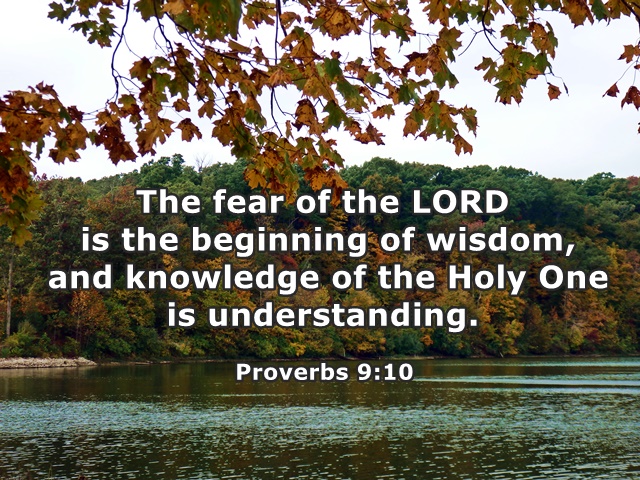
Understanding

donmerrittonline.com
Posted in Christian living | Tagged , , , | Leave a comment

A Wealthy Young Man

Matthew 19:18-22

Social conventions and customs are a funny thing; they influence most of us in a way that enables us to make sweeping assumptions concerning great truths, even eternal ones, and yet those very conventions change often through history. We should take this reality as a warning to question the social conventions of our time, and this tale is a case in point. In Jesus’ day, as in many other historical periods, it was assumed that most wealthy people were the ones favored by God; why else would they be so blessed? Yes, some were not so ethical in their conduct, yet many others were good, hard working people, the bedrocks of the community; surely God’s favor was upon them!

What a contrast to those little children in the last scene, those little ones who represented vulnerability and humility. Right after Jesus commented about the little ones, a rich young man walks up to Him and asks a question:

Just then a man came up to Jesus and asked, “Teacher, what good thing must I do to get eternal life?” (19:18)

Here’s a guy who appears to have it all, but he apparently believes that he is lacking in the way he has led his life; there is an element of humility here that we often overlook. In the dialogue that follows, we learn more about this young man:

Why do you ask me about what is good?” Jesus replied. “There is only One who is good. If you want to enter life, keep the commandments.”

“Which ones?” he inquired.

Jesus replied, “‘You shall not murder, you shall not commit adultery, you shall not steal, you shall not give false testimony, honor your father and mother,’and ‘love your neighbor as yourself.’”

“All these I have kept,” the young man said. “What do I still lack?” (19:17-20)

This young man was righteous, and appears to have good intentions, and as you will see, Jesus doesn’t dispute his claim that he has kept all of those commandments. It would also appear that the man was beginning to realize, perhaps more quickly than the disciples, that merely keeping commandments as was the Jewish prevailing thought, wasn’t quite enough, after all− why else would he have asked Jesus in the first place? Yet, he still seems to have believed that eternal life was contingent upon his ability to do something. Maybe he was right:

Jesus answered, “If you want to be perfect, go, sell your possessions and give to the poor, and you will have treasure in heaven. Then come, follow me.”

When the young man heard this, he went away sad, because he had great wealth. (19:21-22)

Jesus told the man to sell what he owned, give money to the poor and follow Him. I cannot over-emphasize how radical this was, for the prevailing thought of those times said that the rich were blessed, worthy and most favored of all, yet Jesus told the man to liquidate and give to the poor. Notice, He didn’t say to give everything to the poor (as some older translations say) but the implication is clear enough. The story ends with the man going away sad, because he had great wealth.

Traditional teaching assumes the man did not do as Jesus told him, but I want to point out that the text doesn’t say that; maybe he did, maybe he didn’t… but he was sad.

This is where we like to bash people who have more than we do; I can’t tell you how many times I have heard this in class discussions and sermons and how many times I have read it, but I would suggest that we should not go rushing into this too quickly. I have known quite a few people who are quite wealthy, rich people, and they usually discover that their wealth, while handy for sure, is also a millstone around their necks; a burden more than a pleasure. Yet once they have it, it is hard to let go of. Even so, let’s not concentrate on those who have more than we do, let’s look in the mirror instead, for there is where Jesus’ message, and the young man’s predicament resonate:

Suppose Jesus came to you and told you to liquidate everything you have, that’s right dear reader, sell all your possessions, give to the poor and follow Him.

Would that make you happy?

If you answer “yes” to that question, then let’s take a closer look: Your home, your car(s), your accounts, retirement plans, investments, kids’ college funds, the contents of your house… everything. You show up to follow Jesus with only the shirt on your back. Hold on, the shirt on your back is also a possession, so you show up without even a shirt on your back or anything else, to follow Jesus: Are you happy?

More importantly, would you do it?

Maybe we should think carefully before we make this all about pointing fingers at others!

The good news is that we are still in that section where the instruction is for the disciples, and in the next part, we will see what Jesus has to say to them; will it get easier? Well, you’ll have to come back next time to find out!


Posted in Bible | Tagged , , , , , , | Leave a comment

Little Children

Then people brought little children to Jesus for him to place his hands on them and pray for them. But the disciples rebuked them.

Jesus said, “Let the little children come to me, and do not hinder them, for the kingdom of heaven belongs to such as these.” When he had placed his hands on them, he went on from there.

Matthew 19:13-15

There are times when the disciples are quite insightful, when they really “get it”, and then there are times when they really seem to miss the point entirely, and this is one of those latter cases. I suppose that we should be hesitant to be too critical of them, since I’m sure that each of us is probably guilty of missing the point often enough.

In this brief scene, Jesus is out among the people, and they bring some little children to Him for Him to pray over, and the disciples rebuked them. Maybe they thought that Jesus was too busy at the time to deal with a bunch of little ones, Matthew doesn’t say, but whatever their reason, it would appear that they have missed what Jesus was telling them in 18:5…

And whoever welcomes one such child in my name welcomes me.

Jesus insisted that the little ones be allowed to come to Him, and once again mentions that we must be as little children, the powerless, vulnerable and often exploited by this world, to enter the Kingdom of heaven. Yes, it would be accurate to say that little children are a metaphor for the “citizens” of His Kingdom. I have already commented on this in my remarks on 18:1-5, “The Greatest in the Kingdom” so I won’t repeat the whole thing again now, instead, let’s once again take a step backward to look at the whole picture.

We are still in that section of Matthew in which Jesus is educating the disciples, where they are the ones in the scene that He is primarily concerned with. Also, in this part of that section, He is teaching them the stark difference between His teaching of the Kingdom, and the traditional teachings of the Jewish leadership, so isn’t it interesting that this should happen, and isn’t it significant that Matthew has included it here?

I can’t prove this, and I can’t pass it on to you as an established fact, but I can tell you that my guess is that Matthew passed this little episode on to us because this is when they began to understand His teaching about little children; certainly, it was for the disciples’ education that these events took place when they did.

In the next scene, Jesus has a chat with a rich young man; see you then!

Posted in Bible | Tagged , , , , , , , | 2 Comments

Transition from Galilee to Jerusalem

When Jesus had finished saying these things, he left Galilee and went into the region of Judea to the other side of the Jordan. Large crowds followed him, and he healed them there.(19:1-2)

With these two verses, we have a shift of scenes as well as the beginning of the transition from Galilee to Jerusalem, where Matthew’s narrative will reach its climax. As you will recall, we are in a larger section in which Jesus is teaching His disciples about His mission as the Messiah, and His mission is much different than they had expected. I thought that we would be best served at this point, to look at a summary of the events of chapters 19 and 20 before we are caught up in the details, for often we miss the larger picture (not to mention the context) because of our expectation and traditional understanding of the details. Of course, this is not to say that our understanding is wrong, but it may sometimes be slightly incomplete.

The first thing we must understand is that Jesus is going on the offensive at this point. I’m not suggesting that He lacked the initiative in Galilee, but now He is the spiritual equivalent of an invading army as He moves into Judea, challenging the very core of the Jewish tradition and ethic as it existed at the time. Make no mistake; the Jewish religious authorities will not take this assault on their position and authority lying down… and you know what happens after that.

Jesus’ first move in this match is to radically challenge the conventional values and personal rights of all people as He calls for the stabilization and preeminence of marriage, challenging a legal system that perpetuated divorce (19:3-9). This challenge seemed very difficult to the disciples (19:10), but Jesus insists that for the sake of the Kingdom, some may even be called upon to renounce their right to marry (19:11-13).

Those deemed by society to be weak and helpless, like little children, were not to be marginalized or exploited, and He even used them as models for Kingdom living (19:13-15). In a society where a person was highly regarded for their wealth and position, Jesus calls for the renunciation of possessions in favor of the higher calling of following Him (19:16-30). He tells the parable of the landowner to illustrate this graphically, reversing their values in favor of outright generosity (20:1-16). In contrast to the Gentile habit of lording it over others Jesus calls upon His disciples to be servants of all, modeling His own sacrificial mission (20:20-38). The section closes with Jesus modeling compassion for all of those who cry out in the city (20:29-34). In this way, we transition into the next section of conflict in Jerusalem, but not before Jesus has completed the task of discipling the disciples and making them aware of what sort of lifestyle will be required of them when their turn comes to proclaim the Kingdom, and of course by extension, He has provided instruction for all future generations of the values that must be predominant in the Kingdom in ages to come.

Posted in Bible | Tagged , , , , , , | 1 Comment