It’s Christmas Time Again…

121513 010-LR

…so it’s time to get ready! I thought that I should write some posts for the occasion this year, and what better way to get started than a short review of Matthew chapter 6?

Oh yes, that’s right, this is the very heart of the Sermon on the Mount. What’s that you say – what does that have to do with getting ready for Christmas? Oh my, I can see that I should have started this sooner! Why the Sermon on the Mount has everything to do with Christmas, especially Matthew Six!

No, really it does… you’ll see.

“Be careful not to practice your righteousness in front of others to be seen by them. If you do, you will have no reward from your Father in heaven.

2“So when you give to the needy, do not announce it with trumpets, as the hypocrites do in the synagogues and on the streets, to be honored by others. Truly I tell you, they have received their reward in full. But when you give to the needy, do not let your left hand know what your right hand is doing, so that your giving may be in secret. Then your Father, who sees what is done in secret, will reward you.

Matthew 6:1-4

Have you ever read the story of Jesus’ birth in Luke 2 and thought there was something ‘funny’ going on? Think about it: The heir to the throne of David was born of humble parents, Joseph and Mary, only Joseph wasn’t the father, and they weren’t exactly married. They were summoned to Bethlehem by a proclamation of a pagan king far away, and were not only poor, but they couldn’t get a room anywhere and had to stay in a barn, where Mary gave birth to a son. A bunch of shepherds came to pay their respects, and then a group of foreign noblemen came by, and when the local “king” found out about all of this, he had all of the little boys in town murdered in a vain attempt to kill this particular child. Be honest; this is an odd little story that we tell each December.

That child grew up and spoke the words that I have included above from Matthew, and these words are pretty strange as well. We are being told to help the poor and needy in secret. We aren’t to do this publicly, not to seek credit for doing good; we are to do good quietly.

Who does that?

Have you ever been to a charity fundraiser? Normally there is a big splash in the press and a bunch of people all dressed up in their best finery are introduced and applauded under bright spotlights; often they are thanked by local dignitaries, and sometimes they receive glitzy awards for all of their work. Surely Jesus knew how this sort of thing was supposed to be done.

It seems that Jesus didn’t care how the world does things.

His teaching tells us that if we do good to impress men and gain press coverage, then that praise and publicity is our reward, but when we do it simply to help others and give glory to God, then we will receive praise and thanks from God, and He seems to be saying that this is a better outcome.

So, let’s see what happens if we put these two things together, the story of His birth, and His teaching in the beginning of this chapter. On the one hand, we have a king born in a barn to a poor young mother, and a Father who just happens to be God. Oh God announced the birth, make no mistake, but He announced it not to the press or to the local luminaries, but to a group of lowly shepherds who were spending the night out in the open keeping watch over a bunch of dumb and smelly sheep.

On the other hand, Jesus is teaching us not to do good things to impress people, but to do them just because they are right.

Come to think of it, I suspect that we can sum this all up in one short statement:

Jesus was born to show us what it means to be humble.

It would seem that His humility gives us quite a contrast to the ways of the world around us.

Posted in Bible, Christian living | Tagged , , , , , , , , | 2 Comments

Preparing the Way

E. Annunciation of the Rise of John the Baptist  Luke 1:5-25

JERUSALEM Around 6 BC Zechariah and his wife Elizabeth were old and well beyond child bearing; they had no children and no hope of ever having children. He was a priest at the Temple, and she was something of a disgrace for being barren. On a certain day, Zechariah was chosen by lot, as was the custom, to enter the Holy Place to burn the incense to God. This of course was the twice daily ritual following the sacrifice for the atonement of sins. It is important to this story for us to understand that the casting of lots was done to enable God to choose which priest was to enter the Holy Place, thus Zechariah’s selection would have been understood as God’s choice, and no accident.

While in the Holy Place, Zechariah was startled by the angel of the Lord who came to bring him some very unexpected good news: Elizabeth would conceive a child in her old age.

Does this remind you of someone?

This would be no ordinary child, for he would be filled with the Holy Spirit even before being born, which was the special favor of God in a time when there was no generally available indwelling of the Spirit. He would prepare the way for the Lord Himself with the spirit of Elijah, the great prophet of old. In the process, he would bring many people back to the righteous ways of the Lord.

Zechariah was to call the boy John.

If you were in Zechariah’s sandals, what would be your reaction? Maybe you’d be overjoyed, or shocked, or terrified, or very proud… or skeptical! Zechariah wanted to know how he could be sure this news was true, a fairly human concern, I’d have to say. It would appear that the angel wasn’t all that impressed with such a reaction, however. He identified himself as Gabriel who served in the presence of God, and informed Zechariah that he would be mute until the miraculous (there’s really no other word for it) birth was completed.

Well, Zechariah asked for a sign, and he got one… right?

Meanwhile, the people outside praying were wondering what had happened to Zechariah; he’d been inside far too long. When he emerged from the Temple, they could tell he had experienced some kind of vision, but he couldn’t tell them anything about it. He returned home and his wife became pregnant; the Lord had taken away her disgrace and she went into seclusion for her term. Yet soon another angelic visit would take place…

Posted in Bible | Tagged , , , , , , , | 3 Comments

The Cycles of Life

121013 009-LR

There’s an order to life that is at the same time, both simple and profound.  It is simple in its predictability; it is profound in its impact. We know, for example that one season follows another, that winter comes before spring, and that spring comes before summer.  We know that life comes before death, and that new life comes after that. We know that joy and sorrow go together, for without sorrows, joy can never be complete.  We know at the sunrise, that sunset must soon follow…

Maybe you can say that there is order in not only this life, but in the universe in which we live.

Some would tell us that everything in this universe is by random chance, but I don’t believe them.  Randomness is a lie! There is order all around us in nature, there is order in the cycles of life.  Consider the evergreen: It remains green all the year long.  It provides a perch for the snow that falls on an earth gone dormant for the winter. Yet, right on the same branch with the snow is the pine cone, which ensures that when the snow has melted there will be new life upon the earth― there is a plan to all of this.

The very same God who planned and created the universe has seen to it that it will continue to carry on in an ordered way.

The same is true in our lives, for we too will go through seasons and cycles, and yet as we approach the day of physical death, we know that we will never die spiritually.  We know that we will pass from the mortal state into the immortal, just as surely as the seeds from the pine cone will bring about a new tree.  We know this because the God who created the entire universe has ordained that it be so, through the work of our Lord Jesus Christ.

In the final analysis, after all of the debates have ended, our eternity is every bit as sure as the sunrise in the morning, the coming of spring, and the cycles of life.

Posted in Christian living | Tagged , , , , , , | 3 Comments

Luke’s Genealogy

D. The Genealogy of Jesus   Luke 3:23-38

In contrast to Matthew’s much larger description of Jesus’ baptism, Luke moves right to the result of the baptism. Jesus was baptized and prayed, and when He did the heavens opened, the Spirit descended upon Him in bodily form the Father spoke, and everyone knew about it: Jesus was the Messiah.

Well, I guess that just about cinches it, don’t you agree?

It might be useful for us to be reminded that Luke was writing to a much different audience than Matthew, who was writing to a predominantly Jewish audience. As a result, Matthew gets into the history of Israel, the prophecies concerning the Messiah and so forth, while Luke, writing to a largely Greek audience skips much of the Israel part, and gets right to the result that has affected his readers: Jesus really is the Messiah, God incarnate… Period.

Interestingly, as a first century historian, Luke then gives the genealogy of Jesus, and so we can see that this is the “official” beginning of His story. Again there is a great contrast to Matthew’s genealogy, for although Matthew shows us every way possible that Jesus = son of David, Luke simply demonstrates that Jesus inherited the royal kingship of David through adoption by David’s heir Joseph.

Posted in Bible | Tagged , , , , , , | Leave a comment

Photo of the Week: December 10, 2025

w112313-010-pv

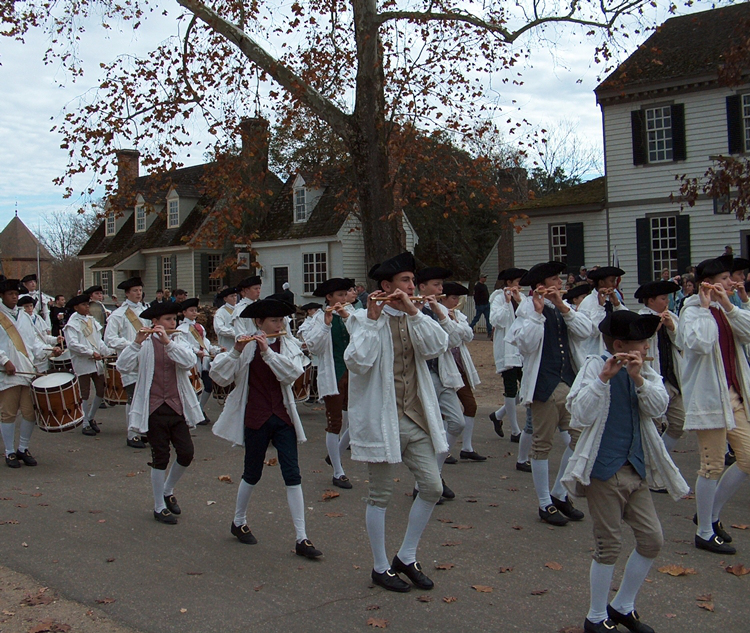
Virginia Colonial Militia, Williamsburg, VA

Posted in Photo of the Week | Tagged , , , , , , | Leave a comment

Glory!

“Glory to God in the highest heaven, 
   and on earth peace to those on whom his favor rests.” 

Like 2:14

Thus sang the host of angels the night that Jesus was born in Bethlehem.  The shepherds who witnessed

this were dumbstruck.

The eternal plan of Almighty God was beginning to unfold.

Shepherds were at the bottom of the social structure of the day… why did the angels announce the birth of Christ to them and not to the king?  And, why was the King of kings born to an unknown girl in a stable instead of to someone in a high station?

I’ve heard countless ideas; here’s mine:

Those who lived at the bottom of society in those days were not filled with pride at their earthly status; they had no status.  They were not full of themselves; they were ‘nobodies’ as far as society was concerned.  Jesus came to save those who would be willing to follow God.  He came to set us free from our sins… And let’s not forget that when the king found out about this, he started killing babies.

Think for a moment:  If the baby Jesus were born in our time, do you think that high society would welcome the news?  How about the ruling “elite,” or the Hollywood crowd or the various grandees of our world?

The shepherds were humble men.  They were men who held no position that needed hanging on to.  From their point of view, having the Son of God in their midst was a pretty cool thing, and when He grew up and began His ministry, these were the kinds of people who followed Him while the grandees of the day plotted His death.

Those who are satisfied in themselves, their positions, their riches and in what they think they are, lack the humility to follow God; in fact, many probably don’t see any need for God, and would prefer to forget all about Him.  In order to follow Christ, we must put self aside and serve Him.

How can we do that if we are at the center of everything?

Posted in Bible, Christian living | Tagged , , , , , , , | 4 Comments

Matthew’s Genealogy of Jesus

C. The Last Part

Matthew continues his genealogy as he moves from the first group of 14 names to the next. The first group culminates in King David, that glorious figure who is “a man after God’s own heart”, with whom God made a covenant that one of his descendants would always be on his throne, and quickly the second group of 14 comes along, ending with no one on David’s throne. This scenario underscores the failure of the people of the Abrahamic covenant, and the lack of fulfillment of their covenant.

We can see Matthew’s historic vision in this sequence, a vision of election and high privilege, followed by human failure and lost opportunity. It would seem that this is a preview of what would follow in Matthew’s story as the pattern of Israel’s rebellion and subsequent judgment unfolds in Israel’s rejection of Jesus, and Israel’s loss of kingdom, (21:33-22:10) the destruction of the nation, (21:41; 22:18; 23:29-24:3) and eschatological destruction (8:10-11; 22:11-14).

The final group of 14 is an interesting one for several reasons. For the most part, the names found in the first two thirds of the genealogy can be found in the Septuagint, but the nine names in vv. 13-15 don’t follow any Old Testament genealogy. In addition, Matthew uses only nine names to cover about 500 years, while Luke uses 18, and of these, only four are in both lists; two of the four are Joseph and Jesus. To be fair, this is not uncommon in comparing genealogies, as we have mentioned, and neither Matthew nor Luke are recording genealogies as strict historical pedigrees.  Finally, Matthew’s progression from father to son is suddenly broken when there is no direct link between Joseph and Jesus, leaving the father of Jesus not strictly identified (see verse 16). Notice that Matthew instead shifts our attention from Joseph to Mary as “mother of Jesus”.

Matthew will answer the obvious questions about this ambiguity in the next scene, and the implications of that answer will be the subject of the entire story… and to say that those implications are huge, would be an understatement, to say the least.

Posted in Bible | Tagged , , , , , | Leave a comment

The Third Christmas Lesson

This is a Christmas carol that contains the essence of the yearning of a people for a savior.  “O Come, O Come Emmanuel, and ransom captive Israel

Hold on, wait!  Ransom…?

Yes, Ransom. Israel was in slavery to sin; so were we.  Being held captive to sin, living in rebellion against God because of sin… yes, “ransom” is exactly the right word.

Jesus came to this earth to pay the ransom for our release from this bondage, and He did so by giving His life for us.  By giving His life for us, He paid the price for our redemption, and by doing this, He took away sin.  Yes, I know that this is a familiar story, but it isn’t the whole story…

In a nutshell, we were living in rebellion against God from the time of the fall of Adam.  All of the rest of the Old Testament tells the story of God working to rebuild the relationship that was lost, and progress was made, but fellowship was never restored between man and God until Jesus paid the ransom for our sins.  This is the indispensable act that makes the resumption of fellowship between man and God possible.

Rejoice, rejoice, Emmanuel has come to thee O Israel!

This is our third Christmas Lesson.

Posted in Christian living | Tagged , , , , , , , | 3 Comments

Matthew’s Genealogy of Jesus

B. Second Part

This is the genealogy of Jesus the Messiah the son of David, the son of Abraham: (1:1)

Matthew begins with this verse full of content and contextual implications. It would seem that Matthew is intent on linking the story of Jesus to the larger context of Israel’s history. Notice his reference to “the genealogy of” in language which in the original Greek parallels that of the Septuagint in Gen. 2:4 and 5:1, alongside the names of David and Abraham, two of Israel’s most illustrious heroes. That Matthew uses the terms “Jesus the Messiah” (or Jesus Christ) makes it quite clear that this son of David is special (cf. 2:4; 16:16, 20; 22:42; 24:5, 23; 26:63, 68). In putting the personal name together with the messianic concept, Matthew is referring back to the hopes of an entire Nation.

With the reference “son of David” our author is hearkening back to the glory days of his people and God’s covenant promises concerning the Davidic royal house, David may well be considered the pivotal name in the genealogy for it is mentioned 5 times, and is the only name associated with the title of “king” (v. 6), singling him out of all other royal references as the greatest. Many scholars also point out the presence of the numerical value associated with the Hebrew numeric consonants. For the name David, the numerics look like this: d (4) w (6) d (4) or 4 + 6 + 4 = 14. The number 14 is the number of David to be sure, but here it appears that, as some suggest, it has more meaning than that, for it is also arrived at by multiplying 2 X 7. Seven is the number of completeness or perfection. Jesus is the second Person of the godhead. Thus, some suggest that 14 is the number of Messiah, and when you compare that to David, and recall that the Messiah would be the son of David, these scholars conclude their case.

As for me personally, I don’t know who is right or wrong about the numbers, but in noticing how often the number 14 appears here, and remembering how the ancient Jews felt about numbers, it appears to me that at the least, Matthew is trying in every way possible, to make sure that his readers get “son of David” and “Messiah” out of this discussion.

Matthew goes on to mention that David was a “son of Abraham” which is another interesting component. Recall God’s covenant with Abraham: Isaac was the son of promise through whom all of the nations of the world would be blessed. Here, David is named “son of Abraham”. Jesus is mentioned as “son of David” and “Messiah” with the obvious attempt to reinforce Matthew’s contention that Jesus is the ultimate fulfillment of God’s covenant promise to Abraham.

While Matthew doesn’t mention every man who could be mentioned here, the inclusion of the names of four women is worthy of our note. As scholars like to do, they often differ about why these four names are included. My thought is that these women are all Gentiles; yet here they are in the genealogy of Jesus, who is the fulfillment of the very non-Gentile Abrahamic covenant. It strikes me that this may be important for two reasons: First, because Matthew makes certain to point out when Jesus breaks the ethnic barrier between Jew and Gentile (cf. 8:5-13; 15:21-28; 28:18-20), and second because of the way that social outcasts received His message. Whether or not this was Matthew’s thinking, one thing is perfectly clear: This is no ordinary genealogy, and with the arrival of Jesus the Messiah, nothing would ever be the same again.

Posted in Bible | Tagged , , , , , , | Leave a comment

Simple Things

W112313 144-LR

Maybe I’m just getting old, but it seems to me that life is getting way too complicated these days.  I can remember an earlier time when people got along in life just fine without electronics, instant information and constant contact.  Back in those times, you opened the garage door yourself, set things out to thaw and ate food that was actually what it appeared to be.  Back then, if you wanted to cool your house, you closed the blinds, and to cool your car, you rolled down the windows… with a crank. What was really strange back then was that most households survived with only one income, but then those people didn’t have bills for multiple phones, internet, cable or satellite; well you can see where we’re headed.

Yes, this must be the musings of someone who is ancient.

The funny thing is that back in those days, people spoke of “what is really important” and it was about the same list that we have today.  I interpret that as showing that all of the modern things that we think of as essential, haven’t really made much of anything “important” any better.  I might even go so far as to say that they may have even made some worse.  Here’s an example:  Today we have so many time-saving devices that we have no time to simply talk.  You would think that with mobile phones in everyone’s pocket, we would talk to other people more than ever, but then we started texting. You would think that in a social media world, we would really stay in contact with one another, but instead we are slaves to the very media that are supposed to bring us together.  Last Valentine’s Day, I sat in a restaurant across from a nice young couple who were sitting at their table, each of them texting other people; they hardly had time for their “Valentine” across the table!

So what is really important?  Our faith, our family, close friends… our relationships!

Maybe we need to make time for our relationship with Jesus Christ, our relationship with our spouses, or families and close friends.  Maybe this needs to be a time free from media, electronics, games, TV, and movies. Maybe we as a people need to re-discover a lost skill: Conversation!

I don’t want to go crazy here, but I wonder if so many couples would need to work so hard to make ends meet if we were willing to live a more simple lifestyle…

OK, that is crazy!

Posted in Christian living | Tagged , , , , , | Leave a comment