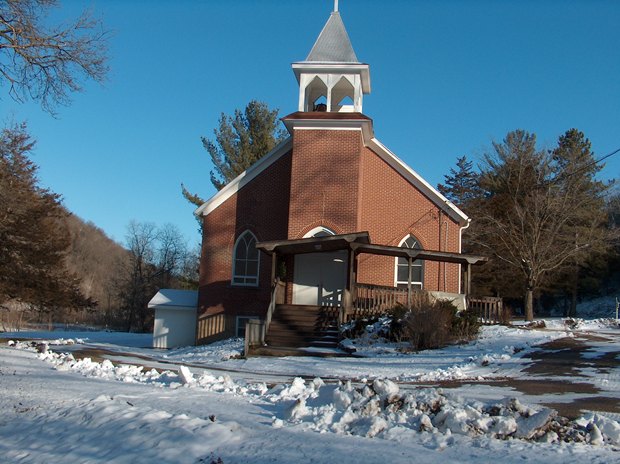
Challenging, Yet Amazing and Wonderful Warnings

Remember those earlier days after you had received the light, when you endured in a great conflict full of suffering. Sometimes you were publicly exposed to insult and persecution; at other times you stood side by side with those who were so treated. You suffered along with those in prison and joyfully accepted the confiscation of your property, because you knew that you yourselves had better and lasting possessions. So do not throw away your confidence; it will be richly rewarded.

Hebrews 10:32-35

Remember the context;  Hebrews 10:19-39 is the section context in this letter written to Jewish Christians in Rome during the persecution of Nero to encourage them to hold on to their faith in severe trial, and following right after a section on the superiority of the New Covenant.  

 The author refers to an earlier persecution, a time of trial almost as difficult as the present one, when these Christians had come through with their faith intact, and then he urges them to continue to hold on through the present crisis promising them a rich reward.  We might ask ourselves what this reward is to be, is he referring to a temporal reward or an eternal one?  In context, it must be an eternal one- why? Because that is the reward that has been under discussion leading up to this section; there has been nothing in the text to tell us differently, thus that context remains in place. If we attempt to impose a different meaning here, then we might satisfy our doctrinal need to reinterpret this section, but we will have the wrong application for the text.

You need to persevere so that when you have done the will of God, you will receive what he has promised. For,

“In just a little while,
he who is coming will come
and will not delay.”
And,

“But my righteous one will live by faith.
And I take no pleasure
in the one who shrinks back.”
But we do not belong to those who shrink back and are destroyed, but to those who have faith and are saved.

Hebrews 10:36-39

Verse 36 keeps the last three verses of the chapter in context as an exhortation; this is critical to our understanding of 37-39.  Verse 37 tells us that Jesus is surely coming soon (so hang in there, hold on to your faith). Verse 38 tells us that the righteous will hold on to their faith, and yet some will shrink back and lose out, and verse 39 encourages us all to continue in our faith and not shrink back, for to shrink back will result in our destruction.  Notice that “destruction” is contrasted with “saved.” We are only left with one last question: What is destruction?  

But we do not belong to those who shrink back and are destroyed, but to those who have faith and are saved.

Hebrews 10:39

It would seem entirely consistent with the context of this passage within the letter to the Hebrews, and within the New Testament, that our author is telling us that we could lose everything we have in Christ.  

 This chapter falls at the high point of the letter.  We’ve seen that our superior high priest has brought a superior sacrifice to establish a superior covenant based on superior promises.  We’ve seen that the old Law is gone, and that the New has come, and that the New is the reality that was only illustrated by the Old. We have learned that we can enter the Most Holy Place, the very presence of God with confidence. We have been warned to hold on to what we have in Christ, even in very difficult times, because what we have is so great and so wonderful that nothing can compare with it.

This is a message of love and encouragement, not a threat or a warning about a God who wants to zap you!  Some have suggested that this passage is too harsh, others have suggested that it must be adapted to fit a doctrine:  Why? Too harsh- Really? Would we have God hide things from us and then fall away out of ignorance?  That would be the actions of a God looking for a “gotcha” moment, not a God of love.  Doctrinal traditions… would we really rather use this for an argument to be “right” about something that may or may not be right, when it is a message of encouragement?  Really?

All we have in the passage is a message that our hope is awesome, so hang on to your faith come what may, and you will be in an amazing place for all eternity… this strikes me as wonderful! You know why? Because I can do it, and so can you. This is not a burden, at least not until we make it one.  This isn’t negative; it’s positive… until we make it negative… and it certainly isn’t complicated until we impose our doctrines upon it and make it complicated… so why do that?

Here’s a challenge for you, just for fun: Forget everything you’ve heard and everything you’ve read, including what you’ve read here.  Then go back and read chapter 10 over again, verses 1-39. Don’t think about anything it doesn’t say… and then see if you haven’t just read the most amazing and encouraging thing ever!

Posted in Bible, Christian living | Tagged , , , , , , , | Leave a comment

The End of the Old Covenant, part 1

The Jews went into exile as the prophets had said… some ended up in Babylon, others in Persia, from there many were scattered to Western Europe, India and even to Eastern China… as had been foretold, they were scattered to every nation under heaven.  Some became high officials, other merchants and land owners, still others were sold into slavery. Women sold into slavery produced children with fathers from many lands, and a change was made: being Jewish no longer passed from the father, now it passed from the mother.  Eventually, a small band was allowed by the Persian government to return to Jerusalem.

This group, headed by Nehemiah faced many obstacles, but they grew, and eventually rebuilt the city.  The time came when this group of returnees renewed the Covenant with God in a striking ceremony. (Neh. 9:32-10:39) In this Covenant renewal, some interesting things emerge: First, the oath swearing was done only by those who can understand. The idea of covenant passage to any blood relation of Abraham, regardless of understanding or personal faith had been strained to its breaking point. This concept became very significant in the New Testament.  Second, some Jews returned to Canaan, while many, many others did not. Since returning to the Land had more to do with covenant keeping than it did with blood, the idea of being a Jew by blood was weakened, and eventually resulted in the collapse of the Covenant.

Many other questions were raised by these circumstances. Some of them are: What would become of those who could return, but chose not to? Do you need to live in Canaan to receive the covenant promises? Could a man be a Jew, and yet not speak the language of the Torah? How could sins be atoned for without the Temple sacrifices as required by Law? Ezra was quite strict on these questions. Jews who returned were not enrolled unless they could prove with documentary evidence that they were of pure Jewish blood. Jews who had married foreign women were required to divorce. Jews who returned out of pure devotion to the Lord, but who were not of pure blood were left entirely out of the central power structure.

They had a city and a Temple, and they had Levites, but they had no king of Davidic blo; things were confused.  Ezra and Nehemiah organized delegates to go to wealthy Jews abroad to collect donations for the Temple, and to attempt to convince them to return.  These delegates, called Apostolos also organized groups of Jews who could not return into communities called synagogues. These synagogues became little Jewish outposts, where among other things they attempted to buy the freedom of Jewish slaves. From that time forward, the dispersed Jews, called Diaspora, played an important role in Bible history.

Those who returned hardly personified the glorious visions of the prophets who had told of a glorious return of “multitudes” from exile. They had barely gotten things in order when the land was conquered by the Greeks led by Alexander the Great, and the result of this conquest was the “Hellenizing” of the culture, meaning that they would be overwhelmed by Greek thought, philosophy, language, architecture, religion and values.

The Greek Old Testament

During the exile, a large number of Jews moved to the new city of Alexandria, built on orders of Alexander. This great ancient city had a famous library containing over 500,000 volumes, and it was there that scholars translated the Hebrew Old Testament into Greek. This translation, called the Septuagint, provided many advantages; among them it allowed the Jews to access the scriptures in the dominant language.  In fact, it was the version of the Old Testament used during the time of Jesus and the early church. It also had disadvantages. The Greek translation tended to result in Greek definitions and philosophical interpretations in place of Hebrew definitions and understandings, and the confusion this caused are at the very heart of much of the divisions still with us to this day.  For example, when the Greek word for “hearing” would be translated, a Greek would understand it to mean “listen to” whereas the Hebrew concept is to “hear and do” (Mt. 7:24) When the word “flesh” is used, the Greek understanding is philosophic: it refers to the evil nature inherent in the body of Man. The Hebrew would never allow the understanding of the human body to be inherently evil!  Paul tells us that it refers to a wicked and sinful way of life, (Gal. 5:19) or a lifestyle dominated by the needs of the body. (Gal. 6:7)

The entire context of Hebrew Covenant is lost when it is understood in a Greek philosophical context, as we have seen previously.

Messianic Dream

Additional confusion arose because many of the pre-exile prophets spoke of a Messiah.  There were four theological strands in these prophecies. First, “the One to come” (Dan. 7:13) would be a “true son of David” (Isa. 11: ff.) and restore Israel. He would be “anointed” by God as was his father David (1Sam. 16:13)

Second, was that he would be a prophet (Deut. 18:15-18). He would be a “suffering servant” prophet. (Isa. 53:1 ff.) He would speak from God and lead the people as Moses and Elijah had done. He would be a “messenger” and a “covenant for the peoples” (Isa. 42:1-6; 61:1-6)

Third, he would be a priest. (Isa. 53:12)  See also Psalm 110:4.

Fourth, he would be the “son of man” (Ps. 8:4) this figure is also seen in the writings of Ezekiel:

“Son of man, I have made you a watchman for the house of Israel; so hear the word I speak and give them warning from me.”

Ezekiel 33:7

            Clearly, this was the image Jesus Himself preferred, as he used it in reference to Himself more than any other. Daniel also used it:

“In my vision at night I looked, and there before me was one like a son of man, coming with the clouds of heaven. He approached the Ancient of Days and was led into his presence.  He was given authority, glory and sovereign power; all peoples, nations and men of every language worshiped him. His dominion is an everlasting dominion that will not pass away, and his kingdom is one that will never be destroyed.”

Daniel 7:13-14

            There were then, as there are now various ideas about what this passage means, but one thing is clear: it was understood by some in the age of the Apostles to mean that someone would come from Heaven to set up his own eternal kingdom. What is important to realize in this study is that the One who would come had the authority, of king, prophet, priest and redeemer to set all things right, and when He arrived, Israel’s problems would be over.

The Last Promise to Abraham

“And in your seed shall all the nations of the earth be blessed”

Gen. 12:1-3

            In the writings of Joel, Isaiah and Jeremiah the word “gentile” began to be used… in fact, it was used in parallel with “peoples, nations and tongues”. How indeed could they be blessed by the seed of Abraham, the holders of the promise of God?  Consider:

“In that day I will restore
David’s fallen tent.
I will repair its broken places,
restore its ruins,
and build it as it used to be,

so that they may possess the remnant of Edom
and all the nations that bear my name, ”
declares the LORD, who will do these things.

(Amos 9:11-12; Cf. Acts 15:16-17)

Other passages indicate an expectation that the gentiles will share in the glory to come: (Ps. 18:49; Deut. 32:43; Ps. 117:1; Isa. 11:10) God’s intention was to develop a people who would obey His commands, and when the day arrived, they would hear Him… and the day did come when the command that all of heaven had been waiting for came:

He said to them, “Go into all the world and preach the good news to all creation

Mark 16:15

Then Jesus came to them and said, “All authority in heaven and on earth has been given to me. Therefore go and make disciples of all nations, baptizing them int he name of the Father and of the Son and of the Holy Spirit, and teaching them to obey everything I have commanded you. And surely I am with you always, to the very end of the age.”

Mt. 28:18-20

Hints of the End

There are four hints in the Old Testament texts pointing toward an end or revision of the Old Covenant. They are listed below:

1. Genesis 3:15. This is the passage that indicates that the offspring of the woman will crush the serpent’s head (Satan) and that the serpent will strike the offspring’s heel. It is understood by many that the serpent was crushed at the cross, and also at the cross he struck the heel… but Paul put it differently: “The God of peace will soon crush Satan under your feet” (Romans 16:20) Paul saw that it would ultimately be the church that crushed Satan for all mankind through the Gospel, which is the “power of God unto salvation”. In order for this to occur, the Law of Moses must pass so that all mankind can be united, as it was in the Garden.

2.  The promise to Abraham implies a covenant change, because if the Mosaic definitions of blessing remained, there was no room for any blessing to the gentiles.  This is true because, as defined by the Law, the gentiles were to be utterly excluded from the blessings of the Covenant.

3. Deut. 18:15-18 tells us that there would be one to come after Moses, and as a result, the Jews should have expected that one to come after the giver of the Law would give a new law… a New Covenant. Peter spoke plainly of this in Acts 3:22-23…

For Moses said, ‘The Lord your God will raise up for you a prophet like me from among your own people; you must listen to everything he tells you. Anyone who does not listen to him will be completely cut off from among his people.’

4.  Jeremiah 31 tells directly that there will be a New Covenant… and it does so in exact and clear words:

“The time is coming,” declares the LORD,
“when I will make a new covenant
with the house of Israel
and with the house of Judah.”

Jer. 31:31

            Read the entire passage: Jeremiah 31:31 ff. Note verse 34:

No longer will a man teach his neighbor,
or a man his brother, saying, ‘Know the LORD,’
because they will all know me,
from the least of them to the greatest,”
declares the LORD.
“For I will forgive their wickedness
and will remember their sins no more.”

            No one will be a part of the New Covenant Jeremiah is talking about who does not already know the Lord. This is very different from the Old Covenant which is entered into by birth!  In the New Covenant, you must know the Lord and swear allegiance to Him in order to enter the Covenant. The author of Hebrews slams the door on the issue:

By calling this covenant “new,” he has made the first one obsolete; and what is obsolete and aging will soon disappear.

Hebrews 8:13

Posted in Bible | Tagged , , , , , , , , | 2 Comments

Warnings

 If we deliberately keep on sinning after we have received the knowledge of the truth, no sacrifice for sins is left, but only a fearful expectation of judgment and of raging fire that will consume the enemies of God. Anyone who rejected the law of Moses died without mercy on the testimony of two or three witnesses. How much more severely do you think someone deserves to be punished who has trampled the Son of God underfoot, who has treated as an unholy thing the blood of the covenant that sanctified them, and who has insulted the Spirit of grace? For we know him who said, “It is mine to avenge; I will repay,” and again, “The Lord will judge his people.” It is a dreadful thing to fall into the hands of the living God.

Hebrews 10:26-31

Our author gets off to a very candid start in this paragraph, coming right to the point of his warning.  You will recall no doubt, that this letter was written to Jewish Christians in Rome during the persecution of Nero for the purpose of encouraging them to hold firmly their faith through a time of severe trial, and this is not the first such warning in this letter. (see Hebrews 8:1 ff.)

I would call your attention to the word “we” in verse 26; “If we deliberately keep on sinning…”  Surely the word “we” does not mean the same thing as the word “they.”  Thus, in a context of a letter written to encourage Christians, “we” is not referring to those who are not in Christ, and to suggest otherwise requires the suspension of the rules of context, grammar, and vocabulary.  If we would go further and suggest that “after we have received the knowledge of the truth” would refer to an unbeliever, saying that to receive the knowledge of the truth is not to have accepted it and been born again, because they knew but didn’t believe, would also seem to be a contention in utter disregard of the rules of context, grammar, and vocabulary; a parsing of words worthy of a politician. Must I really comment on the words “enemies of God”?

How much more severely do you think someone deserves to be punished who has trampled the Son of God underfoot, who has treated as an unholy thing the blood of the covenant that sanctified them, and who has insulted the Spirit of grace? Can you think of any context in the New Testament that asserts that an unbeliever is sanctified by the blood of the Covenant?  Take a look at the next verse, v. 30, and consider what it means to know God: Didn’t Jesus have something to say about that in John 8:55? Notice here that “we” are they who “know” him. Who is this “we” again- unbelievers? Hardly.

Look, I know I’m laying it on more thickly than I normally do here, and I’m doing so for a reason: If we want to merrily go on down the road with the idea that these warnings are for “them” and not “us” then how can we learn from those warnings? What is the point of giving these warnings to Christians, if they apply only to non-Christians? What would be the purpose of these warnings, if we have nothing that we can lose- the whole letter would be almost meaningless to the people it was written to.

Are these warnings uncomfortable? Yes, they are, and yes, they should be. Would I rather not think about them? Yes, but how could I learn and grow if I only did what I want and only thought about the fun stuff?  Can you see why I keep saying that Hebrews is often quoted and seldom taught?  It gets messy!

Posted in Bible, Christian living | Tagged , , , , , , , | Leave a comment

donmerrittonline.com
Posted in Bible, Christian living | Tagged , , , , , | Leave a comment

Sunday Reflection: October 12, 2025

Posted in Christian living | Tagged , , , , , , | Leave a comment

Lord of all Creation

Apples 015-LR

There are times when my heart is filled with pity for those who will not believe in God.

How can we look upon the awesome creation around us and not be filled with awe at what an amazing God we have?  When we see the changing of the seasons, how can we not be impressed by the work of His hand?  When we hear the roar of thunder, how can we not be impressed with His power?  When we gaze upon the vastness of the sea, or the limitless wonder of the heavens, how can we not be breathless at His magnificence?

At times such as these, how can we not be filled with praise for Him? What a glorious sensation!

And then, to contemplate the fact that the God who created all of this and so much more, that very God who holds it all together with His Word, and who reigns on high as King of kings and Lord of lords has actually taken the effort to know my name, to love me, to want to save me from my sin, and who desires a relationship with me…!  This might be the most incredible and amazing thing of all.

Yes, these are times when I pity those who will not believe, those who will deny Him even when completely surrounded with evidence, so sure are they of their own great intellect…  To miss all of this, to miss His hand at work, His awesome love and relationship with Him.  How truly pitiful are such as these.

Posted in Christian living | Tagged , , , , , , , , , | Leave a comment

Unswerving Faith

Therefore, brothers and sisters, since we have confidence to enter the Most Holy Place by the blood of Jesus, by a new and living way opened for us through the curtain, that is, his body, and since we have a great priest over the house of God, let us draw near to God with a sincere heart and with the full assurance that faith brings, having our hearts sprinkled to cleanse us from a guilty conscience and having our bodies washed with pure water. Let us hold unswervingly to the hope we profess, for he who promised is faithful. And let us consider how we may spur one another on toward love and good deeds, not giving up meeting together, as some are in the habit of doing, but encouraging one another—and all the more as you see the Day approaching.

Hebrews 10:19-25

After the wonderful news of the last couple of chapters, the author is moving us toward another series of warnings, and his transition in these verses is as inspiring as any appeal in the entire New Testament.  We have a confidence gained from the previous discussion of the superior high priest who has brought us a superior sacrifice to bring about a superior covenant based on superior promises, and as a result we can ourselves enter the Most Holy Place.

Imagine how this would have sounded to the original recipients… Remember, they were Jewish Christians living in Rome at the time of Nero’s terrible persecution, tempted to give it all up to avoid the Emperor’s wrath, but after reading these chapters and now coming to this incredible assertion… how can they turn their backs on Jesus?  

Yes, we have an entirely new way, a way right into the holy presence of God, a way that their ancestors couldn’t have imagined, and it is here now… and yes, here it comes: “Let us hold unswervingly to the hope we profess, for he who promised is faithful.” How could they let all of this go? They have in their hands the keys to the Kingdom, what could Nero do to them to make this worth giving up? Then the author takes the next step, a very dangerous one…  Not only should they hold on, they should seek out ways to encourage others, and as if this weren’t enough, they should not give up meeting together.

Let’s stop and consider this point.  It was dangerous enough to simply be a Christian in those days, but meeting together was infinitely more dangerous than that.  A group of believers in worship can bring attention, can be noticed. It can result in somebody reporting that they saw you with the others; guilt by association could result.  Some had apparently quit meeting for these reasons, but our author urges them to continue, to persist no matter the cost, for what they had in Christ was so worth it.  Even more as the Day approaches…

The Day, as we saw earlier, refers to Jesus’ coming again, and as we know, He didn’t come in their lifetimes.  We can also reasonably infer that we are about 2,000 years closer to His return in our day, yet we still don’t know when His return will happen.  Most of you who read this are not in places where there is persecution. For us this should be so easy, it shouldn’t even be an issue, and yet more and more have forsaken the assembling of the believers together.  Even among those who have not forsaken it, how much do we really encourage others?

Since I can only answer for myself, I guess we’ll leave that as a rhetorical question…

Posted in Bible, Christian living | Tagged , , , , , , , | 4 Comments

Morning’s Reflection

MV102913 093-LR

By the light of the early morning we sing your praises o Lord, for we know that you are the King of all things!  You have created this world that we live in, you have made, by the work of your hand, all things.  You have given us life and light to live by, and you, O Lord, have forgiven our transgressions against you and your holy ways.  Go with us, we pray, throughout this day, and bring to us many who are desirous of hearing the good news about your Son, Jesus Christ.

Fill our hearts, we pray, with a gladness and willing desire to share this day, with all of those with whom we come into contact, be they a friend or a stranger.  Give us the words to say, and give us the boldness to speak up for you in our circle of friends and others. O Lord we ask these things that we may do our parts to build your Body on this earth, that we may share in your purpose, and we hope that by being willing to serve you, that the day will soon come when your will is done throughout this earth just as it is in Heaven, and so that in everything that we do this day, we will be pleasing in your sight.

Posted in Christian living | Tagged , , , , , , | Leave a comment

Once for All

The law is only a shadow of the good things that are coming—not the realities themselves. For this reason it can never, by the same sacrifices repeated endlessly year after year, make perfect those who draw near to worship. Otherwise, would they not have stopped being offered? For the worshipers would have been cleansed once for all, and would no longer have felt guilty for their sins. But those sacrifices are an annual reminder of sins. It is impossible for the blood of bulls and goats to take away sins.

Hebrews 10:1-4

The author of Hebrews is now wrapping up this central core section of the letter, and he is doing so by once again focusing on the superior sacrifice that Jesus brought to establish a superior covenant with superior promises. Again, he states that the Law is merely a shadow of a reality to come, stating again that its sacrifices cannot take away sin. In fact, he seems to have found three ways to restate this in just a few short sentences here.  I’ve never actually gone through these chapters and counted the number of times he’s made this same point… why?  It might just be that this point takes a lot of repetition before it really sinks in.  The Law was not sufficient to complete God’s purposes, so it has been replaced by a better system, a perfect one, that takes our sins away entirely, after all, the Law was but an illustration of what was to come, and what was to come was the reality of Jesus Christ.

Therefore, when Christ came into the world, he said:

“Sacrifice and offering you did not desire,
but a body you prepared for me;
with burnt offerings and sin offerings
you were not pleased.
Then I said, ‘Here I am—it is written about me in the scroll—
I have come to do your will, my God.’

Hebrews 10:5-7

After the restatement of the Law’s inadequacy in the first 4 verses, this quotation from Psalm 40 shows the attitude of Christ, the real sacrifice, who gave up His life as the sacrifice that would end the problem of sin once for all.

First he said, “Sacrifices and offerings, burnt offerings and sin offerings you did not desire, nor were you pleased with them”—though they were offered in accordance with the law. Then he said, “Here I am, I have come to do your will.” He sets aside the first to establish the second. And by that will, we have been made holy through the sacrifice of the body of Jesus Christ once for all.

Hebrews 10:8-10

Acting as commentator, the author restates another of his themes: The first covenant was set aside to make room for the second, and by that second covenant, the New Covenant, we have been made holy by the removal of our sins in Christ.

Day after day every priest stands and performs his religious duties; again and again he offers the same sacrifices, which can never take away sins. But when this priest had offered for all time one sacrifice for sins, he sat down at the right hand of God, and since that time he waits for his enemies to be made his footstool. For by one sacrifice he has made perfect forever those who are being made holy.

Hebrews 10:11-14

You’ve probably noticed that the mere fact of the repetition of the old sacrifices has been used by the author to make the point that they could never take away sins; our author here again, uses this fact of the repetition of the same sacrifices, day after day, year after year, as proof enough that this system is finished. Jesus, after making His sacrifice, has sat down on high and awaits His enemies being made His footstool, which is some interesting imagery, for sure. His enemies are defeated, and upon His return, their activities will cease once and for all time, becoming as a footstool for His feet, and thus our author is showing us that the old system is over for good.

The Holy Spirit also testifies to us about this. First he says:

 “This is the covenant I will make with them
after that time, says the Lord.
I will put my laws in their hearts,
and I will write them on their minds.”
Then he adds:

“Their sins and lawless acts
I will remember no more.”
And where these have been forgiven, sacrifice for sin is no longer necessary.

Hebrews 10:15-18

Once again, we see the verses from Jeremiah 31 foretelling of the New Covenant that was to come, and now has come, and notice the final sentence, the author’s summation of these chapters. Sin has been forgiven, and further sacrifices are no longer necessary: The Old Covenant is over.

When the same things are repeated over and over again, it is incumbent upon us to take notice of them. This repetition isn’t simply poor writing style, if anything, the letter to the Hebrews of Rome is one of the best written of all the New Testament books; some of the phrasing is nothing less than brilliant.  No, the repetition is a literary device to underscore these points, to highlight them; the author really wants the people to remember them, and hopefully we will all remember.

Posted in Bible | Tagged , , , , , , , | Leave a comment

Major Covenants of the Old Testament

Introduction

Three covenants from the Old Testament form the entire basis of New Testament theology.  Even though there are other covenants mentioned in the Old Testament, these three are referred to over and over by Jesus and the Apostles in the New Testament Scriptures, and almost exclusively provide the foundation of our Faith.  It is only too sad that so many Christians fail to grasp them fully. These three covenants are the Abrahamic, Mosaic and Davidic covenants.  In this section, we will look carefully at the Abrahamic and Davidic covenants, the Law of Moses will be discussed later in this study.

The Abrahamic Covenant

The Jews began real history with Abraham. While other things may have happened before him, none of that was very important: Abraham was their beginning point. When an Israelite brought an offering to God, he was required to cite the shema of Abraham, see Deut. 26:5.

This fact is evident all through the Old Testament. We see it in such passages as Deut. 1:8; Ex. 32:11 ff.; Lev. 26:42; Ex. 33:1; and the following, which may be the most explicit demonstration of God’s motivation in giving the land of Canaan to the Israelites:

 After the LORD your God has driven them out before you, do not say to yourself, “The LORD has brought me here to take possession of this land because of my righteousness.” No, it is on account of the wickedness of these nations that the LORD is going to drive them out before you.  It is not because of your righteousness or your integrity that you are going in to take possession of their land; but on account of the wickedness of these nations, the LORD your God will drive them out before you, to accomplish what he swore to your fathers, to Abraham, Isaac, and Jacob    

    Deut. 9:4-5

As you can see clearly here, God would act in concert with Israel, but not for Israel’s sake per se, rather He would act to fulfill His covenant with “Father” Abraham… and He would do so in spite of the Israelites themselves. Thus, we can establish the core connection of Jewish history’s beginning with Abraham, and God’s covenant hesed... New Testament accounts also begin with Abraham. For example, Stephen began his account of redemption history with the call of Abraham, explaining the exodus as Moses did in the context of covenant; Acts 7:17. In short, God called Abraham for reasons not revealed, tested his obedience, and made a covenant with him. Thus began the history of the relationship between God and men.  See Genesis 12:1-3.

Here is a composite summary of the Abrahamic Covenant:

Parties:God and Abraham, his posterity through Isaac and all slaves who were attached to that family Gen. 17:1 ff. 
Terms:Dwell in Canaan (12:4) Continue to trust God and Him only (14:22; 15:4-7) Circumcise all males (17:9) Establish Isaac as covenant heir (17:19) “Then the LORD said to him, “Know for certain that your descendants will be strangers in a country not their own, and they will be enslaved and mistreated four hundred years.” (15:13)  
Promises:Canaan was to belong to the heirs of Abraham (15:18 ff.)They would become a great Nation (15:4) God was to rescue them from Egyptian captivity (17:16) Sarah was to have a “son of promise” (17:15) Isaac was to become the father of 12 nations (17:20) The covenant with Abraham would be renewed with Isaac (17:21) “…and all peoples on earth will be blessed through you.” (12:3)

Abraham

As a man like any other, Abraham was not perfect. He made his share of mistakes, and it can certainly be argued that he made some very serious errors.  He needed reassurance from God, and God tested him several times. Even after all of this, the New Testament writers used him as an example of how we should relate to God.  He is the example of the person who satisfies God because he believed God. To the Hebrew, to believe is to receive, understand and act upon a message. See Hebrews 11:16; James 2:21 ff.

Sons of Covenant

The covenant passed from Abraham to his son Isaac (Gen, 26:1-5) and onto Isaac’s sons after that. Like Abraham, none of these men were perfect by any means, nor was the rest of the family.  But God kept His part of the deal. Isaac was basically a moral man, but his son Jacob was quite another matter. Yet Jacob is considered great because he took the covenant seriously, in spite of his cheating, lies and other peccadilloes Believing in, supporting, and enhancing the success of the covenant was morality. This was true then; it is true today.

The Davidic Covenant

Once again, God chooses a man to enter covenant with. David, like Abraham was a good man, but not perfect; he had all of the human weaknesses.  His story is well known, but his covenant is less well known. It follows a slightly different format than Abraham’s or Moses’ but the formulary is the same.  This is a “vassal-grant” covenant, common in ancient times, which follows or ensues from a prior treaty: two in this case, the Abrahamic and Mosaic covenants. It can be summarized as follows:

PartiesGod and David (2Sam. 7:12-17) 
Terms:Keep the Law of Moses satisfactorily (1Kings 2:2)Stay away from idols (1Kings 11:9) Protect and promote the covenant (1Kings11:33)  
Promises:A descendant of David to be king (2Sam. 7:13)To punish but not forsake the royal house (2Sam. 7:15) Be ruler over one state only (1Kings 11:36) “…and of his kingdom there shall be no end” (1Kings 11:39; Luke 1:33)

It is important to note the conditionality of this covenant. See 1Kings 2:12 ff. Note that David in giving his charge to his son, Solomon makes it clear that they must obey and promote the covenant if they are to expect to receive its promises.

Posted in Bible | Tagged , , , , , , , , | Leave a comment