In the Stillness of the Morning

I guess that I am what you might call a morning person; I get up earlier than most. I don’t have to, I just like it. Morning is my favorite time, I like to be up long before the sun. Early morning is the time most of the posts on this blog are written, the time when the mind is clear, creativity is greatest, and when God seems so very near. I don’t want to miss such a glorious time!

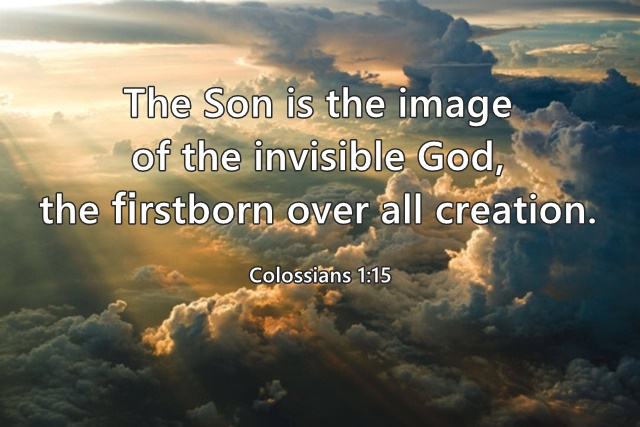
I remember taking this photo six years ago. It was shortly after sunrise, the air was warm and still, and the only sound was the birds singing in the trees; it was glorious. My mind was full of praise and thanksgiving for God and His amazing creation, for His mercy, for His faithfulness.

Listen to my words, Lord,
consider my lament.
Hear my cry for help,
my King and my God,
for to you I pray.

In the morning, Lord, you hear my voice;
in the morning I lay my requests before you
and wait expectantly.

Psalm 5:1-3

Yes indeed, glorious is only word for it. I remember when I was much younger, hearing an older preacher say that everyone should rise early to pray as Jesus did. I didn’t want to do it, for in those days I was of the opinion that getting up around 7 am was pretty early.

Boy, was I wrong.

I suppose we’re all different, and God will meet us where ever we are, but for me, the early morning is by far the best time of any day…. There’s just something about it that’s hard to describe, something different, something… special.

One time I read a letter George Washington wrote to an associate in which he spoke about his daily routine. In it he made several interesting comments, things that kind of made him come alive, seem like a real human. One of them was that he always went to bed early and rose before the sun, because people who are happiest in this life, and people who are most productive in this life, skip the foolishness of the night, and enjoy God’s presence in the morning.

George Washington was a very wise man.

Posted in Christian living | Tagged , , , , , , , | 8 Comments

Persevere!

Marriage should be honored by all, and the marriage bed kept pure, for God will judge the adulterer and all the sexually immoral.  Keep your lives free from the love of money and be content with what you have, because God has said,

“Never will I leave you;
never will I forsake you.”
So we say with confidence,

“The Lord is my helper; I will not be afraid.
What can mere mortals do to me?”
Remember your leaders, who spoke the word of God to you. Consider the outcome of their way of life and imitate their faith.  Jesus Christ is the same yesterday and today and forever.

Hebrews 13:4-8

The Hebrews author continues to wind up his letter to Rome with exhortations, and at first glance this selection seems a little random, almost out of context, in fact.  We’ve been going through the amazing reality of the New Covenant, sweeping through redemption history, coming into the very presence of God… in a context of remaining faithful to the end, even through terrible persecution; even unto death.  Then the author suddenly begins to tell us to respect marriage, be pure, not to love money and to respect our leaders in the faith.  Circle the piece in the picture that doesn’t belong…

But don’t be too hasty!

You could say that these things are mentioned to remind the recipients not to slip into sin, and who could argue with that?  Yet it still doesn’t quite fit in context, does it?  Yes, yes, not slipping into sin is the correct Sunday school answer, but it hardly gets to the point; Sunday school answers usually don’t get to the point.

Remain faithful to the end, even unto death.  Faithful is a covenant term meaning to keep covenant.  Adultery is a violation of the marriage covenant. Have you ever known (or been) someone who is involved in an extra marital affair? These things seem to require a web of deceit and deception to keep them going, and there seems to be a certain drive to keep them going.  When the guilty party is found out, there is great carnage in their homes, relationships and in their lives in general. These things take a lot of work and attention, and I can say with great confidence that they do not promote or advance anybody’s relationship with Jesus Christ.  Sexual immorality tends to have the same kinds of attributes even if there is no marital issue involved.  How about the love of money and things?  While this may not always require secrecy, it does require attention and effort; a great deal of it, actually. Does it enhance one’s relationship with our Lord?  Hardly!

The author has been teaching us not to neglect our covenant relationship he has been encouraging us to remain faithful. Sexual immorality of whatever kind and the love of money are things that can become so all-encompassing in a person’s life that they can easily cause one to slip away from Christ, their faith and even to “fall away” entirely; thus, these are not random exhortations at all. The quotations from Deuteronomy 31 and Psalm 118 take the exhortation to the next step, for they remind us that in Christ, we have the help we need to stand firm in our faith, to remain faithful and to persevere. Even the mention of our leaders who stand tall in their faith to teach, encourage and exemplify what it is to live in Christ is there to give us encouragement.  Leaders, this should also remind you of your responsibility to emulate Jesus Christ in everything that you do and say.

As we pause here to reflect, can you see how this all fits together?  It is as though the author is telling us to keep our eyes on Jesus, not to be drawn off track by the temptations of this world, but to persevere through any kind of trial, whether it is a trial of persecution or a trial of temptation so that we can remain faithful to the end. What he is not really doing here is citing mere “violations”, for he is going much deeper than that. He is asking us to consider our innermost priorities, just as Jesus taught in His Sermon on the Mount.

Posted in Bible | Tagged , , , , , , , | 4 Comments

Continue in Love

Keep on loving one another as brothers and sisters. Do not forget to show hospitality to strangers, for by so doing some people have shown hospitality to angels without knowing it. Continue to remember those in prison as if you were together with them in prison, and those who are mistreated as if you yourselves were suffering.

Hebrews 13:1-3

Chapter 13 is largely made up of exhortations, and from these, we can fill in any blanks we might have in our understanding of chapter 12.  Notice how it begins: “Keep on loving…”  As we saw at the end of the last chapter, this is really what the book is trying to teach us, to keep on doing the things we are supposed to do as Christians, no matter what happens in this life.  Obviously, this should have had a powerful impact on the original recipients of the letter who were having such a rough time in Rome, but let’s not think it doesn’t apply in our time as well.  Loving one another is one of the commands of Jesus that is repeated over and over again in the New Testament, and frankly it deserves more than lip service from us.

Showing hospitality to strangers is another common theme in the New Testament; have you ever wondered about it?  Does it mean showing hospitality to dangerous persons on the run from the police? Does it mean only for other believers?  Different people are led in different ways here… and for the record, I wouldn’t advise harboring fugitives from the law… I can only suggest that we all follow the Lord’s leading.  Some, especially those who have the spiritual gift of hospitality, will be led more than others. Certainly, however, those who habitually refuse hospitality might not seem like people who are sharing God’s love very freely.

Taking this verse in a broader cultural context sheds a better light on its meaning.  In that context, it would seem most likely that the author is referring to people who are believers, such as those sent from another church congregation. A travelling preacher or messengers might qualify more than just anyone who looks lost…

Finally, those in prison. I doubt the author is talking about random thieves and violent criminals. It seems more likely to me that he is referring to people being held in prison for their faith, as were many at the time of his writing. This would fit more clearly into the first verse and its injunction to keep on loving one another.

Whatever our personal views may be on these topics it is clear that these three verses are all about sharing the love of Christ with others.

Posted in Bible | Tagged , , , , , , , , | 2 Comments

Photo of the Week: April 15, 2021

Posted in Photo of the Week | Tagged , , , , | Leave a comment

Warning and Hope

See to it that you do not refuse him who speaks. If they did not escape when they refused him who warned them on earth, how much less will we, if we turn away from him who warns us from heaven? At that time his voice shook the earth, but now he has promised, “Once more I will shake not only the earth but also the heavens.” The words “once more” indicate the removing of what can be shaken—that is, created things—so that what cannot be shaken may remain.

Hebrews 12:25-27

This, is a powerful passage, one of amazing awe and wonder to ponder.  The author begins it with an imperative, “See to it…” Who is speaking, the one we aren’t supposed to refuse?  The answer is in the next sentence: Who warned the people from earth, and warns us from heaven?  God would be my answer.

Go back to verses 18-21, and you can get an idea of what the author is referring to here.  He recounted Mount Sinai, the fire, the darkness the smoke and shaking…  Yes, there was warning for the people in all of that: They were to take the Law that was given to Moses seriously.  Did they?  Well, some of the time.  Did those people get into the promised land?

No, they didn’t.

We have the reality that was to come, and yet we are being told not to turn away from Him.  Yes, that warning was for the Jewish Christians of Nero’s Rome, and it is for those who followed them as well.  The author continues his thought in the rest of this passage by making a comparison between God’s warnings on Sinai, and the judgment that is to come.  When that day arrives, all of creation will be stripped away, and only that which is entirely of God will remain, and the very strong implication is that those who are left standing will be the ones who remained faithful to God.

Therefore, since we are receiving a kingdom that cannot be shaken, let us be thankful, and so worship God acceptably with reverence and awe, for our “God is a consuming fire.”

Hebrews 12:28-29

Here the chapter draws to a close.  Look carefully and you see that it ends on an optimistic note.  Preachers over the centuries have often quoted verse 29 “for our God is a consuming fire.” to strike fear into the hearts of their congregations, and that is a pity.  They often left out verse 28 entirely, and verse 28 gives verse 29 its rich significance, for it reminds the readers of this letter that we have a great inheritance, that we are a heavenly kingdom and that we shall indeed stand on that day. Yes, we will stand for we will never turn away from Him. No!  We will worship Him properly, with reverence and awe in loving and faithful trust.

To wrap up the chapter, I just want to mention one final thought about judgment day.  What we have just read is not a literal description of the day.  It is told here in figure, as an illustration of the reality that is to come; sound familiar?  It probably won’t be a great earthquake that shatters everything except God’s people, but of course it will accomplish the same thing.  For us today, it is simply important to understand that no matter what the future may hold, we simply need to remain faithful to our Lord, to love Him, to trust Him and to share His love with one another… and not worry about the details of the great day.  We’ll come out just fine if we do that, and that is the point of the chapter.

Posted in Bible | Tagged , , , , , , , | 1 Comment

Two Mountaintops

You have not come to a mountain that can be touched and that is burning with fire; to darkness, gloom and storm; to a trumpet blast or to such a voice speaking words that those who heard it begged that no further word be spoken to them, because they could not bear what was commanded: “If even an animal touches the mountain, it must be stoned to death.” The sight was so terrifying that Moses said, “I am trembling with fear.”

Hebrews 12:18-21

We’re in the home stretch now on our tour of Hebrews, and it begins with two mountaintops. In these verses, we see Mount Sinai in quotes from both Exodus and Deuteronomy. Notice that the author is speaking in the negative: “You have not come to a mountain that…” See it? He is about to describe a place we have moved away from…

Read the passage slowly, try to picture the terror the people felt when they came to Mount Sinai.  Fire, darkness, gloom; everything about the place was intimidating and terrifying; they were in the presence of God, and that was not a place you wanted to be. Poor Moses had to climb up there and receive the Law from a God who was unapproachable.  Yes, He was a God of love, but He was dealing with a people who were in rebellion against Him, yet He had taken the initiative to build a relationship with them. These were the descendants of Abraham, now grown to the size of a small nation.  This was not a negotiation; it was a truce being offered by the stronger side: Take it or leave it. If they took it, God was willing to be their God, as long as they kept His Law. If they left it, well, let’s not think about what might happen.  What is really important for us to understand is that God, the party in the stronger position, was offering the truce, and this was an act of mercy.

Oh, yes… and it wasn’t the end of the story; it was just the beginning!

But you have come to Mount Zion, to the city of the living God, the heavenly Jerusalem. You have come to thousands upon thousands of angels in joyful assembly, to the church of the firstborn, whose names are written in heaven. You have come to God, the Judge of all, to the spirits of the righteous made perfect, to Jesus the mediator of a new covenant, and to the sprinkled blood that speaks a better word than the blood of Abel.

Hebrews 12:22-24

Now, the second mountaintop, and what a contrast; this is the mountain we have come to, Mount Zion, the heavenly Jerusalem.  This is the reality that was only pictured in the old earthly city.  Joyous angels, the spirits of the righteous, the presence of God… without the fear and the dread, for now we are made perfect in His sight by the blood of Jesus. No longer are we at war.  This is not just a truce, this is a Treaty of Alliance, of Fellowship: We are now members of the Family!

Here’s a little bonus for you:  notice the terms that are used here as one: Mount Zion, city of the living God, Heavenly Jerusalem, church of the firstborn.  These are combined with the descriptive comments; thousands of angels, spirits of the righteous, the presence of God and Jesus the mediator of a better covenant.  You see, they all refer to what we would call the heavenly church or heaven.  Remember this when you read the prophets and the Psalms and you will find them easier to understand.

Finally, that sprinkled blood, the blood that was brought by the mediator of the New Covenant, His own blood. It speaks a better word than the blood of Abel, for it speaks not of senseless hatred and violence, it does not cry out for vengeance, it speaks of redemption and life; what an awesome picture this is.

Posted in Bible | Tagged , , , , , , , | 2 Comments

Weekly Bible Study Notes: April 14, 2021

Attacks, Always Attacks

John 8:31-59

To the Jews who had believed him, Jesus said, “If you hold to my teaching, you are really my disciples. Then you will know the truth, and the truth will set you free.”

John 8:31-32

This section opens with Jesus turning to address those among the crowd who have believed in Him.  In speaking to them, Jesus issues a new challenge: discipleship.  To become His disciple, they must “hold to my teachings.”  The meaning of the original text is more like the rendering of the NASV: “continue in my word.”  This is much more than being a good Bible student, for John introduced Jesus as the Living Word (1:14) so that to “continue in my word” would require that they have a relationship with Him. In the following sentence, Jesus goes on to tell these people that they will know the truth (Jesus Himself) and that the truth will set them free.  This is not a freedom from political or worldly oppression, but a freedom from spiritual oppression; freedom from slavery to sin.  This is where His opponents resume their attack…

In 8:34-38 His opponents ask Jesus a question with a false premise: We have never been slaves.  Jesus in His reply does not take the bait; He is talking about slavery to sin and they are all slaves to sin.  He uses the metaphor of a slave’s position in the family of the master to illustrate the fact that if He, God’s Son sets them free from bondage to sin, He is doing something that it is His place to do.  He goes on to mention that they have refused to “have room for my word.”  Notice that this is the complete opposite of the disciple who continues in His word.  He ends this reply with a set-up of His own…

I am telling you what I have seen in the Father’s presence, and you are doing what you have heard from your father.

John 8:38

They object to this saying that they are not “illegitimate” being Abraham’s descendants, and Jesus continues by pointing out that they are not acting like Abraham would act, instead they are following not Abraham but their own father. Now they say that their only father is God; they have fallen into His trap.  Jesus tells them that if this were true, they would love Him, not be plotting to murder Him.  They are doing the work of their father the devil, who was a murderer and a liar from the beginning.  They hate hearing the truth from Him because they are following the lead of their father “master” because they are slaves to sin (the devil). Jesus finishes this comment by telling them the obvious:  If they belonged to God, they would hear and comprehend His Word, but since they belong to the devil they cannot hear or comprehend.

Once again, the Jews respond in a way that seeks to marginalize His words, calling Him a Samaritan and demon-possessed. Jesus calmly tells them that He is neither and says that He is honoring God, and that anyone who keeps His Word will never see death ( v. 51).

This next section begins with the Jews asking Him more or less just exactly who He thinks He is:

At this they exclaimed, “Now we know that you are demon-possessed! Abraham died and so did the prophets, yet you say that whoever obeys your word will never taste death. Are you greater than our father Abraham? He died, and so did the prophets. Who do you think you are?” 8:52-53)

Jesus is quick to tell them that He is God’s Son:

Jesus replied, “If I glorify myself, my glory means nothing. My Father, whom you claim as your God, is the one who glorifies me. Though you do not know him, I know him. If I said I did not, I would be a liar like you, but I do know him and obey his word. Your father Abraham rejoiced at the thought of seeing my day; he saw it and was glad.” (8:54-56)

  Notice that He seems to know Abraham’s thoughts when He says that Abraham looked forward to this day and rejoices in it, It is important to note that Jesus did not say this so as to speculate on what Abraham would have thought, but instead He is stating it as a fact; He is acting as a witness to it. 

This completely blows their minds.

Their response in verse 57 is not one of amazement but is instead ridicule:

“You are not yet fifty years old,” they said to him, “and you have seen Abraham!”

 They are marginalizing Him again so as to reduce or eliminate His credibility with the rest of the people.  Verse 58 is the tipping point in the discourse:  Jesus claims to be God:

“Very truly I tell you,” Jesus answered, “before Abraham was born, I am!”

  To make the statement that Jesus made here is one that is direct, to the point and undeniable in its meaning.  Jesus is telling them two things, first that He has been around since before Abraham; He isn’t thirty-something, He’s at least 2,000 years old.  Second, notice that Jesus didn’t say “before Abraham was born, I was alive” no, He said “I am”.  I Am is the name God used to identify Himself to Abraham, thus Jesus is telling them that He is none other than God in the flesh.  They understood this, and since they knew blasphemy when they heard it, they proceeded to grab for stones with which to execute Him.  Jesus slips away, for His time had not yet come to die.  It is worth pointing out that for all of the reasons Jesus cited, these people did not stop to consider the possibility that He might be telling the truth.  These great men of God, these teachers, lawyers and scholars were actually following the devil, and their haste to shut Jesus up when He states the greatest truth of all is a poignant reminder to all of us that we must “continue in His word” to ensure that we are recognizing the truth when it is spoken in this difficult and dark age in which we live for truly, there is nothing new under the sun.

Posted in Bible | Tagged , , , , , , | Leave a comment

Did You Hear That?

Make every effort to live in peace with everyone and to be holy; without holiness no one will see the Lord. See to it that no one falls short of the grace of God and that no bitter root grows up to cause trouble and defile many. See that no one is sexually immoral, or is godless like Esau, who for a single meal sold his inheritance rights as the oldest son. Afterward, as you know, when he wanted to inherit this blessing, he was rejected. Even though he sought the blessing with tears, he could not change what he had done.

Hebrews 12:14-17

This is a particularly interesting little paragraph; look at it carefully, and let’s see what riches are in store for us…

First, the author exhorts us to live in peace with everyone, and to strive to be holy, set apart, for without that, no one will see God.  Living at peace with everyone seems to be referring to a lifestyle that is not engaging in controversy and discord; things that the New Testament teaches in many places, as we have seen.  Living holy lives is also a common theme in the New Testament, and keeping in mind that holy means “set apart” it isn’t too difficult to follow what that means.  We are to be set apart from the world we live in, set apart for God and not partakers in every crazy thing that comes along. We are to be willing to undergo God’s discipline and to stand for the Truth of His Word; these things would be very consistent with the 11 chapters of Hebrews that we have been through so far, and would make sense considering the historical context that we have seen so many times.

We’ve been told before in this letter to help and encourage one another to hold on to our faith, and so to be told here not to let anyone “fall short of the grace of God” and to allow no “bitter root” in our midst to defile others would also seem to make sense. That sexual immorality is mentioned right after this is interesting…  but the most interesting little piece of the entire paragraph comes right after that.  “Godless like Esau” is a very interesting thing; the author goes on to remind his readers that Esau sold his birthright for a dinner, and could not get it back.

His birthright, or inheritance is a covenant reference, for he was to inherit his right as a patriarch of old, as a direct descendant of Abraham.  Remember that Esau didn’t really take that inheritance as seriously as he should have, and traded it to his younger brother Jacob for a bowl of stew, and thus Jacob inherited upon Isaac’s death.  So, what will we take away from this?

What has Hebrews been all about so far? It was written to the Jewish Christians in Rome in a time of severe persecution, to urge them not to give up their faith under severe trial.  The message has been that in the New Covenant relationship with Christ, we have a superior high priest who brought a superior sacrifice to establish a superior covenant based upon superior promises.  We have just been warned not to be like Esau who lost his place in Abraham’s covenant when he valued a bowl of stew more that his birthright.  Once again, in a slightly different way than before, the author is telling his readers, including you and me, to place our highest priority on our New Covenant birthright as co-heirs with Christ to everything, lest we should lose everything.

Interesting, isn’t it?  So, I must ask…

Is God speaking to us in this passage? I sure “hear” Him.  What’s He saying to you?

Posted in Bible | Tagged , , , , , , , | 1 Comment

Discipline, everybody’s favorite thing

In your struggle against sin, you have not yet resisted to the point of shedding your blood. And have you completely forgotten this word of encouragement that addresses you as a father addresses his son? It says,

“My son, do not make light of the Lord’s discipline,
and do not lose heart when he rebukes you,
because the Lord disciplines the one he loves,
and he chastens everyone he accepts as his son.”

Hebrews 12:4-6

Our author moves from the high ground of the first 3 verses into an area that isn’t quite as warm and fuzzy… or is it?  Remember who he is writing to, Jewish Christians in Rome during the time of Nero’s persecution.  These brothers are enduring very difficult times, times most of us can hardly imagine.  This whole letter has served to encourage them to persevere, to hold on to their faith in Christ, and to recognize that whatever the current crisis may be, it is never worth throwing away our future hope to avoid it.  Now, the author takes a different approach: Discipline.

Notice that right off, he paints discipline as a positive.  To receive the discipline of the heavenly Father is to have our sonship confirmed!  Have you ever thought of it that way? I hadn’t until about the third or fourth time I studied this.

As we struggle with sin… and yes, we all have that struggle in one form or another… we have not resisted (sin) to the point of shedding our blood (being killed).  Even for the original recipients, this statement must have been obvious.  Then the word of encouragement, that we receive discipline because we are God’s children… Take a minute to reflect on this quote from Proverbs 3. Early on in this letter, we rejoiced at the thought that through Christ, we have been made His sons and daughters, remember? We are co-heirs with Christ!  As sons and daughters normally do, we come under the authority and discipline of Father.  Are we still rejoicing?

Endure hardship as discipline; God is treating you as his children. For what children are not disciplined by their father? If you are not disciplined—and everyone undergoes discipline—then you are not legitimate, not true sons and daughters at all.

Hebrews 12:7-8

I have three children, all grown now, and when they were growing up, they were subject to my discipline.  There were times when they were punished.  There were times when I lectured them, times when I scolded them and times when I pleaded with them. As they grew, some of my methods changed because their understanding changed.  There were times with all of them when I had to step aside and let them get hurt so they could learn the hard way a lesson they were slow to learn by other means; this was the worst for me.  Oh, how much it hurt to step back and let them do something stupid; how hard it was to force myself not to say “I told you that would happen!”  (I sometimes failed at this point, by the way) Of course, there were times when they blamed me for not stopping them when they set out to do something they knew better than to do.  Maybe this sounds familiar to you parents out there… maybe this sounds familiar to all of us in our relationships with God also.

Moreover, we have all had human fathers who disciplined us and we respected them for it. How much more should we submit to the Father of spirits and live! They disciplined us for a little while as they thought best; but God disciplines us for our good, in order that we may share in his holiness. No discipline seems pleasant at the time, but painful. Later on, however, it produces a harvest of righteousness and peace for those who have been trained by it.

Hebrews 12:9-11

Our human fathers did their best with us in most cases, as I did my best with my kids.  But neither I nor any other human father was always right, no human father did as good a job for their children as our heavenly Father does with us.  The sad truth is that for many, the concept of a loving and merciful father is hard to comprehend because of the imperfections of their human father, yet the truth remains that our heavenly Father is love itself.  He is able, willing and more than capable of guiding us along through this great adventure that is our lives… this “race” we are in.  Yet, from time-to-time we are much like any stubborn teenager, slow to learn.

Therefore, strengthen your feeble arms and weak knees. “Make level paths for your feet,” so that the lame may not be disabled, but rather healed.

Hebrews 12:12-13

A word of encouragement!  Yes, may we learn, may we come to see the way that we should go. May we be like the young person who is willing to be taught, rather than like the one who is certain that they know everything already!  May we accept our Father’s lessons and discipline and learn and grow from it quickly, and run our race straight to the finish line.

Posted in Bible | Tagged , , , , , , | 6 Comments

Fix Your Eyes on Jesus

 Therefore, since we are surrounded by such a great cloud of witnesses, let us throw off everything that hinders and the sin that so easily entangles. And let us run with perseverance the race marked out for us, fixing our eyes on Jesus, the pioneer and perfecter of faith. For the joy set before him he endured the cross, scorning its shame, and sat down at the right hand of the throne of God. Consider him who endured such opposition from sinners, so that you will not grow weary and lose heart.

Hebrews 12:1-3

We begin chapter 12 with an amazing shift in tone, yet it is a small section that is actually in the position of summing up the previous chapter.  Remember that chapter 11 has been all about active faith, and here in summing that up the author, sounding very much like the Apostle Paul, uses a sports metaphor. We are surrounded by a “great cloud of witnesses” referring to all of those great people of faith who were named in chapter 11, and here they are the spectators at a great race; the stage is set…

The author now urges us to throw off everything that hinders as an athlete would remove all hindering clothing in preparation for a race.  Then, he applies this to our reality when he says “and the sin that so easily entangles.”  If we were athletes in a locker room before a great race, we would change out of our “street clothes” and into the garb of a runner; minimal clothing that allows full freedom of movement, with no extra weight, and nothing to limit our ability to run the race. Likewise, as servants of Jesus who are running the “race” of life, we must get rid of anything that would limit our ability to run our “race.” Sin, distractions and the like must be left behind, lest they should inhibit our efforts.

Then, we run our race that has been “marked out for us” with our eyes fixed on Jesus.  When you run a race, you don’t just make up the course as you go along; it has been fixed by the racing officials. Likewise, the race that is our lives has been marked out by God, so that we run a certain course.  We usually call this our “calling.”  Each of us has been “called” to His service in a certain way, and the author is trying to encourage the people to fix their eyes on Jesus, and run the race we have been called to effectively and without distraction or restraint.

Jesus, who is the author and perfecter of our faith is our model for the race.  Notice that He is author; He is the One who has written this tale and marked out our race. He has perfected our faith by His work on the cross. As you read further, we see that Jesus is our model, for in His earthly ministry, He has done exactly what we are to do now in our own rights. He threw off sin and distraction, fixed His eyes upon the will of the Father, and ran His race to win.  We are to throw off all distraction and sin and fix our eyes upon Jesus and run our race to win just as those great people of faith in chapter 11 did.

Finally, Jesus sat down at the right hand of the throne on high; He reached the finish line.  For just as He reached the finish line and as He sat down on high, so shall we, when we finish the course before us. I’m struck at this moment that the whole concept of this is so simple. It’s really easier to comprehend than it is to describe, which is the mark of a great metaphor. Will we get ready and run that race?

On your mark…. get set…. GO!

Posted in Bible | Tagged , , , , , , , | 2 Comments